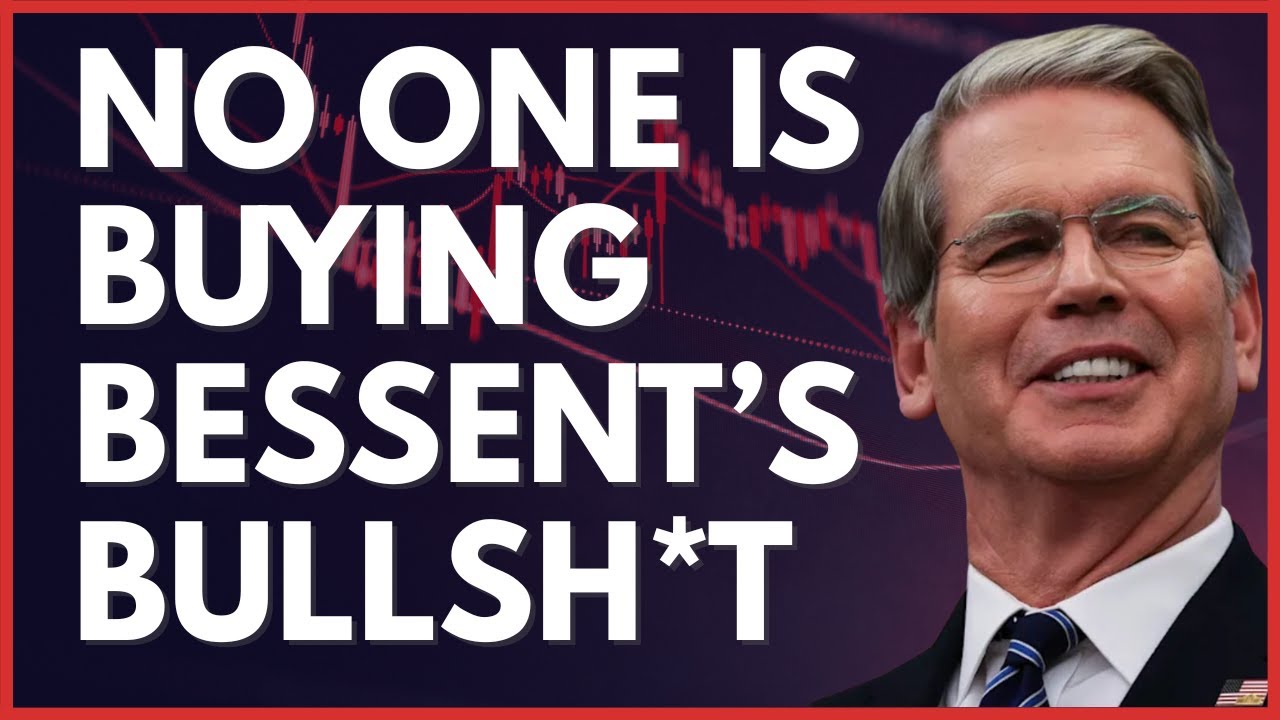
Foreign Central Banks Are Dumping US Debt At Alarming Rates
Keywords
Summary
130 words
Critical Evaluation
Value of the Information & Strength of the Argument
The video provides valuable insights into recent TIC data and the mechanics of the yen carry trade, offering a clear explanation of how foreign investment flows affect US debt markets. The argumentation is structured and uses specific data points, but it is heavily biased towards a pessimistic outlook, often using emotive language and framing. The host’s claims are not always balanced with counterarguments, and some causal links are oversimplified. The value lies in raising awareness of trends, but the solidity of the argumentation is weakened by selective presentation and lack of direct sourcing.
Scientific Rigor, Source Quality, Title Accuracy
The video references official data from the US Treasury (TIC) and the Federal Reserve, which lends some credibility. However, specific reports or papers are not cited directly, and the host’s interpretation is subjective. The title accurately reflects the content, but the video’s tone is more opinionated than strictly analytical. The adequacy between title and content is good, but the scientific rigor is moderate due to the lack of verifiable citations and the presence of speculative statements.
184 words
Title / Content Match
The title accurately reflects the core topic: foreign central banks reducing US debt holdings. The content expands on this with related factors like the yen carry trade and Treasury auctions.
Quality & Reliability
6/10
The video presents a coherent narrative backed by specific data points (TIC data, Treasury yields, BOJ actions) and references official sources, but it is heavily opinionated and lacks direct citations to primary documents within the video. The analysis is selective and framed to support a pessimistic thesis, reducing overall reliability.
Key Moments
Markers derived by PSI from the transcript: the creator did not define chapters.
- Introduction: overview of the episode's topics.
- Scott Bessent confrontation at a restaurant.
- Discussion of US debt history and current levels.
- Explanation of interest payments as percentage of budget.
- Analysis of Treasury yields and Bessent's short-term debt strategy.
- Who buys US debt: Fed, domestic institutions, foreign central banks.
- Japan's rate hike and the yen carry trade unwind.
- October TIC data: net outflows from foreign official and private sources.
- Comparison of foreign flows into stocks vs. Treasuries.
- Asset inflation as store of value for baby boomers and conclusion.
Cited Sources
- UNFTR Memberships — Support the show
- UNFTR Merch — Shop merchandise
- UNFTR Shop — Buy coffee and other products
Concurring Sources
- Treasury International Capital (TIC) Data — Official data on foreign holdings of US securities, referenced in the video.
Dissenting Sources
- US Treasury Department — The Treasury may argue that foreign demand for US debt remains strong, contradicting the video's narrative.
Contribution & Novelties
The video synthesizes recent TIC data and the yen carry trade dynamics to argue that foreign central banks are losing confidence in US debt. It offers a perspective that connects these trends to broader socioeconomic issues like asset inflation and generational wealth. The original contribution is the framing of these developments as a ‘sell America’ trend, though the analysis is not entirely novel.
Pour aller plus loin :
- Treasury International Capital (TIC) System — Official source for the data discussed.
- Yen carry trade - Wikipedia — Background on the carry trade mechanism.
- Bank of Japan — Official site for BOJ policy decisions.
- Federal Reserve — Source for monetary policy and economic data.
112 words
Radar Profile
The radar profile shows moderate scores across all dimensions, with a slight peak in quantity of information. This suggests the video is informative but not exceptionally rigorous or technical, balancing data with opinion.
💬 Très négatif. Sur les 30 commentaires analysés, la grande majorité exprime une profonde méfiance envers l'administration Trump et une vision pessimiste de l'économie américaine, avec des critiques acerbes et des appels à la vente de la dette américaine.