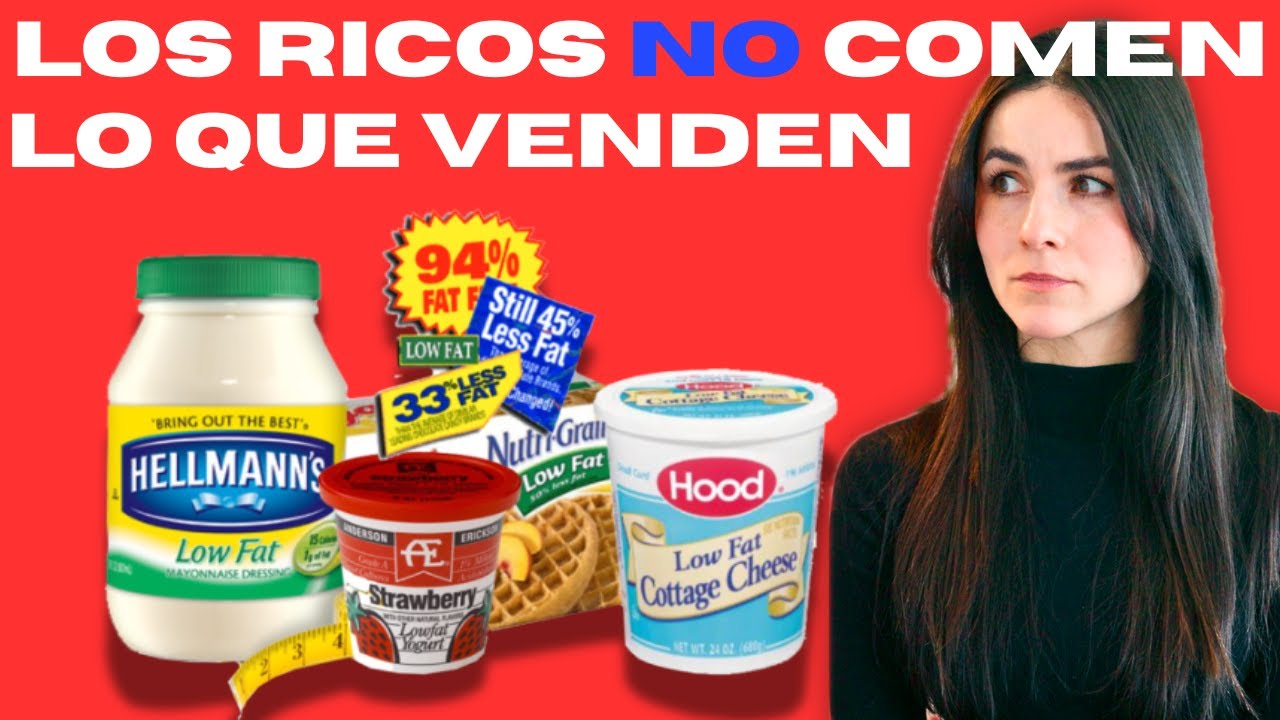
La Mafia de la Industria Alimentaria
Keywords
Summary
158 words
Critical Evaluation
Value of the Information & Strength of the Argument
The video provides valuable information by synthesizing well-documented cases of industry influence, such as the sugar industry’s manipulation of science and Coca-Cola’s funding of research. The argumentation is solid, using historical examples and scientific studies to support claims. However, it is presented from a strong advocacy perspective, which may oversimplify complex issues. The video effectively argues that corporate interests have shaped public health policies, but it could benefit from acknowledging counterarguments and the complexity of dietary science.
86 words
Title / Content Match
The title accurately reflects the content, which exposes the influence of the food industry on public health and regulations.
Quality & Reliability
8/10
The video is well-researched, citing numerous scientific studies and news articles, and presents a coherent argument about food industry lobbying. However, it is an opinion-driven piece with a strong narrative, and some claims are simplified for a general audience.
Key Moments
Markers derived by PSI from the transcript: the creator did not define chapters.
- Introduction: Executives don't eat their own products.
- Nestlé's neuroscientist admits he doesn't eat their sweets.
- Ultra-processed foods linked to many diseases.
- Engineering of addictive foods: sugar, fat, salt, and texture.
- Lobbying spending by food industry compared to tobacco and alcohol.
- 1960s sugar industry paid scientists to blame fat.
- Coca-Cola's Global Energy Balance Network and its message.
- Studies funded by industry are five times less likely to find links.
- Call for regulation and transparency, and critique of social media.
Cited Sources
- Sugar industry and coronary heart disease research: a historical analysis of internal industry documents — Historical analysis of sugar industry's influence on science.
- 50 Years Ago, Sugar Industry Quietly Paid Scientists To Point Blame At Fat — News article on the sugar industry's funding of research.
- Coca-Cola Funds Scientists Who Shift Blame for Obesity Away From Bad Diets — New York Times investigation on Coca-Cola's funding.
- Relationship between funding source and conclusion among nutrition-related scientific articles — PLOS Medicine study on industry funding and conclusions.
- Dietary Guidelines for Americans 2020-2025 — Official dietary guidelines influenced by lobbying.
- Big Food Companies Spend Big Money in Hopes of Shaping the Dietary Guidelines for Americans — Blog post on industry lobbying for dietary guidelines.
- Processed foods are making us sick. It's time for the FDA and USDA to step in. — Harvard School of Public Health opinion piece.
- White House promise to food lobbyists: no surprises in MAHA report — News article on lobbying influence.
- Ultra-processed foods and health outcomes: A systematic review — NYT article on ultra-processed foods.
- How ultraprocessed foods took over America — NYT podcast on ultra-processed foods.
- Dietary guidelines should be led by science, not politics — CSPI statement on dietary guidelines.
- Processed meat and cancer — Physicians Committee for Responsible Medicine on processed meat.
- Alcohol and health — Food Politics blog on alcohol.
- Sugar and heart disease — PDF on sugar and heart disease.
- Sugar and heart disease (PubMed) — Historical study on sugar and heart disease.
- Archive of NYT article on Coca-Cola — Archived article on Coca-Cola funding.
- NYT article on dietary guidelines and food industry — NYT article on dietary guidelines.
- NYT article on ultra-processed foods and dietary guidelines — NYT article on ultra-processed foods.
Concurring Sources
- Sugar industry and coronary heart disease research — Supports the claim of sugar industry manipulation.
- Coca-Cola Funds Scientists Who Shift Blame for Obesity — Supports the claim of Coca-Cola's influence.
- Relationship between funding source and conclusion — Supports the claim that industry-funded studies are biased.
Dissenting Sources
- Dietary Guidelines for Americans 2020-2025 — The official guidelines do not explicitly recommend avoiding ultra-processed foods, which contrasts with the video's stance.
External References
Contribution & Novelties
The video provides a compelling synthesis of well-documented cases of industry influence on nutrition science and policy, making it accessible to a broad audience. It adds value by connecting historical examples (sugar industry) with contemporary issues (Coca-Cola, ultra-processed foods) and highlighting the systemic nature of corporate lobbying. The video also encourages viewers to be critical of information sources.
Pour aller plus loin :
- Ultra-processed foods — Wikipedia overview of ultra-processed foods.
- Sugar industry and heart disease — Wikipedia article on the sugar industry’s influence.
- Corporate lobbying — Wikipedia article on lobbying.
- Conflict of interest in research — Wikipedia article on conflicts of interest.
- Global Energy Balance Network — Wikipedia article on the organization funded by Coca-Cola.
116 words
Radar Profile
The radar profile shows high scores in quantity and quality of information, and moderate technical level, indicating a well-researched but accessible video. The reliability score is also high, reflecting the use of credible sources. Overall, the video is strong in providing evidence-based information, though it is opinionated.
💬 Très positif. Sur les 30 commentaires analysés, la grande majorité exprime un soutien enthousiaste au contenu, saluant la qualité de l'analyse et partageant des expériences personnelles, avec quelques demandes de sujets similaires.