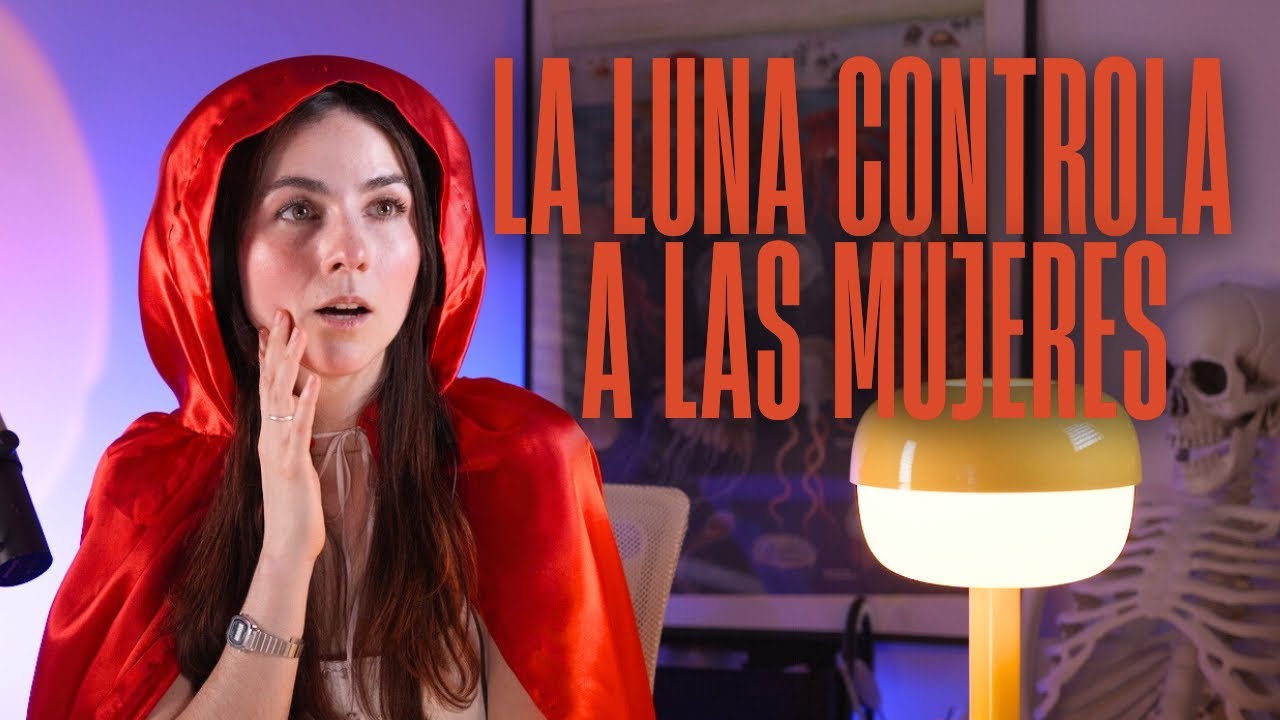
La Luna nos controla? - CIENCIA SIMPLIFICADA EP#60
Keywords
Summary
188 words
Critical Evaluation
Value of the Information & Strength of the Argument
The video provides valuable information by synthesizing historical and recent scientific studies on lunar-menstrual synchronization. It effectively argues that while early studies suggested a link, they were methodologically flawed, and larger datasets later showed no significant correlation. The recent Science study adds nuance, suggesting a possible weak synchronization in certain women. The argumentation is solid, as Carolina clearly distinguishes correlation from causation and acknowledges the limitations of the research. She also transparently discloses her personal biases, which enhances the credibility of her analysis. The use of accessible language and analogies helps convey complex concepts without oversimplifying the science.
Scientific Rigor, Source Quality, Title Accuracy
The video demonstrates scientific rigor by referencing a specific study published in Science and discussing its methodology and findings. However, it does not provide direct citations for all claims, relying on general knowledge. The title is appropriate and engaging, accurately reflecting the content. The host’s transparency about her biases adds to the overall trustworthiness. The video does not include any sponsored content, and the absence of chapters is compensated by clear segment transitions.
186 words
Title / Content Match
The title is engaging and accurately reflects the content, which explores whether the Moon affects human biology, particularly menstrual cycles.
Quality & Reliability
8/10
The video presents a balanced review of scientific evidence on lunar influence on menstrual cycles, citing a recent study published in Science. It clearly distinguishes correlation from causation and acknowledges limitations. The host transparently discloses personal biases, enhancing credibility. However, some claims lack specific citations within the video, and the presentation is aimed at a general audience, which may oversimplify complex topics.
Key Moments
Markers derived by PSI from the transcript: the creator did not define chapters.
- Introduction and welcome back; topic announcement: Does the Moon affect women's menstrual cycles?
- Definition of the menstrual cycle and its four phases.
- Explanation of the lunar cycle and its three monthly cycles: synodic, anomalistic, and tropical.
- Historical context: belief in lunar effects on mental health and emergency room visits; evidence shows no significant difference.
- Early studies on lunar-menstrual synchronization; methodological criticisms (selection bias, small sample sizes).
- Use of menstrual tracking apps to gather large datasets; findings show no overall synchronization.
- Introduction of the 2025 Science study: 'Women's menstruation synchronization with the moon has decreased but remains detectable when the zeitgeber is strong.'
- Details of the study: 176 women, long-term records, comparison of past and present data; findings on synchronization with lunar cycles.
- Explanation of zeitgeber and circadian rhythms; discussion of why synchronization is limited to certain cycle lengths.
- Conclusion: Moon does not control us; importance of critical thinking and avoiding misinterpretation of scientific studies.
Cited Sources
- Science (journal) — The host mentions a study published in Science on September 24, 2025, titled 'Women's menstruation synchronization with the moon has decreased but remains detectable when the zeitgeber is strong.'
Concurring Sources
- Science (journal) — The study cited in the video is published in a high-impact peer-reviewed journal, indicating a certain level of scientific scrutiny.
Dissenting Sources
- Previous large-scale studies using menstrual tracking apps — The host mentions that earlier large-scale studies found no synchronization, contrasting with the recent study's findings.
Contribution & Novelties
The video provides a comprehensive and up-to-date synthesis of research on lunar-menstrual synchronization, including the latest 2025 study. It clarifies common misconceptions and emphasizes the importance of methodological rigor. The host’s transparent discussion of her own biases adds a unique perspective.
Pour aller plus loin :
- Circadian rhythm — Fundamental to understanding biological clocks and zeitgebers.
- Zeitgeber — The concept of external cues that synchronize biological rhythms.
- Menstrual cycle — Detailed physiological overview.
- Lunar effect — Historical and scientific perspectives on lunar influences.
83 words
Radar Profile
The radar profile shows high scores in information quantity, quality, and reliability, with a moderate technical level. This indicates a well-researched and trustworthy presentation that remains accessible to a general audience.
💬 Très positif. Sur les 30 commentaires analysés, la grande majorité exprime un accueil enthousiaste et de l'affection pour le retour de la chaîne, avec des éloges pour la qualité de la recherche et du contenu.