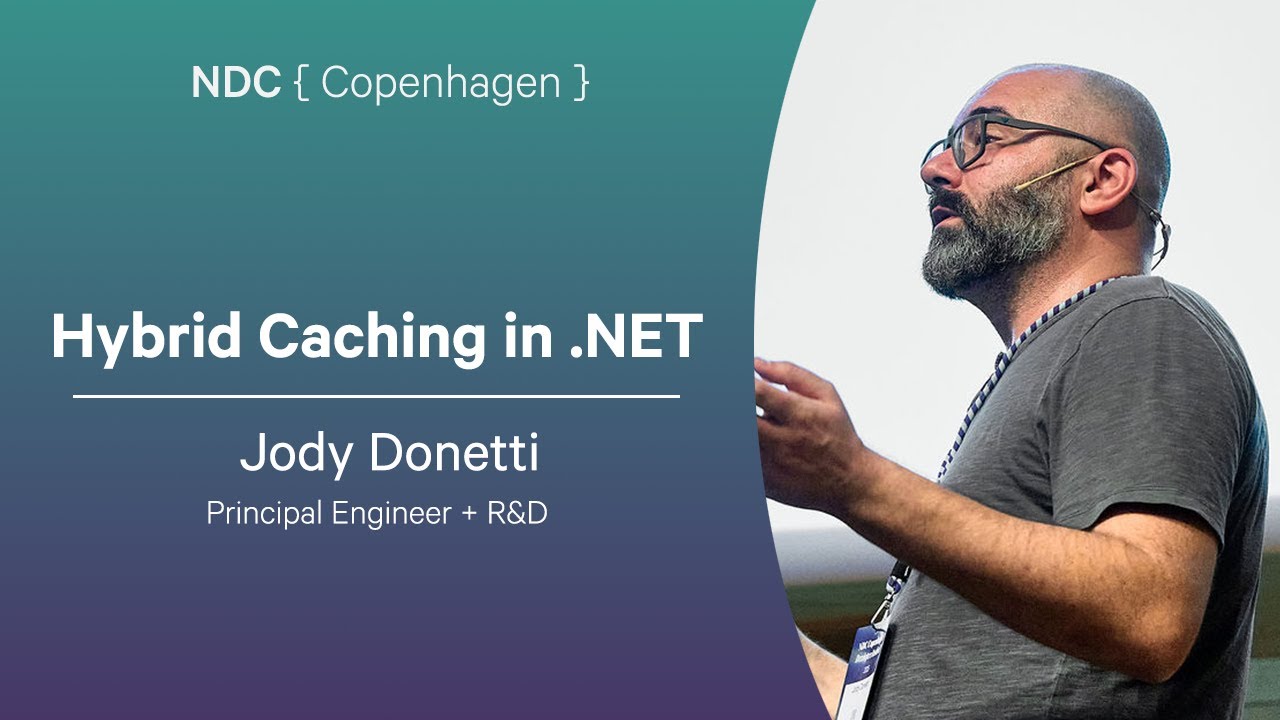
Hybrid Caching in .NET - Jody Donetti - NDC Copenhagen 2025
Keywords
Summary
134 words
Critical Evaluation
Value of the Information & Strength of the Argument
The talk provides valuable insights into caching strategies, particularly the benefits of hybrid caching. The speaker’s argumentation is solid, backed by his extensive experience and the success of FusionCache. He clearly explains the trade-offs between different cache types and demonstrates how hybrid caches address common problems like cache stampede. The presentation is practical, with code examples that can be directly applied. However, there is a potential bias as the speaker promotes his own library, though he also covers Microsoft’s HybridCache, providing a balanced view. The argumentation is persuasive and well-structured.
Scientific Rigor, Source Quality, Title Accuracy
The talk demonstrates scientific rigor by referencing well-known caching concepts and libraries. The speaker mentions that FusionCache is used by Microsoft’s Data API Builder, which adds credibility. However, he does not provide external sources or citations beyond his own project. The title accurately reflects the content, and the talk is well-organized. The speaker’s expertise is evident, and the information is reliable, though the lack of external references limits the ability to verify claims independently.
179 words
Title / Content Match
The title accurately reflects the content, which focuses on hybrid caching in .NET, covering both FusionCache and Microsoft's HybridCache.
Quality & Reliability
8/10
The speaker is the creator of FusionCache and a principal engineer with 30 years of experience. The talk is based on practical experience and covers well-known caching concepts. However, it is largely a presentation of his own library, which introduces potential bias. The technical information is accurate and aligns with common knowledge in the field.
Key Moments
Markers derived by PSI from the transcript: the creator did not define chapters.
- Introduction to the talk and speaker's background.
- Explanation of memory caches and their characteristics.
- Discussion on distributed caches and their trade-offs.
- Introduction to hybrid caches and their advantages.
- Comparison between hybrid and multi-level caches.
- Overview of FusionCache features and usage.
- Explanation of cache stampede and protection mechanisms.
- Demonstration of FusionCache code examples.
- Discussion on backplane support and multi-node scenarios.
- Conclusion and final thoughts on hybrid caching.
Cited Sources
- NDC Conferences — Conference organizer, where the talk was given.
- NDC Copenhagen — Specific conference event page.
Concurring Sources
- FusionCache GitHub — Official repository for FusionCache, confirming its features and usage.
- Microsoft HybridCache documentation — Official documentation for Microsoft's HybridCache, providing details on its implementation.
Contribution & Novelties
The talk provides a comprehensive overview of hybrid caching in .NET, with a focus on FusionCache. It offers practical advice and code examples that can be immediately applied. The speaker’s unique perspective as the creator of FusionCache adds depth, and he clearly explains the benefits of hybrid caching over traditional approaches. The talk also highlights the importance of cache stampede protection and other advanced features.
Pour aller plus loin :
- FusionCache GitHub — Official repository for FusionCache, with extensive documentation.
- Microsoft HybridCache documentation — Official documentation for Microsoft’s HybridCache.
- Cache stampede article on Wikipedia — Overview of cache stampede problem and solutions.
- IMemoryCache documentation — Official documentation for IMemoryCache.
109 words
Radar Profile
The radar profile shows high scores in quantity and quality of information, technical level, and reliability, indicating a well-rounded and informative talk. The speaker's expertise and practical examples contribute to a strong overall assessment.
💬 No comments were provided for analysis.