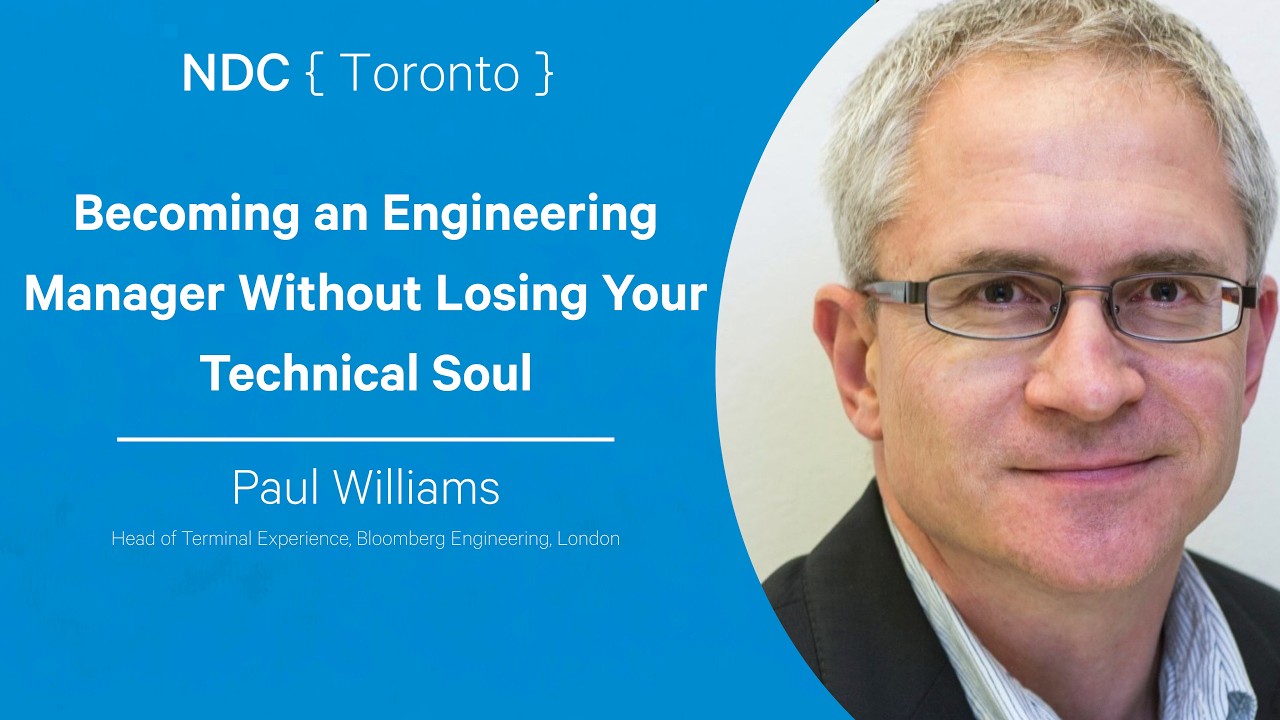
Becoming an Engineering Manager Without Losing Your Technical Soul
Keywords
Summary
224 words
Critical Evaluation
Value of the Information & Strength of the Argument
The talk provides valuable insights into the role of an engineering manager, drawing on the speaker’s extensive experience. The argumentation is coherent and persuasive, using a real-world case study to illustrate the importance of technical depth. The speaker effectively addresses common concerns about losing technical identity and offers practical advice on maintaining technical skills. However, the arguments are largely based on personal anecdotes rather than empirical evidence, which may limit their generalizability.
Scientific Rigor, Source Quality, Title Accuracy
The talk is based on the speaker’s personal experience and does not cite formal sources. The title accurately reflects the content, which focuses on the transition to management while retaining technical skills. The speaker mentions a podcast with Larry Page but does not provide a specific reference. The talk is well-structured and the content is credible given the speaker’s background, but the lack of citations reduces its scientific rigor.
156 words
Title / Content Match
The title accurately reflects the content, which focuses on how engineering managers can maintain technical depth and identity.
Quality & Reliability
7/10
The talk is based on 20 years of personal experience as an engineering manager, providing practical insights and a real-world case study. However, it is largely anecdotal and lacks formal citations or empirical data.
Key Moments
Markers derived by PSI from the transcript: the creator did not define chapters.
- Introduction and personal background in programming.
- Story about debugging a real-time data issue in the Bloomberg terminal.
- Explanation of the technical details of the issue involving anti-malware software.
- Discussion on the value of engineering managers and the six questions.
- Insights on scaling, empowering teams, and solving problems together.
- Advice on staying technically engaged and balancing code writing with management.
Cited Sources
- NDC Conferences — Conference website where the talk was recorded.
- NDC Toronto — Specific conference event page.
Concurring Sources
- Larry Page on leadership — Reference to the quote about putting the best people on important work.
Contribution & Novelties
The talk offers a personal perspective on maintaining technical skills as an engineering manager, illustrated with a compelling real-world debugging story. It provides practical advice on balancing management and technical work, and emphasizes the importance of technical depth at all levels of an organization. The speaker’s 45 years of coding experience adds credibility.
Pour aller plus loin :
- Engineering management — Overview of the field.
- Technical leadership — Concepts and practices.
- Mentorship — Importance in professional development.
77 words
Radar Profile
The radar profile shows high scores in quantity and quality of information, moderate technical level, and slightly lower reliability due to lack of formal citations. This indicates a well-informed but anecdotal talk.