Lit Review Part II: Finding and Evaluating Sources
Keywords
Summary
141 words
Critical Evaluation
Value of the Information & Strength of the Argument
The video provides valuable insights into the practical aspects of conducting a literature review, such as refining search terms, using library resources, and evaluating source credibility. The argumentation is based on the creator’s personal experience and expertise, which adds authenticity. However, the video lacks a structured argument or evidence-based claims; it is more of a demonstration than a critical analysis. The creator’s reasoning for choosing sources is sound, but the video does not delve into the content of the sources themselves, limiting its value for understanding the research topic.
Scientific Rigor, Source Quality, Title Accuracy
The creator demonstrates scientific rigor by emphasizing the importance of peer-reviewed sources and evaluating them based on author, publisher, and date. He uses credible sources like Routledge books and institutional documents. The title accurately reflects the content. The video is transparent about the process, including failures and workarounds, which enhances its credibility. However, the video does not provide formal citations or links to the sources mentioned, making it difficult for viewers to verify them. The description includes a link to a rubric, but it is not directly referenced in the video.
195 words
Title / Content Match
The title accurately reflects the content: the video focuses on finding and evaluating sources for a literature review, building on a previous video.
Quality & Reliability
8/10
The video is a transparent, step-by-step demonstration of the literature search process by an experienced educator. It emphasizes critical evaluation of sources (author, publisher, date) and shows real-world challenges. The creator is a general education coordinator and Routledge reviewer, adding credibility. However, the video is informal and lacks formal citations or peer-reviewed backing for its claims.
Key Moments
Markers derived by PSI from the transcript: the creator did not define chapters.
- Introduction and recap of previous video; outlines two search categories.
- Discusses institutional documents from UNC and Georgia Board of Regents, noting they are institution-driven.
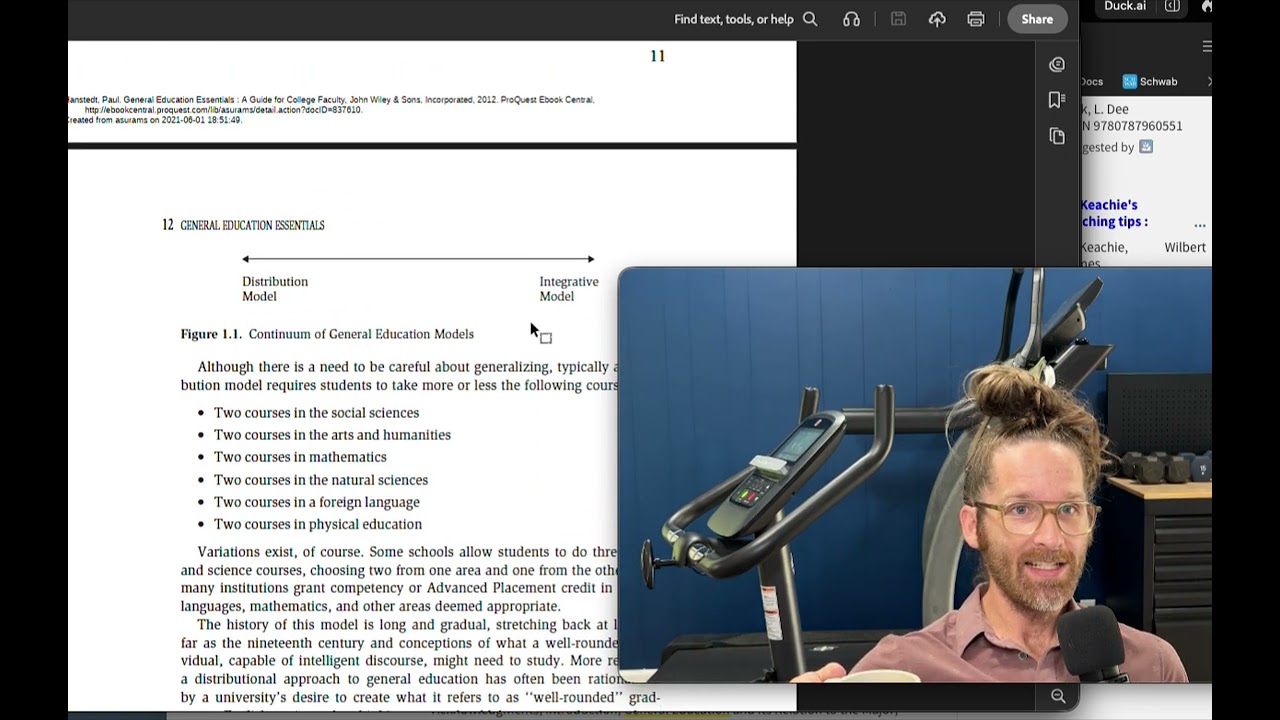
- Searches for books on general education; finds 'General Education Essentials' by Handstedt.
- Uses library catalog to access book chapters; downloads PDFs.
- Searches for more books; finds 'Amplifying Student and Youth Voices' but cannot access it.
- Checks Association of American Colleges and Universities website but finds it too distant from topic.
- Finds an article on student-driven healthcare course design; uses trick to find PDF.
- Summarizes the four resources found and reflects on the process.
- Writes down the process followed, including challenges and AI encounters.
- Concludes with next steps: reading and writing the manuscript.
Cited Sources
- Writing a Lit Review: A Process-Based Approach — Referenced as the rubric for the video.
Concurring Sources
- General Education Essentials — Book by Handstedt (2024) used as a key source for general education course design.
- Amplifying Student and Youth Voices in Education Research — Book by Vernon Press, relevant to student involvement in education.
- Perceptions of healthcare course design implementation and opportunities from a student-driven multi-disciplinary perspective — Article by Daniel et al. (2025) found via Galileo and internet search.
Contribution & Novelties
The video offers a unique, transparent look into the often messy process of academic research, showing real-time problem-solving and the importance of information literacy. It provides practical tips for finding and evaluating sources, such as using library catalogs and searching for PDFs. The creator’s emphasis on evaluating sources before reading them is a valuable lesson.
Pour aller plus loin :
- Information literacy — Core concept underlying the video’s approach.
- Literature review — Overview of the process and purpose.
- Peer review — Explains why the creator prioritizes peer-reviewed sources.
88 words
Radar Profile
The radar profile shows high scores in quality and reliability, reflecting the creator's expertise and transparent approach. The lower score in technical level indicates the video is accessible to a general audience, while the moderate quantity of information suggests a focused but not exhaustive coverage of the topic.