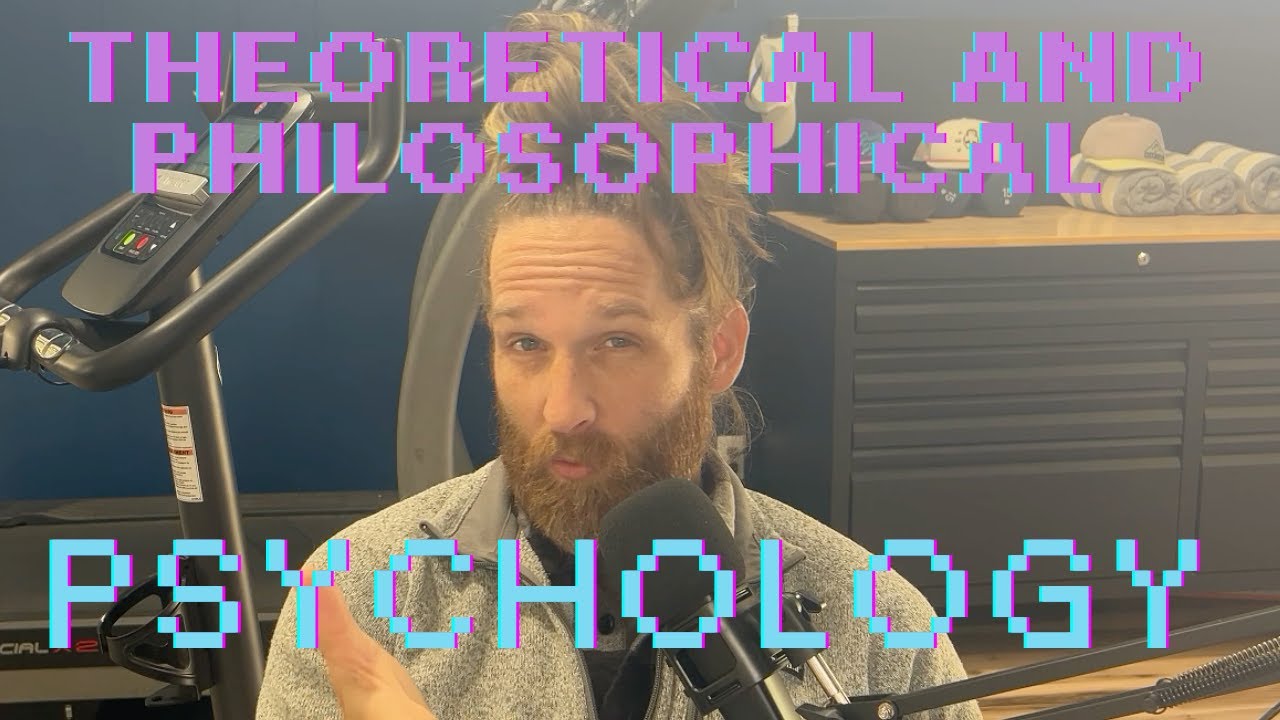
Theoretical and Philosophical Psychology for Beginners
Keywords
Summary
169 words
Critical Evaluation
Value of the Information & Strength of the Argument
The video provides valuable insights into the often-overlooked role of theoretical and philosophical psychology. The author’s argumentation is coherent and grounded in his personal experience and scholarly work. He effectively demonstrates how theoretical work underpins empirical research, using historical examples like behaviorism and contemporary issues like AI therapy. The five goals he proposes offer a practical framework for understanding TPP. However, the argumentation is largely based on personal opinion and lacks systematic evidence or citations, which limits its scientific rigor. The author acknowledges oversimplification for a beginner audience, which is appropriate but reduces the depth of the analysis.
Scientific Rigor, Source Quality, Title Accuracy
The video demonstrates moderate scientific rigor. The author cites Andre Kukla’s ‘Methods of Theoretical Psychology’ and mentions the APA Division 24, but does not provide detailed references or empirical evidence. The quality of sources is limited to the author’s own publications and a few general references. The title accurately reflects the content, which is an introductory overview. The video does not include any advertising or sponsorship segments.
180 words
Title / Content Match
The title accurately reflects the content: an introductory overview of theoretical and philosophical psychology, its goals, and how it differs from empirical work.
Quality & Reliability
7/10
The author is a PhD in psychology with a strong theoretical orientation, has published multiple books and articles in this area, and is a member of Division 24 of the APA. The content is based on personal experience and scholarly knowledge, but it is largely opinion and lacks rigorous citations or empirical evidence. The video is an introductory overview, and the author acknowledges oversimplification.
Key Moments
Markers derived by PSI from the transcript: the creator did not define chapters.
- Introduction: author's background and purpose of the video.
- Comparison of theoretical vs. empirical work in psychology.
- Historical context: pendulum swing between theory and empiricism, behaviorism.
- Example of theoretical work: 'Existential Health Psychology'.
- Example of theoretical work: 'Expanding the Category Human' and posthumanism.
- Introduction of five goals of theoretical psychology.
- Goal 1: Defining the subject matter, example with AI therapy.
- Goal 2: Determining research methods.
- Goal 3: Guiding practice, discussion on therapist likeability.
- Goal 4: Evaluating achievements, DSM-5 example.
Cited Sources
- Division 24 of the American Psychological Association — Mentioned as the division for theoretical and philosophical psychology, and the author is a member.
- Methods of Theoretical Psychology — Book by Andre Kukla, cited as a reference for the history of theoretical work in psychology.
Concurring Sources
- Division 24 of the American Psychological Association — The author's membership and the division's mission align with the video's content.
Contribution & Novelties
The video offers a clear and accessible introduction to theoretical and philosophical psychology, a field often overshadowed by empirical research. The author’s five goals provide a useful framework for understanding the practical contributions of TPP. He also brings a personal perspective, sharing his own experiences and publications, which adds authenticity. The discussion of AI therapy as a contemporary example is timely and illustrates how theoretical thinking can address emerging issues.
Pour aller plus loin :
- Theoretical psychology (Wikipedia) — Provides an overview of the field and its history.
- Philosophy of psychology (Wikipedia) — Explores the philosophical foundations of psychology.
- Division 24 of the APA — Official site of the Society for Theoretical and Philosophical Psychology.
- Posthumanism (Wikipedia) — Relevant to the author’s discussion of expanding the category of human.
- DSM-5 (Wikipedia) — Context for the discussion on diagnostic criteria changes.
140 words
Radar Profile
The radar profile shows a balanced distribution across the four dimensions, with slightly higher scores in quantity and quality of information, and lower in technical level and reliability. This reflects the video's introductory nature and the author's reliance on personal experience rather than rigorous empirical evidence.
💬 No comments were provided for analysis.