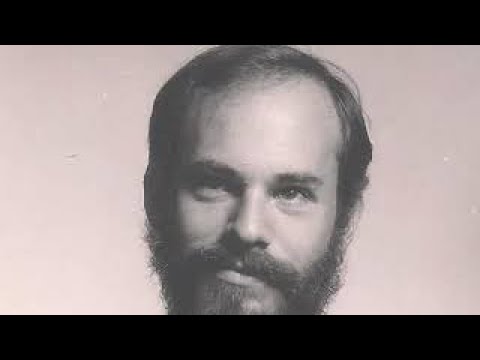
The passage of time through a charmed life - Ep. 3: Past, Present and Future
Keywords
Summary
166 words
Critical Evaluation
Value of the Information & Strength of the Argument
The video provides valuable insights into the philosophy of time, particularly the debate between A-theory and B-theory. Oaklander’s argumentation is rigorous and logically structured, clearly explaining the dialectic of McTaggart’s argument and the problem of temporal becoming. He effectively demonstrates the circularity in attempts to define time in terms of past, present, and future. The discussion is intellectually stimulating and offers a unique perspective, though it is conversational and assumes some prior knowledge.
Scientific Rigor, Source Quality, Title Accuracy
The video demonstrates high scientific rigor, with Oaklander referencing McTaggart’s argument and discussing views of philosophers like Broad and Gale. However, no specific sources are cited in the description, and the conversation relies on the speaker’s expertise. The title accurately reflects the content, focusing on past, present, and future in the context of time’s passage. The discussion is well-structured and logically coherent.
150 words
Title / Content Match
The title accurately reflects the content, which focuses on the passage of time and the concepts of past, present, and future.
Quality & Reliability
8/10
The video features a leading philosopher (Nathan Oaklander) discussing central issues in the philosophy of time, with rigorous argumentation and reference to McTaggart's argument. The content is scholarly but presented in an accessible conversational style. No sources are cited in the description, but the speaker's expertise and the logical structure of the argument support high reliability.
Key Moments
Markers derived by PSI from the transcript: the creator did not define chapters.
- Introduction to the A-series and B-series, and the origin of the terms A-theory and B-theory.
- Explanation of the A-series (past, present, future) and B-series (earlier, later) with examples.
- Discussion on the essence of time as passage and the need for a dynamic aspect.
- Introduction of temporal becoming as the change of temporal properties, and the problem of contradiction.
- McTaggart's argument that temporal becoming leads to an event having incompatible properties.
- The need to introduce time to avoid contradiction, leading to circularity.
- Critique of views like presentism and open future for presupposing time.
- Oaklander's suggestion that a proper understanding of time must be timeless.
Contribution & Novelties
The video offers an original and accessible reconstruction of McTaggart’s argument, emphasizing the circularity in attempts to define time via past, present, and future. Oaklander’s ‘Full Future View’ provides a distinctive perspective, though it is only briefly mentioned. The discussion is valuable for students and philosophers interested in the metaphysics of time.
Pour aller plus loin :
- McTaggart’s argument — Stanford Encyclopedia of Philosophy entry on McTaggart’s argument, providing detailed analysis.
- A-theory and B-theory of time — Stanford Encyclopedia of Philosophy entry on time, covering the debate.
- Presentism — Stanford Encyclopedia of Philosophy entry on presentism, a view discussed in the video.
102 words
Radar Profile
The radar profile shows high scores in quality of information, technical level, and reliability, with a slightly lower score in quantity of information due to the video's short length. This indicates a dense, expert-level discussion with strong argumentation.