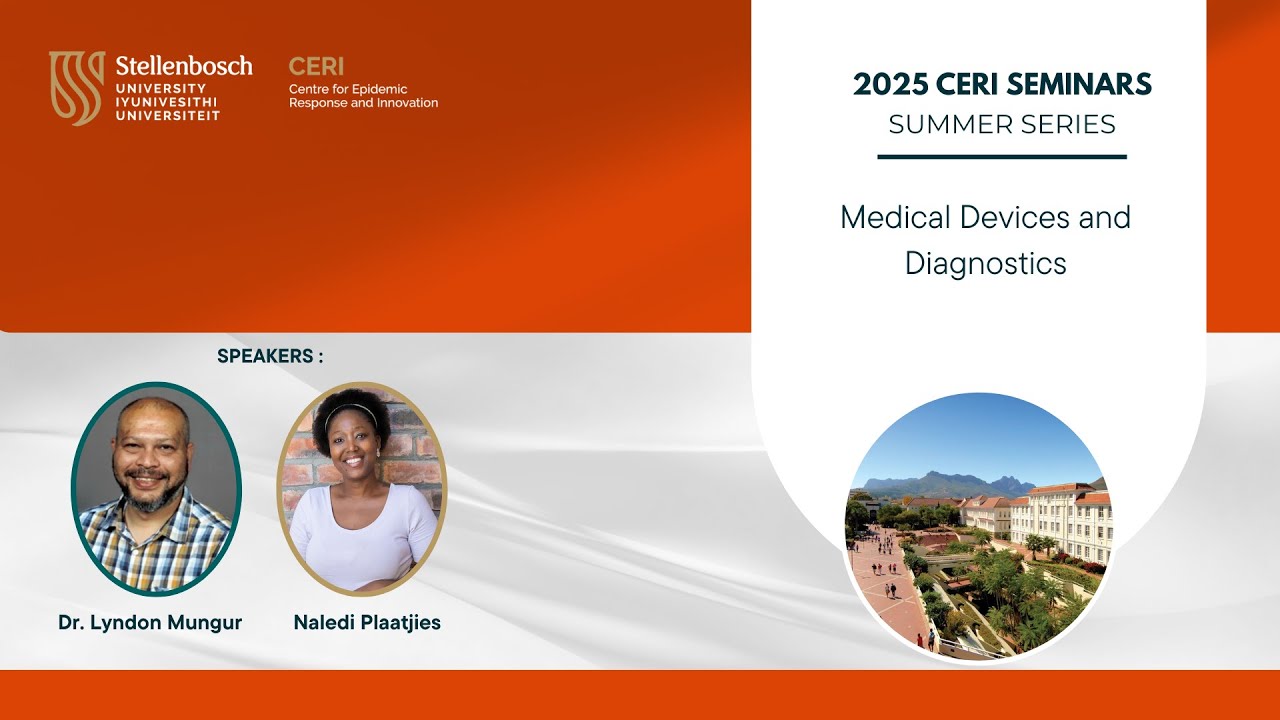
CERI Seminar | Medical Devices & Diagnostics in Africa: Manufacturing & Market Access
Keywords
Summary
148 words
Critical Evaluation
Value of the Information & Strength of the Argument
The seminar provides valuable firsthand insights into the practical challenges of manufacturing and selling medical diagnostics in Africa. Dr. Mungur’s narrative is rich with specific examples: the initial success with a malaria test, the impact of ISO certification, the difficulties with investors, and the lengthy regulatory approval process for COVID tests. He argues convincingly that market research and understanding local contexts are crucial, citing examples like Ethiopia’s requirement for local manufacturing. The discussion of barriers to entry, such as the high cost of WHO prequalification, is particularly informative. Naledi Plaatjies adds a complementary perspective on supply chains and market access, though her presentation is less detailed in the transcript. The argumentation is generally solid, based on real-world experience, but it is anecdotal rather than systematic. The speakers do not provide quantitative data or comparative analyses, which limits the generalizability of their claims.
Scientific Rigor, Source Quality, Title Accuracy
The seminar is not a scientific presentation but an industry-focused talk. The speakers rely on their professional experience rather than citing scientific literature. The title accurately reflects the content, which focuses on manufacturing and market access. The description mentions the speakers’ affiliations and the host institution, adding credibility. However, no external sources are cited, and the claims are not backed by peer-reviewed evidence. The audience appears to be students and researchers, and the Q&A session is not included in the transcript. Overall, the rigor is moderate, with a clear practical orientation.
248 words
Title / Content Match
The title accurately reflects the seminar's focus on medical devices and diagnostics in Africa, covering manufacturing and market access.
Quality & Reliability
7/10
The seminar features two industry experts with direct experience in manufacturing and distribution of medical diagnostics in Africa. They provide concrete examples, data points, and discuss regulatory and market challenges. However, the content is largely anecdotal and lacks peer-reviewed references or systematic data, and the speakers have commercial interests.
Key Moments
Markers derived by PSI from the transcript: the creator did not define chapters.
- Introduction by host, outlining the seminar's focus on medical devices and diagnostics in Africa.
- Dr. Lyndon Mungur begins his talk, sharing the story of Medical Diagnostech's founding and early development.
- Discussion of the first major customer and the importance of ISO 13485 certification.
- Challenges with investors and the impact of COVID-19 on the company's operations.
- Overview of the company's product portfolio, including lateral flow tests and new technologies like LAMP and electrochemistry.
- Discussion of the realities of manufacturing in Africa, including positives and negatives.
- Naledi Plaatjies from Lasec presents on supply chains and market access in Africa.
- Case studies of successful and unsuccessful market entry approaches.
- Q&A session and discussion with the audience.
Cited Sources
- Medical Diagnostech — Company website mentioned by Dr. Mungur as his company.
- Lasec — Company website mentioned by Naledi Plaatjies as her employer.
Concurring Sources
- WHO Prequalification of In Vitro Diagnostics — Supports the claim about the cost and complexity of WHO prequalification.
Contribution & Novelties
The seminar provides a rare, candid look at the operational realities of medical device manufacturing and market access in Africa, from the perspective of a local manufacturer and a distributor. It highlights specific barriers such as regulatory delays, certification costs, and the need for local partnerships, which are often overlooked in academic discussions. The discussion of new technologies like LAMP-based devices and electrochemical sensors offers a glimpse into future innovations.
Pour aller plus loin :
- WHO Prequalification of In Vitro Diagnostics — Official WHO page explaining the prequalification process, which is a key barrier mentioned in the talk.
- ISO 13485 - Medical devices quality management — ISO standard for quality management systems in medical devices, referenced by Dr. Mungur.
- LAMP (Loop-mediated isothermal amplification) — Wikipedia article on LAMP technology, which is the basis of the ‘Pocket’ device discussed.
138 words
Radar Profile
The radar profile shows high scores in quantity of information and technical level, reflecting the detailed and specific content. Quality of information and global reliability are moderate, as the talk is based on personal experience rather than systematic evidence. The overall profile suggests a practical, experience-driven presentation with strong informational value but limited scientific rigor.