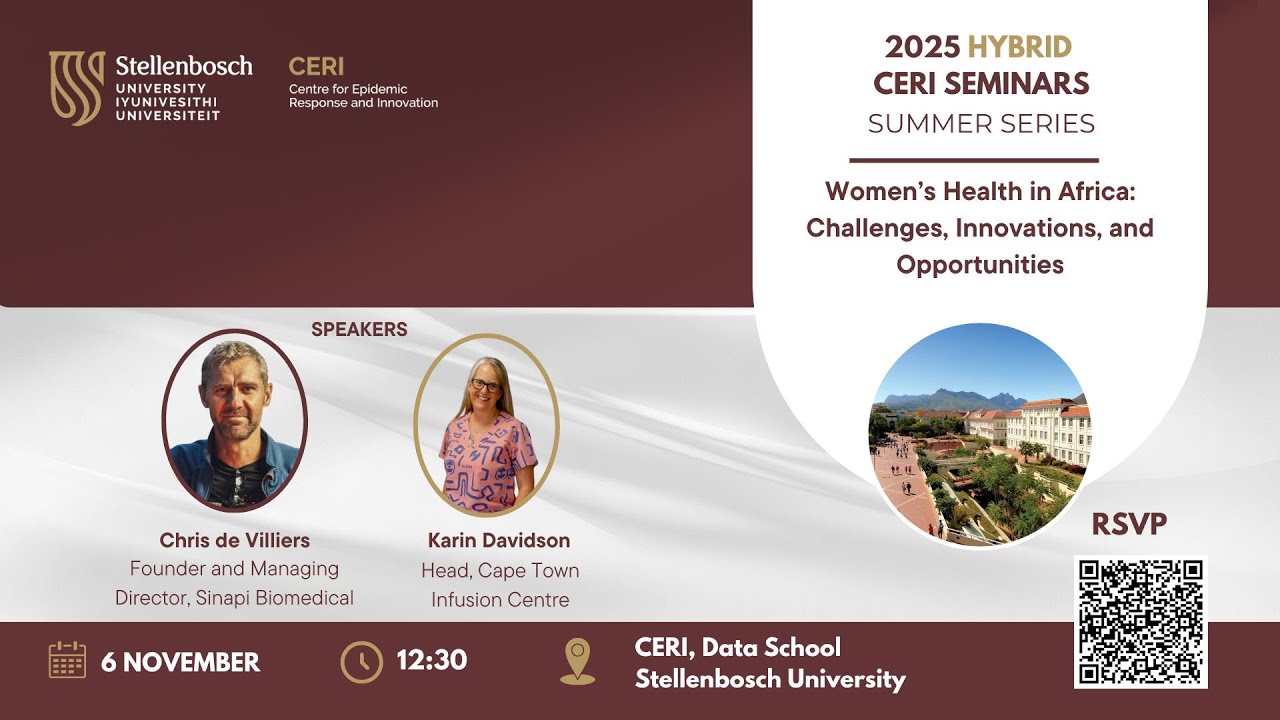
Women’s Health in Africa: Innovations in Anaemia and Postpartum Care | CERI Seminar
Keywords
Summary
148 words
Critical Evaluation
Value of the Information & Strength of the Argument
The seminar provides valuable insights into the burden of anemia and postpartum hemorrhage in Africa, with practical recommendations for intervention. The speakers combine clinical expertise with field experience, making the information actionable. However, the argumentation relies heavily on anecdotal evidence and personal observations rather than systematic data or peer-reviewed studies. The speakers effectively highlight the urgency of the problem and propose feasible solutions, but the lack of rigorous scientific backing limits the strength of the claims.
Scientific Rigor, Source Quality, Title Accuracy
The scientific rigor is moderate. The speakers reference WHO guidelines and statistics, but specific sources are not cited in the video. The title accurately reflects the content, which is well-structured and focused. The seminar is a recording of a live event, so the production quality is basic, but the content is coherent and relevant. No comments were provided for analysis.
151 words
Title / Content Match
The title accurately reflects the content, which focuses on women's health in Africa, specifically anemia and postpartum hemorrhage innovations.
Quality & Reliability
7/10
The seminar features two expert speakers with direct clinical and field experience, providing credible insights into anemia and postpartum hemorrhage in Africa. However, the content is largely anecdotal and lacks rigorous citations or data verification, and the video is a recording of a seminar with limited production quality.
Key Moments
Markers derived by PSI from the transcript: the creator did not define chapters.
- Introduction to the seminar and first speaker, Sr Karin Davidson.
- Definition of anemia and iron deficiency, with global prevalence statistics.
- Impact of anemia on women and children in Africa, including intergenerational effects.
- Challenges in anemia management and the importance of early screening.
- Discussion on oral iron and intravenous iron administration, with practical advice.
- Q&A session on oral iron side effects and prevention strategies.
- Introduction to second speaker, Chris de Villiers, on postpartum hemorrhage.
- Overview of postpartum hemorrhage burden and current challenges.
- Innovations in medical devices for PPH management and implementation.
- Discussion on scaling up innovations and ensuring access in low-resource settings.
Cited Sources
- World Health Organization (WHO) anemia guidelines — Referenced in the talk regarding global anemia prevalence and targets.
- WHO maternal health recommendations — Mentioned in the context of postpartum hemorrhage and maternal mortality.
Concurring Sources
- WHO Global Anaemia Estimates — Provides data on anemia prevalence in women and children, supporting the talk's statistics.
Contribution & Novelties
The seminar provides a practical, field-based perspective on addressing anemia and postpartum hemorrhage in Africa, emphasizing community engagement and point-of-care solutions. It highlights the intergenerational impact of anemia and the need for integrated healthcare approaches.
Pour aller plus loin :
- Iron deficiency anemia - WHO — Official WHO resource on anemia, its causes, and global burden.
- Postpartum hemorrhage - WHO — Fact sheet on PPH, its risk factors, and prevention.
- Sinapi Biomedical — Company website of the second speaker, showcasing innovations in maternal health devices.
85 words
Radar Profile
The radar profile shows high scores in information quantity and quality, reflecting the seminar's comprehensive coverage of the topics. The technical level is moderate, suitable for a mixed audience. The overall reliability is good, but the lack of formal citations and reliance on anecdotal evidence slightly reduces the score.