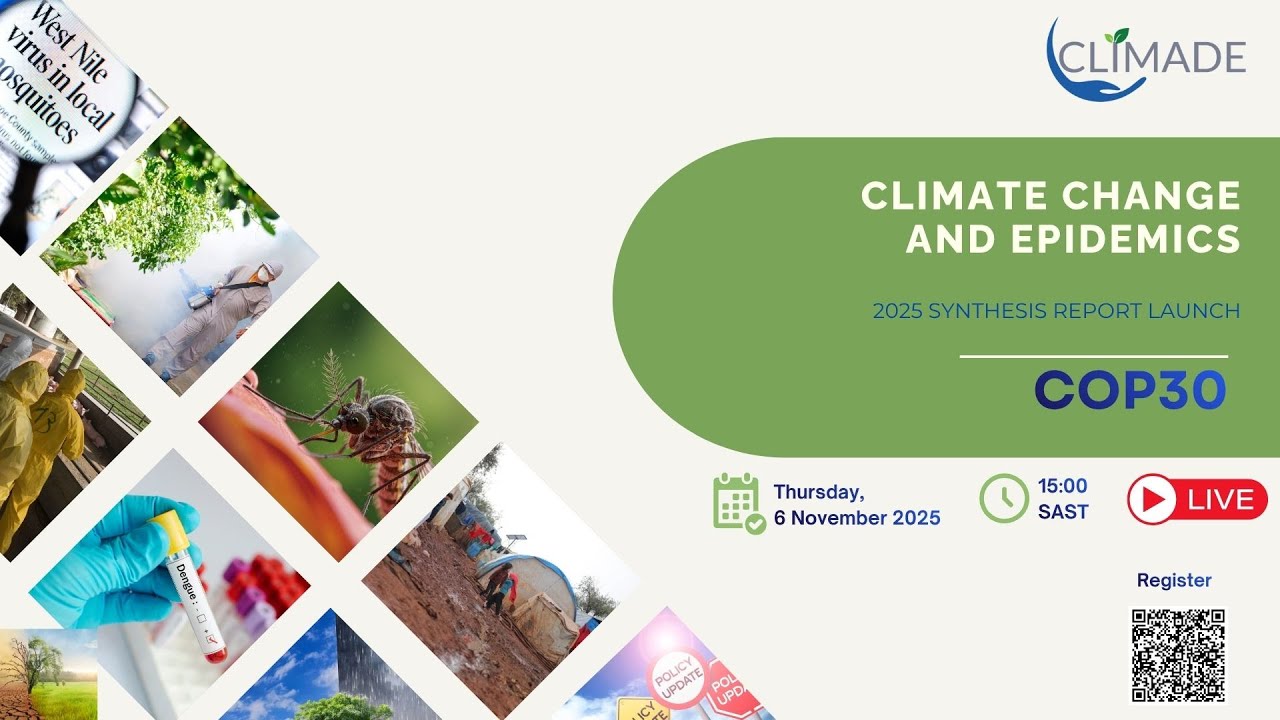
Climate Change and Epidemics Report 2025 COP30: Climate Change as a Public Health Emergency CLIMADE
Keywords
Summary
178 words
Critical Evaluation
Value of the Information & Strength of the Argument
The video provides valuable information on the link between climate change and epidemics, supported by specific examples and data. The argumentation is coherent, presenting four main mechanisms and illustrating each with case studies. The speakers are experts in their fields, lending credibility. However, the presentation is largely a summary of the report, and the evidence is not deeply detailed, relying on assertions rather than in-depth data analysis. The call to action is clear and well-structured, but the scientific evidence could be more rigorously presented.
Scientific Rigor, Source Quality, Title Accuracy
The scientific rigor is moderate. The video references the CLIMADE report and mentions specific studies, but does not provide detailed citations or links to peer-reviewed publications. The sources are not fully verifiable from the video alone. The title accurately reflects the content, and the video is well-structured. The presentation is more of an overview than a detailed scientific analysis, which may limit its rigor for expert audiences.
166 words
Title / Content Match
The title accurately reflects the content, which focuses on the intersection of climate change and epidemics, presented as a public health emergency.
Quality & Reliability
8/10
The video presents a report launch by a consortium of experts, with specific data and case studies, but lacks detailed methodology and peer-review references. The information is credible but not fully verifiable from the video alone.
Key Moments
Markers derived by PSI from the transcript: the creator did not define chapters.
- Introduction by Prof. Tulio de Oliveira, overview of CLIMADE consortium and report launch.
- Discussion on four mechanisms by which climate change amplifies pathogens.
- Example of West Nile virus spread in Europe and Africa.
- Dengue outbreaks in Africa and the role of climate change.
- Pathogen evolution: chikungunya virus evolution and spread.
- Climate migration and its impact on disease spread.
- Call to action: surveillance, reporting, vulnerable populations, and funding.
- Dr. Monica Moya discusses temperature effects on vector-borne diseases.
- Yajna Rampul on pathogen evolution and chikungunya.
- Dr. Desalo Mogus on climate migration in Africa.
Cited Sources
- CLIMADE COP30 Report — The main report being launched, which is the focus of the video.
Concurring Sources
- WHO Climate Change and Health — Supports the claim that climate change affects infectious diseases.
- IPCC Reports — Provides scientific basis for climate change impacts.
Dissenting Sources
- No discordant sources identified — The video presents a consensus view; no conflicting sources were mentioned.
Contribution & Novelties
The video provides a comprehensive overview of the CLIMADE report, highlighting the urgent need to address climate change as a public health emergency. It synthesizes current knowledge on climate-sensitive diseases and offers a framework for action. The novelty lies in the integration of climate data, pathogen evolution, and migration patterns to inform policy.
Pour aller plus loin :
- World Health Organization on Climate Change and Health — Official WHO overview of climate impacts on health.
- European Centre for Disease Prevention and Control on West Nile virus — ECDC page on West Nile virus, relevant to the discussion.
- Nature article on climate change and infectious diseases — A peer-reviewed article on climate change and infectious disease dynamics.
116 words
Radar Profile
The radar profile shows high scores in information quantity and quality, with moderate technical level and reliability. This indicates a well-informed presentation with credible data, but not deeply technical or fully verifiable.
💬 No comments were provided for analysis.