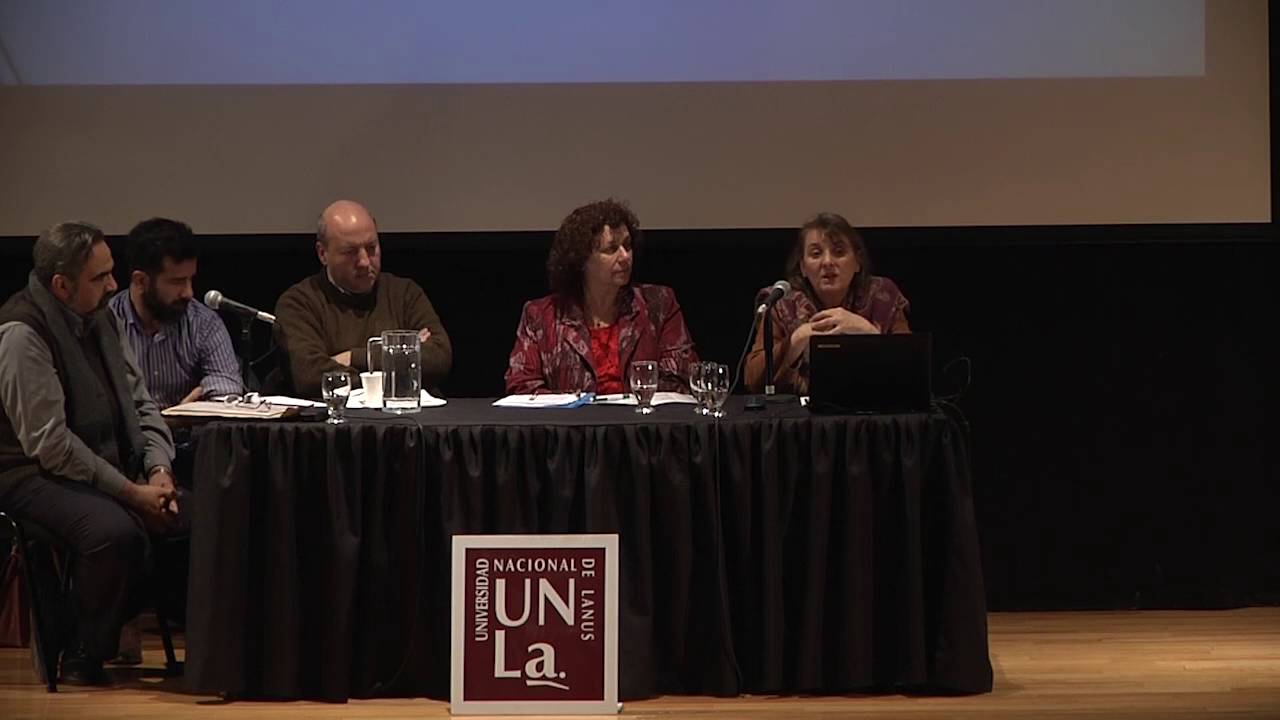
Conferencia Dra. Mabel Bellocchio
Keywords
Summary
167 words
Critical Evaluation
Value of the Information & Strength of the Argument
The presentation offers valuable insights into the challenges of implementing interdisciplinarity in higher education, drawing on the speaker’s extensive experience across many universities. The argument is well-structured, moving from a critique of current practices to concrete proposals and examples. However, the argumentation relies heavily on anecdotal evidence and personal observations rather than systematic research, which weakens its generalizability. The speaker’s proposals, such as shared teaching modules and formative blocks, are innovative but lack detailed implementation strategies and evaluation data.
88 words
Title / Content Match
The title accurately reflects the content, which discusses the transformation of interdisciplinarity from its original scientific context to a pedagogical one, highlighting what is lost in the process.
Quality & Reliability
7/10
The presentation is based on the speaker's extensive experience in higher education and references to established authors (Bunge, Heckhausen) and specific university cases. However, it lacks formal citations and empirical data, relying on anecdotal evidence and personal observations.
Key Moments
Markers derived by PSI from the transcript: the creator did not define chapters.
- Introduction and thanks to organizers
- Presentation of the hypothesis: interdisciplinarity arises spontaneously in science but is lost in pedagogy
- Discussion of problems in Mexican universities: monodisciplinary distribution, excessive number of courses, disconnection from real world
- Proposal of shared teaching modules and formative blocks as solutions
- Reference to Mario Bunge's definition of science and the importance of interaction with other sciences
- Heckhausen's definition of discipline as pedagogical version of science
- Critique of UAM Xochimilco's modular system and lack of teacher collaboration
- Examples of successful interdisciplinary modules at UNAM and Universidad Estatal de Sonora
- Discussion on the need for regulation in research and education, and the influence of economic criteria like PISA
- Q&A session on power, subjectivity, and the case of Darwin
Cited Sources
- Pseudociencia e ideología — Mario Bunge's book referenced for the definition of science
- Heckhausen's work on disciplinarity — Referenced for the definition of discipline as pedagogical version of science
Concurring Sources
- Interdisciplinarity — General concept supporting the need for interdisciplinary approaches.
Dissenting Sources
- Traditional curriculum design — The speaker critiques traditional monodisciplinary curricula, which some may defend for their clarity and structure.
Contribution & Novelties
The presentation offers a critical perspective on the loss of interdisciplinarity in educational settings, proposing practical mechanisms like shared teaching modules and formative blocks. It highlights the gap between scientific practice and pedagogy, and suggests that interdisciplinarity should be intentionally cultivated rather than left to chance.
Pour aller plus loin :
- Interdisciplinarity — Overview of the concept and its applications.
- Curriculum theory — Theoretical foundations for curriculum design.
- Mario Bunge — Philosopher of science whose work on demarcation is referenced.
80 words
Radar Profile
The radar profile shows high scores in quantity of information and quality, but lower in technical level and reliability, reflecting a presentation rich in ideas but lacking in formal rigor and technical depth.