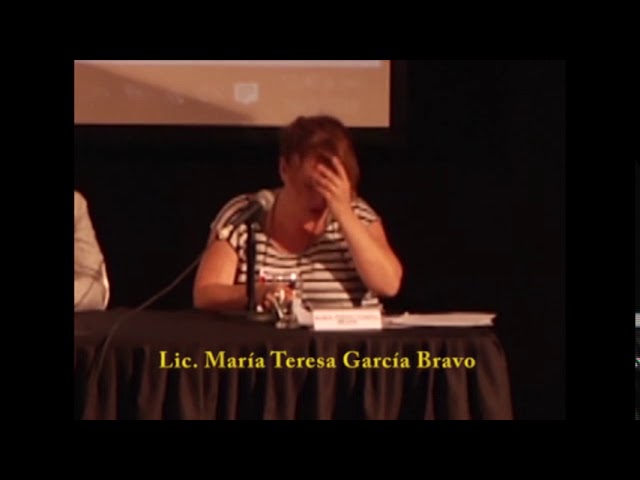
V Congreso Internacional de Epistemología y Metodología / Conferencia María Teresa García Bravo
Keywords
Summary
192 words
Critical Evaluation
Value of the Information & Strength of the Argument
The presentation offers a valuable interdisciplinary perspective, connecting literature, philosophy, and feminist theory. The argument is well-structured, moving from Haraway’s cyborg concept to a detailed analysis of Frankenstein, and finally to contemporary applications. The speaker effectively uses textual evidence and philosophical references to support her claims. However, the argument is largely interpretive and does not engage with potential counterarguments or alternative readings. The reliance on a single theoretical framework (Haraway) may limit the scope of the analysis.
Scientific Rigor, Source Quality, Title Accuracy
The speaker demonstrates scholarly rigor by citing primary sources (Frankenstein, Haraway’s works) and providing historical context. The sources are relevant and appropriately used. The title accurately reflects the content, though it is somewhat generic. The presentation is part of an academic congress, which adds to its credibility. However, the lack of explicit citations for some claims (e.g., historical details) and the absence of a formal bibliography in the talk may be a minor weakness.
166 words
Title / Content Match
The title accurately reflects the content, which is a conference presentation on feminist epistemology and the literary antecedent of Frankenstein.
Quality & Reliability
7/10
The presentation is based on a well-argued interpretation of Mary Shelley's Frankenstein as a precursor to feminist epistemology, drawing on Donna Haraway's work. The speaker demonstrates familiarity with the primary text and relevant philosophical literature, but the argument is primarily interpretive and lacks empirical or systematic verification.
Key Moments
Markers derived by PSI from the transcript: the creator did not define chapters.
- Introduction and context of the talk, mentioning the 200th anniversary of Frankenstein.
- Discussion of Donna Haraway's cyborg concept and its relevance to feminist epistemology.
- Analysis of Mary Shelley's intellectual heritage and the influence of her parents.
- Description of the Villa Diodati ghost-story competition and the origins of Frankenstein.
- Examination of Victor Frankenstein's scientific ambition and the critique of science as a masculine domain.
- Interpretation of the monster as a cyborg and its connection to Haraway's ideas.
- Link to contemporary feminist and transgender theories, particularly Paul B. Preciado's 'Testo Junkie'.
- Conclusion: the monster as a symbol of new subjectivity and resistance.
Cited Sources
- Frankenstein; or, The Modern Prometheus — Primary literary work analyzed in the talk.
- A Cyborg Manifesto — Key theoretical text by Donna Haraway used to frame the argument.
- Simians, Cyborgs, and Women: The Reinvention of Nature — Collection of essays by Donna Haraway referenced in the talk.
- Testo Junkie: Sex, Drugs, and Biopolitics in the Pharmacopornographic Era — Contemporary work by Paul B. Preciado mentioned as an example of body transformation.
- Vindication of the Rights of Woman — Work by Mary Wollstonecraft, Mary Shelley's mother, cited as intellectual background.
Concurring Sources
- A Cyborg Manifesto — Haraway's text supports the cyborg interpretation of the monster.
- Simians, Cyborgs, and Women — Haraway's collection includes essays that align with the talk's arguments.
Dissenting Sources
- Frankenstein as a cautionary tale about science — Some interpretations focus on the dangers of science rather than feminist epistemology, which may contrast with the talk's emphasis.
Contribution & Novelties
The talk provides a novel interpretation of Frankenstein as a precursor to feminist epistemology, bridging literary analysis and philosophical critique. It highlights the relevance of Haraway’s cyborg concept to understanding the monster as a product of scientific intervention. The connection to contemporary transgender theory adds a fresh perspective.
Pour aller plus loin :
- Feminist epistemology — Overview of the field and its key concepts.
- Cyborg theory — Discussion of cyborg theory in cultural and feminist studies.
- Mary Shelley — Biographical context and literary significance.
- Donna Haraway — Profile of the philosopher and her contributions.
- Paul B. Preciado — Information on the philosopher and his work on gender and biopolitics.
109 words
Radar Profile
The radar profile shows high scores in quality of information and reliability, reflecting the scholarly nature of the talk. The moderate score in technical level indicates that the content is accessible but requires some familiarity with feminist theory. The overall balance suggests a well-rounded presentation.
💬 No comments were provided for analysis.