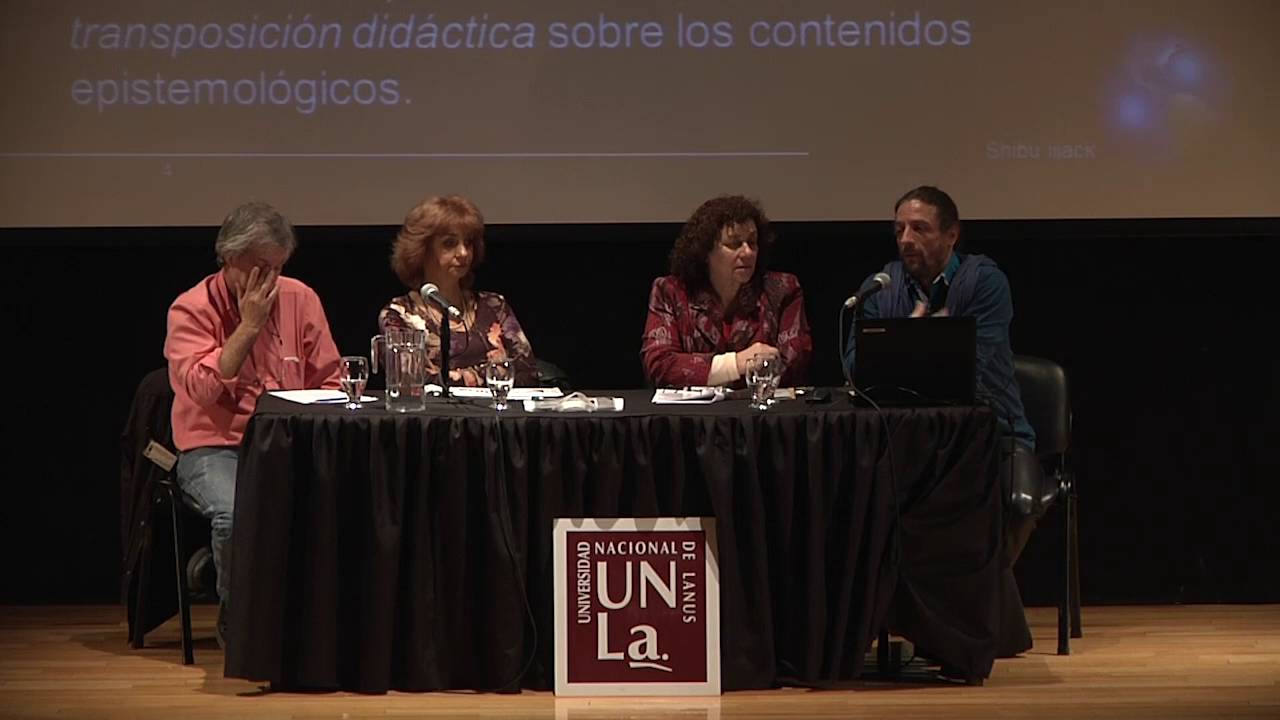
Conferencia Dr. Agustin Aduriz-Bravo
Keywords
Summary
139 words
Critical Evaluation
Value of the Information & Strength of the Argument
The talk provides valuable insights into the field of science education, specifically the integration of NOS into curricula. The argumentation is solid, drawing on established research and personal experience. The speaker effectively builds a case for the importance of metascientific activities, using concrete examples to illustrate his points. He acknowledges the challenges and critiques within the field, demonstrating a nuanced understanding. The proposal is innovative and well-grounded in existing literature, making a significant contribution to the discussion on how to teach NOS.
Scientific Rigor, Source Quality, Title Accuracy
The speaker demonstrates scientific rigor by referencing key authors and works in the field, such as Matthews, Duschl, and the International Handbook of Research in History, Philosophy and Science Teaching. He also mentions specific curriculum documents and his own publications. The title accurately reflects the content, as it is a conference lecture on this topic. The talk is well-structured and the sources are used appropriately to support the argumentation. However, as a conference presentation, it lacks the formal citation style of a written paper, but the references are clear enough for further exploration.
190 words
Title / Content Match
The title accurately reflects the content: a conference lecture by Dr. Aduriz-Bravo on metacognitive activities in science education.
Quality & Reliability
8/10
The speaker is a recognized expert in science education and epistemology, presenting a well-structured proposal grounded in established literature. The talk references key authors and works, though it is a conference presentation rather than a peer-reviewed publication.
Key Moments
Markers derived by PSI from the transcript: the creator did not define chapters.
- Introduction and thanks to organizers
- Proposal of 'school metascientific activity' as an analogy to 'school scientific activity'
- Discussion of the NOS component in science curricula and its history
- Review of the HPS field and key authors like Matthews and Duschl
- Critique of common pitfalls in NOS teaching, such as stereotyping logical positivism
- Presentation of the 'school metascientific activity' model and its components
- Examples of classroom activities: logic with cats, vampires and porphyria, iatrochemistry dialogue
- More activities: the Golem metaphor and the shipwrecked modeler
- Conclusion and call for defending public universities
Cited Sources
- International Handbook of Research in History, Philosophy and Science Teaching — Mentioned as a major publication in the field, edited by Michael Matthews, published by Springer in 2014.
- Nature of Science (NOS) literature — Referenced throughout the talk as a key concept in science education.
- Works by Michael Matthews — Referenced for his contributions to the HPS field.
- Works by Richard Duschl — Referenced for his critique of the mutual exclusion between science education and epistemology.
- Works by Norman Lederman — Referenced for his proposal of teaching 'tenets' about NOS.
Concurring Sources
- International Handbook of Research in History, Philosophy and Science Teaching — The speaker references this handbook as a comprehensive resource supporting the integration of HPS in science education.
Contribution & Novelties
The talk offers a novel proposal for integrating metascientific activities into science classrooms, drawing on the analogy with school scientific activities. It provides concrete examples of activities that can be used to engage students in thinking about the nature of science. The talk also highlights the importance of teacher training in this area.
Pour aller plus loin :
- Nature of Science in Science Education — Overview of the concept and its role in education.
- History and Philosophy of Science — Background on the interdisciplinary field.
- Michael Matthews (academic) — Information on a key scholar in the field.
97 words
Radar Profile
The radar profile shows high scores in information quantity, quality, technical level, and reliability, indicating a well-rounded and credible presentation. The talk is rich in content and technically sound, with a strong foundation in research.
💬 No comments were provided for analysis.