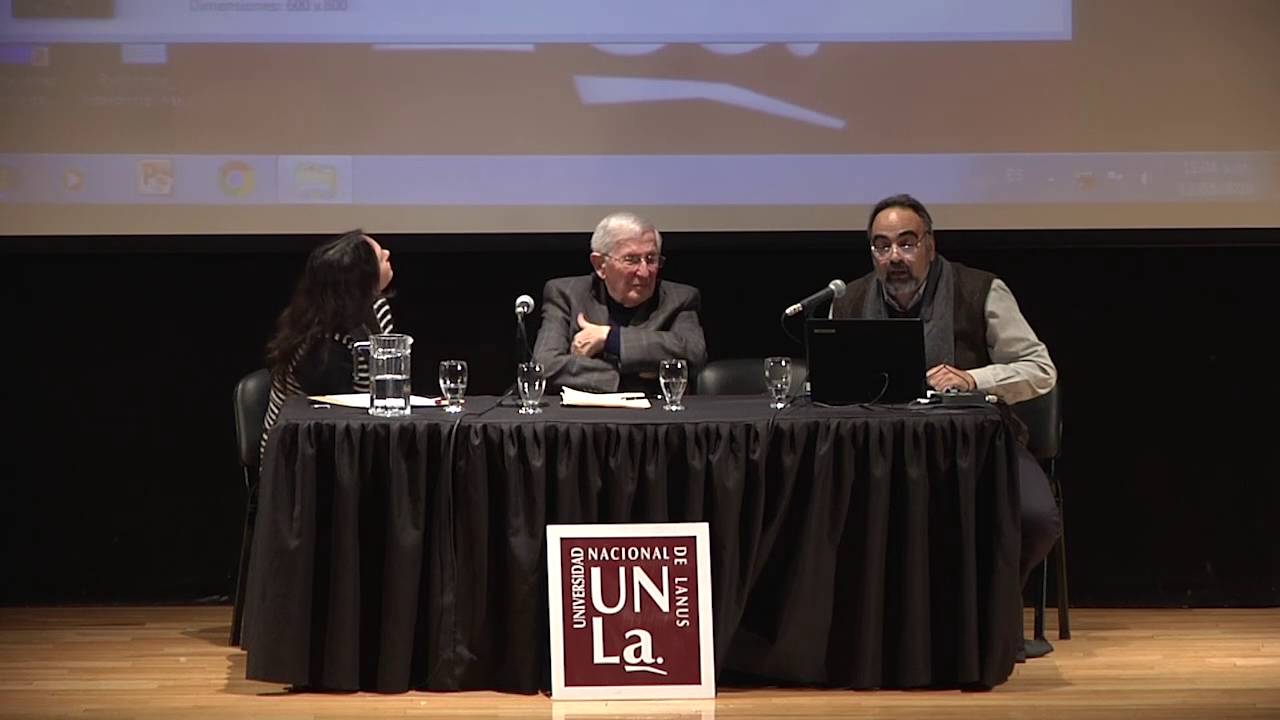
Conferencia del Dr. Andres Mombru
Keywords
Summary
170 words
Critical Evaluation
Value of the Information & Strength of the Argument
The talk provides a valuable philosophical critique of the positivist separation of science from metaphysics and values. The argument is well-structured, drawing on historical examples (Descartes, Hegel, Kant) and contemporary thinkers (Habermas, Hartman, Varsavsky). The speaker effectively argues that science is not value-neutral and that metaphysical assumptions underlie scientific practice. The argumentation is solid, though it is an opinion piece rather than an empirical study. The speaker’s passion and rhetorical style enhance the delivery, but the argument could benefit from more concrete examples of how a ‘sober metaphysics’ would change scientific practice.
Scientific Rigor, Source Quality, Title Accuracy
The talk is rigorous in its use of philosophical sources, citing Descartes, Hegel, Kant, Habermas, Hartman, and Varsavsky, among others. The sources are appropriate for the topic and are used to support the argument. The title accurately reflects the content, which traces the evolution from episteme to epistemology and questions the place of metaphysics. The talk is part of an academic congress, lending it credibility. However, as a conference talk, it does not provide detailed citations or a bibliography, and some references are mentioned in passing. The video description provides context but no additional sources.
202 words
Title / Content Match
The title 'De la episteme a la epistemología ¿y dónde está la metafísica?' accurately reflects the content, which traces the historical shift from episteme to epistemology and questions the place of metaphysics.
Quality & Reliability
7/10
The speaker is a doctor (likely PhD) and the talk is part of an international epistemology congress, indicating academic expertise. The content is a philosophical argument, not empirical research, so it relies on reasoned argument and references to philosophers. The video is a recording of a live conference, with some audio issues and informal language, but the argument is coherent and well-structured.
Key Moments
Markers derived by PSI from the transcript: the creator did not define chapters.
- Introduction and opening remarks about university's social role.
- Discussion of the video about marginalized youth and the killing of a football player.
- Contrast between knowledge and wisdom, and the need for education to address existential questions.
- Reading of a child's story to illustrate the importance of security and warmth.
- Definition of science as a strategy for human installation in the world, alongside myth and religion.
- Historical analysis of the separation of reason from emotion, from Greek philosophy to modern science.
- Critique of positivist rejection of metaphysics and the role of values in science.
- Discussion of the term 'epistemology' and its metaphysical origins.
- Call for a 'sober metaphysics' and a science oriented towards emancipation.
- Conclusion and beginning of Q&A session.
Cited Sources
- IV Congreso Internacional de Epistemología — The video itself is a recording of a conference presentation.
Concurring Sources
- The Structure of Scientific Revolutions — Kuhn's work challenges the view of science as purely objective and value-neutral, aligning with the talk's critique.
Dissenting Sources
- The Scientific Outlook — Bertrand Russell's defense of scientific rationality might be seen as opposing the call to reintegrate metaphysics.
Contribution & Novelties
The talk offers a critical perspective on the separation of science from metaphysics, arguing that this separation is not only historically contingent but also detrimental to the pursuit of wisdom and human flourishing. It synthesizes ideas from various philosophers to propose a ‘sober metaphysics’ that acknowledges the limits of science while retaining the importance of metaphysical questions. The talk is original in its integration of social concerns with epistemological critique.
Pour aller plus loin :
- Epistemology — Overview of the field and its history.
- Metaphysics — Overview of metaphysical questions and their relevance.
- Philosophy of science — Discussion of the relationship between science and philosophy.
- Habermas’s theory of communicative action — Relevant to the separation of spheres of value.
- Oscar Varsavsky — Argentine scientist and philosopher who critiqued the social role of science.
133 words
Radar Profile
The radar profile shows high scores in quantity and quality of information, reflecting the dense philosophical content and the speaker's expertise. The technical level is moderate, indicating that the talk is accessible to a general academic audience. The global reliability is high, given the academic context and coherent argumentation.