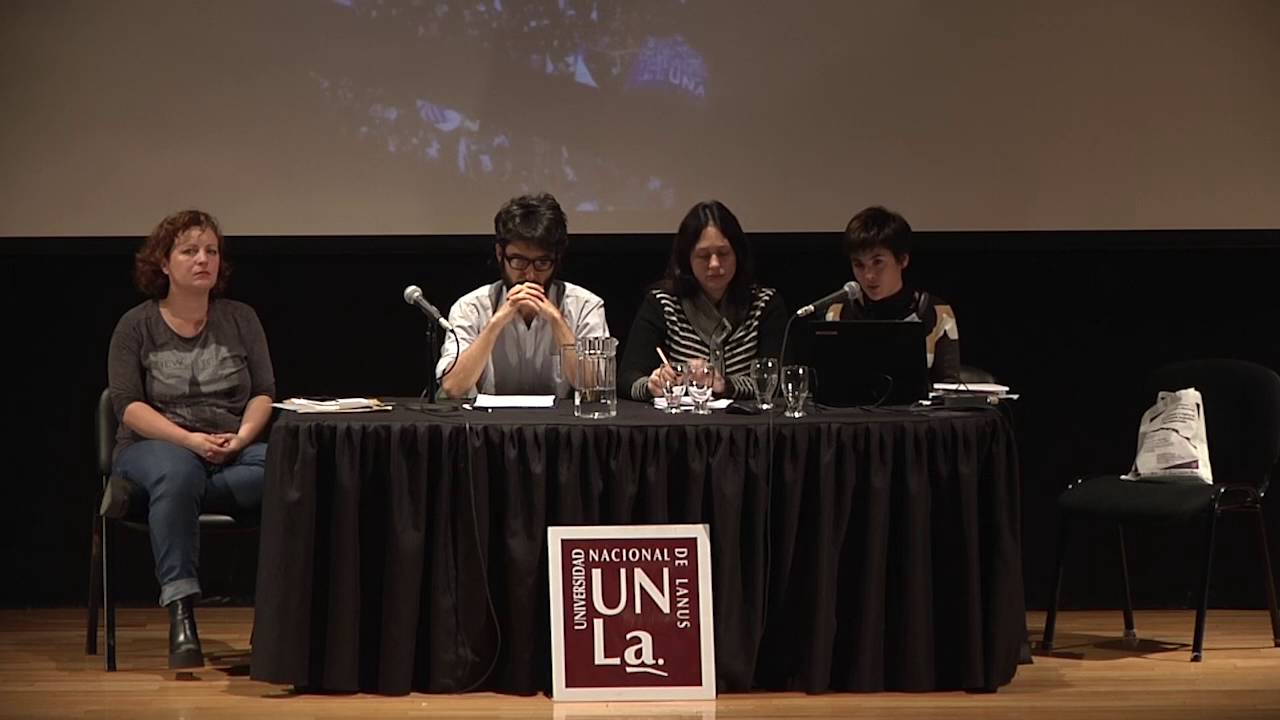
Conferencia de la Prof. Oriana Cosso
Keywords
Summary
135 words
Critical Evaluation
Value of the Information & Strength of the Argument
The lecture provides a valuable critical perspective on the intersection of philosophy, economics, and politics. It offers a coherent argument that the fact-value dichotomy has collapsed, and uses this to critique technocracy and neoliberalism. The argumentation is solid in its philosophical grounding, referencing key thinkers and concepts. However, it is more of an opinion piece than a systematic analysis, and lacks empirical evidence or detailed case studies. The speaker’s passion and rhetorical style are effective, but the argument could be strengthened with more concrete examples and citations.
Scientific Rigor, Source Quality, Title Accuracy
The lecture demonstrates a good command of philosophical literature, referencing Putnam, Foucault, Marí, and others. However, the sources are not systematically cited, and some references are vague. The title is too generic and does not accurately reflect the specific content. The lecture is more of a philosophical essay than a rigorous scientific presentation. The speaker does not provide a clear methodology or evidence for her claims, which limits the scientific rigor. The adequacy between title and content is weak, as the title suggests a broad conference, but the content is highly specific.
194 words
Title / Content Match
The title is generic and does not reflect the specific content, which focuses on technocracy, neoliberalism, and the fact-value dichotomy.
Quality & Reliability
6/10
The lecture is an expert opinion with philosophical arguments, but lacks systematic citations and empirical evidence. It references several thinkers (Putnam, Foucault, Marí, etc.) but without detailed verification.
Key Moments
Markers derived by PSI from the transcript: the creator did not define chapters.
- Introduction to the topic: technocracy, neoliberalism, and the collapse of the fact-value dichotomy.
- Discussion on the institutionalization of the fact-value dichotomy and its effects.
- Reference to Hilary Putnam and the concept of the 'fact-value dichotomy'.
- Critique of technocratic management as 'contemporary thaumaturgy'.
- Discussion on Bernard Marí's open letter to economists and the critique of economic orthodoxy.
- Analysis of the neoliberal subjectivity and the concept of 'entrepreneur of oneself'.
- Call to denaturalize social institutions and assume science as social practice.
- Conclusion: the need for ethical commitment and political engagement.
Cited Sources
- Truth and Reason in History — Referenced as a book by Hilary Putnam (1988) that discusses the fact-value dichotomy.
- Open Letter to Economists Who Take Us for Idiots — Referenced as a book by Bernard Marí, critiquing economists and economic theory.
Concurring Sources
- The Fact/Value Dichotomy and Its Critics — General philosophical literature supporting the critique of the dichotomy.
Dissenting Sources
- Defenders of the Fact-Value Dichotomy — Some philosophers argue that the dichotomy is still valid, contrary to the lecture's claim.
Contribution & Novelties
The lecture offers a critical perspective on the fact-value dichotomy, linking it to technocracy and neoliberalism. It provides a philosophical argument that this dichotomy has collapsed and that this has political implications. The speaker integrates various thinkers to support her argument, offering a synthesis that is relevant for critical theory and philosophy of science.
Pour aller plus loin :
- Fact-value distinction — Overview of the philosophical concept.
- Hilary Putnam — Philosopher who discussed the fact-value dichotomy.
- Neoliberalism — Economic and political ideology critiqued in the lecture.
86 words
Radar Profile
The radar profile shows moderate scores across all dimensions, with a slightly higher level of technicality and information quality, but lower reliability due to the lack of systematic citations. This suggests a lecture that is intellectually stimulating but not rigorously sourced.