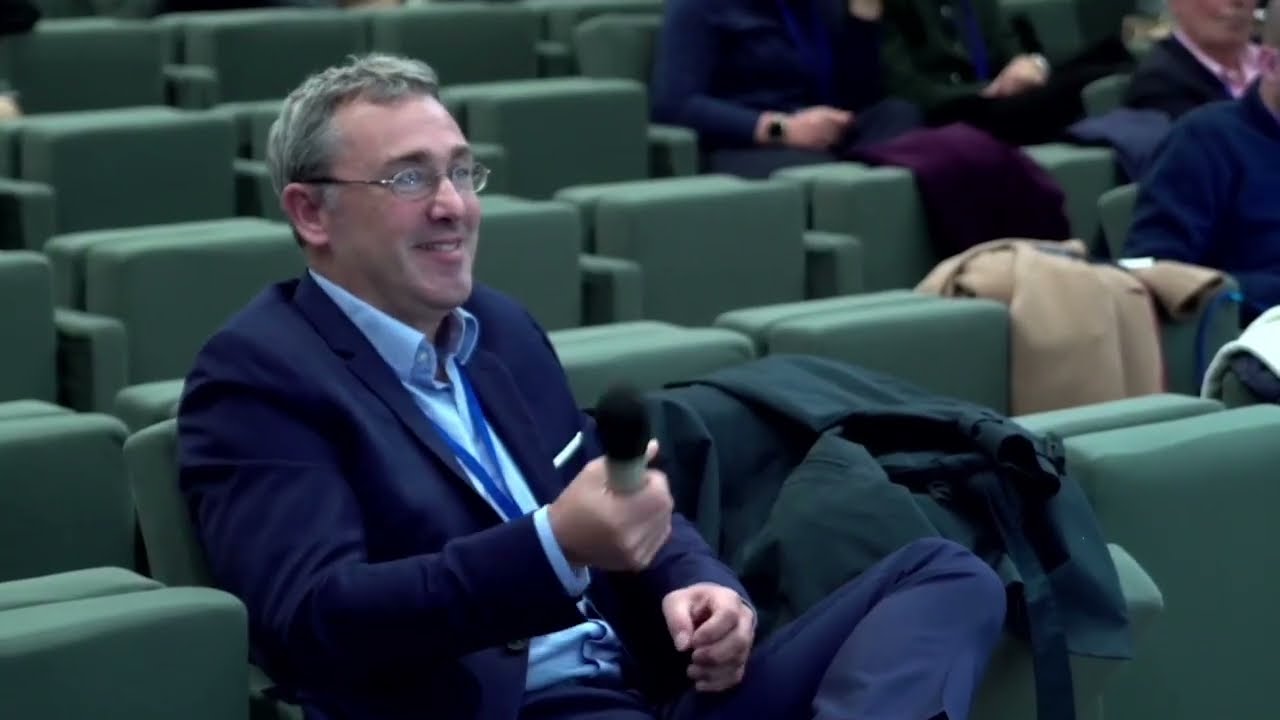
Table ronde – Sénescence cellulaire et maladies rares du foie : échanges et applications – JR 2025
Keywords
Summary
166 words
Critical Evaluation
Value of the Information & Strength of the Argument
The discussion provides valuable insights into the current state of research on cellular senescence in rare liver diseases. The speakers present their own findings and engage in critical thinking about the implications of their work. They acknowledge the limitations of existing studies, such as the controversy surrounding senescent stellate cells and the uncertainty about the efficacy of senolytics. The argumentation is generally solid, based on scientific reasoning and evidence from preclinical models, though some points are speculative, as the speakers themselves admit. The exchange is intellectually honest, with speakers openly discussing uncertainties and the need for further research.
Scientific Rigor, Source Quality, Title Accuracy
The scientific rigor is moderate: the speakers are experts, but they do not cite specific studies or provide references during the discussion. The title accurately reflects the content, which is a round table discussion. The description mentions the FILFOIE network and its role, but no external sources are provided. The discussion is based on ongoing research and personal expertise, which limits the verifiability of the claims. The adequacy between title and content is good, as the video indeed presents a round table on senescence and rare liver diseases.
201 words
Title / Content Match
The title accurately reflects the content: a round table discussion on cellular senescence and rare liver diseases.
Quality & Reliability
7/10
The discussion is led by experts in the field, providing credible insights into cellular senescence in rare liver diseases. However, the content is largely based on ongoing research and personal opinions, with limited peer-reviewed references directly cited.
Key Moments
Markers derived by PSI from the transcript: the creator did not define chapters.
- Introduction and first question about triggers of senescence
- Discussion on different senescence profiles in MVPS and telomeropathies
- Question about senolytics in colitis models and cell death
- Discussion on the role of senescence in biliary atresia and residual bile ducts
- Question about the overlap between senescence and inflammation, and whether senescence is cause or consequence
- Discussion on senolytic therapies and cancer risk, and the potential of senomorphics
- Final questions about senescent stellate cells and the extrapolation of replicative senescence models to stress-induced senescence
Cited Sources
- FILFOIE website — Mentioned in the video description as the official website of the rare liver disease network.
Concurring Sources
- FILFOIE website — Official network website, consistent with the video's context.
Contribution & Novelties
The video provides a unique perspective on cellular senescence in rare liver diseases, particularly in pediatric contexts. It highlights the complexity of senescence as a double-edged sword, with both beneficial and detrimental effects depending on the cellular context. The discussion offers insights into the challenges of developing senolytic therapies, including the risk of cancer and the need for context-specific approaches. The speakers share unpublished data and ongoing research, which adds value for researchers in the field.
Pour aller plus loin :
- Cellular senescence — Overview of the biological process.
- Senolytics — Drugs that selectively induce apoptosis of senescent cells.
- Biliary atresia — A rare liver disease discussed in the video.
- Telomere — Relevant to replicative senescence.
116 words
Radar Profile
The radar profile shows high scores in technical level and information quality, reflecting the expert-level discussion. The quantity of information is moderate, and the global reliability is good but not excellent due to the lack of cited sources. The video is highly specialized, making it less accessible to a general audience.