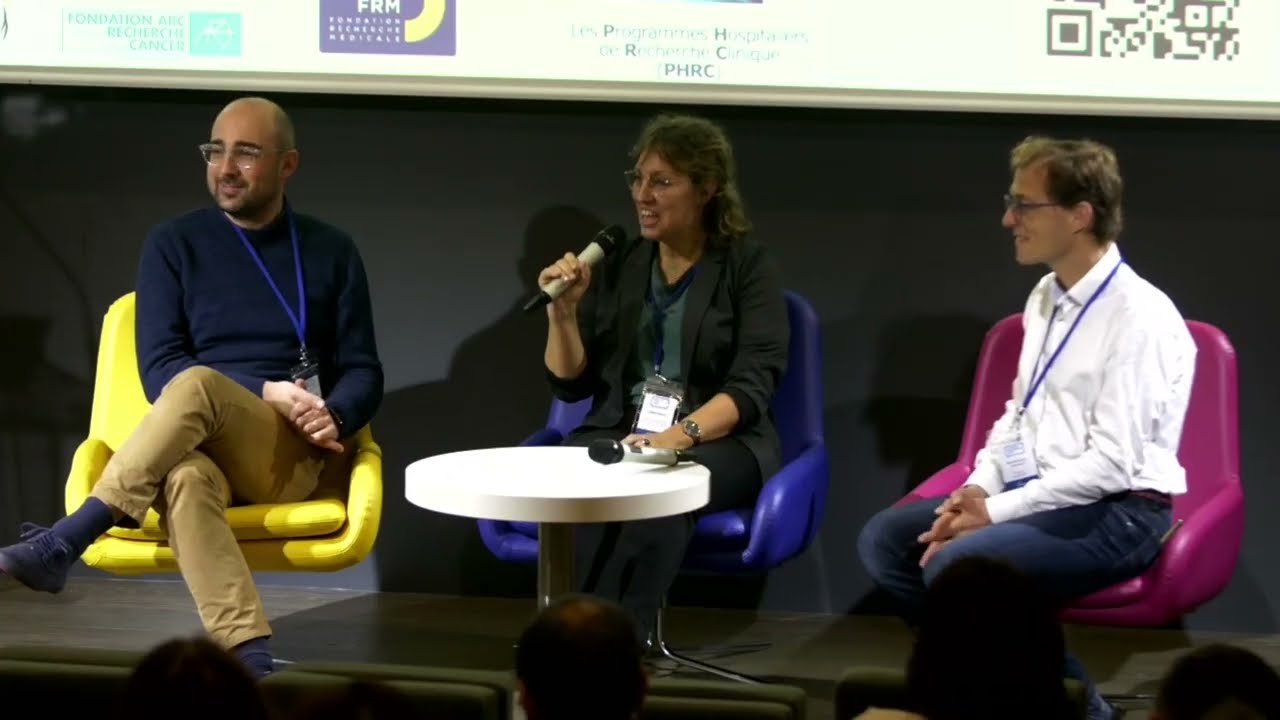
Table ronde – Actualités des réseaux FILFOIE : échanges et discussions – JR 2025
Keywords
Summary
136 words
Critical Evaluation
Value of the Information & Strength of the Argument
The video provides valuable insights into the current state of research on rare liver diseases, particularly PSVD and cholangiopathies. The experts present nuanced arguments about diagnostic thresholds, the utility of liver biopsy, and the challenges of translating findings from animal models to human disease. The discussion is well-structured, with experts building on each other’s points and addressing questions from the audience. The argumentation is solid, grounded in clinical experience and ongoing research efforts, though it lacks formal citations or data presentation.
Scientific Rigor, Source Quality, Title Accuracy
The video demonstrates scientific rigor through the expertise of the speakers and their references to ongoing international collaborations and upcoming meetings. However, no specific sources are cited, and the content is based on expert opinion rather than published literature. The title accurately reflects the content, which is a roundtable discussion on network updates. The absence of formal references limits the verifiability of the claims, but the expertise of the speakers lends credibility.
168 words
Title / Content Match
The title accurately reflects the content: a roundtable discussion on recent developments in FILFOIE networks.
Quality & Reliability
7/10
The video features expert discussions among specialists in rare liver diseases, providing up-to-date insights on diagnostic criteria and research. However, it is a roundtable discussion without formal citations or peer-reviewed references, and the content is highly specialized, limiting its general accessibility.
Key Moments
Markers derived by PSI from the transcript: the creator did not define chapters.
- Introduction and start of the roundtable discussion.
- Discussion on PSVD diagnostic criteria and the role of liver biopsy.
- Question about the sensitivity of diagnostic thresholds and inclusion in clinical trials.
- Discussion on the international nomenclature meeting and efforts to standardize histopathological criteria.
- Question about the number of portal tracts in biopsy evaluation.
- Discussion on sclerosing cholangitis, inflammatory infiltrate, and animal models.
- Question about necroptosis inhibitors and potential therapeutic applications.
Cited Sources
- FILFOIE official website — Mentioned in the video description as the official site for the FILFOIE network.
Concurring Sources
- FILFOIE official website — Official network site providing information on rare liver diseases and research activities.
Contribution & Novelties
The video offers an expert perspective on the latest developments in rare liver disease research, particularly the ongoing efforts to refine diagnostic criteria for PSVD and the challenges of studying cholangiopathies. It highlights the importance of international collaboration and the need for better biomarkers and therapeutic targets.
Pour aller plus loin :
- Porto-sinusoidal vascular disease — Overview of PSVD, its diagnosis, and management.
- Necroptosis — A form of programmed cell death discussed in the context of cholangiopathies.
- Organoids — 3D cell cultures used to model diseases, mentioned as promising tools for research.
92 words
Radar Profile
The radar profile shows high scores in technical level and information quality, reflecting the specialized and expert nature of the content. The lower scores in quantity of information and global reliability suggest that while the discussion is insightful, it is limited in scope and lacks formal references.