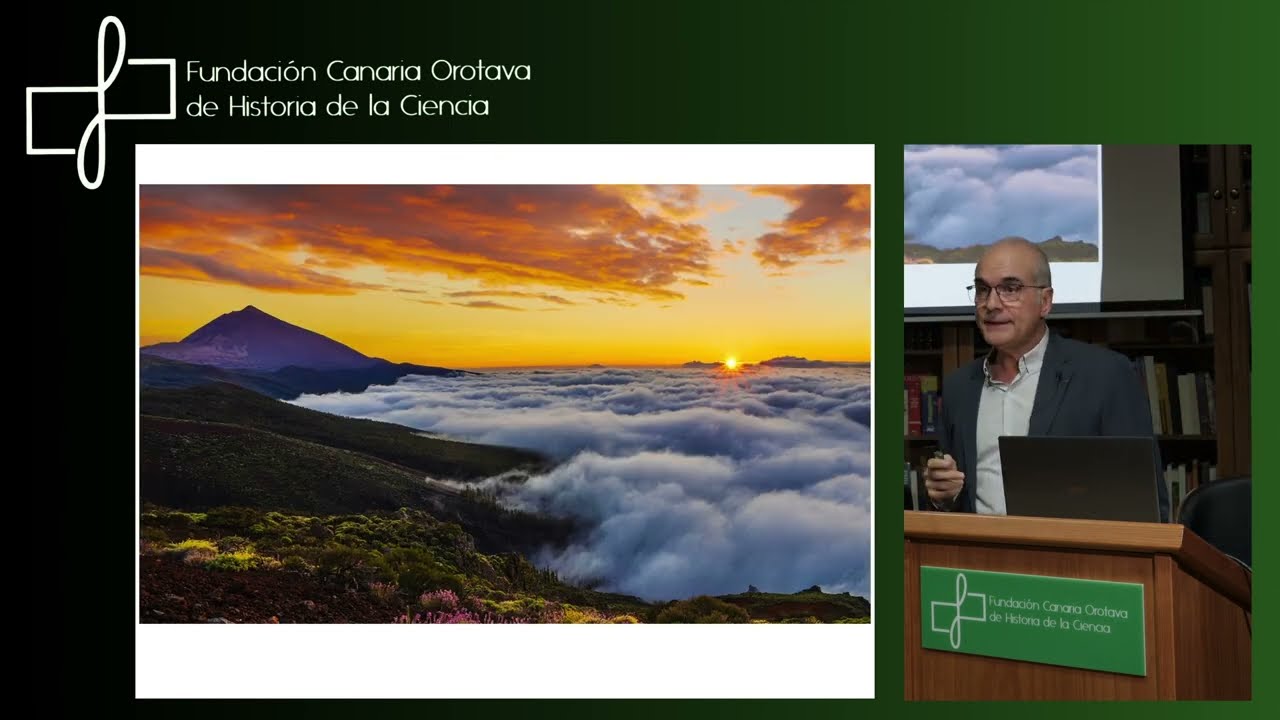
La tormenta de Tenerife de 1826 en el contexto de cambio climático
Keywords
Summary
199 words
Critical Evaluation
The presentation offers a comprehensive and well-structured overview of climate change impacts on the Canary Islands, with a specific focus on the historical 1826 storm. The speaker, an expert in the field, relies on official data and scientific publications, lending credibility to the information. The argumentation is solid, systematically moving from general climate trends to specific local impacts, and then to the historical event. The use of concrete examples, such as the 2002 flood and the increase in tropical nights, makes the content tangible. However, the talk is a conference presentation, so it lacks the depth of a peer-reviewed article, and some claims are based on the speaker’s own research, which is not fully detailed. The title is accurate, as the storm is indeed placed within the climate change context. The speaker does not explicitly address counterarguments, but the data presented are robust. The sources cited are primarily institutional and scientific, but the talk does not provide direct references to specific studies, which limits verifiability. Overall, the content is highly informative and scientifically sound, though it could benefit from more explicit citations. The audience’s comments are not provided, so no analysis of public reception is possible.
196 words
Title / Content Match
The title accurately reflects the content, which focuses on the 1826 Tenerife storm within the context of climate change, as the speaker discusses both the historical event and current climate trends.
Quality & Reliability
8/10
The speaker is a university professor and director of a chair on disaster risk reduction, using official data and scientific publications. The content is well-structured, references specific studies and datasets, and is presented in a formal academic setting. However, the talk is a conference presentation without peer review, and some claims are based on personal research not fully detailed.
Key Moments
Markers derived by PSI from the transcript: the creator did not define chapters.
- Introduction and apology for delay; mention of 199th anniversary of 1826 storm and COP30.
- Overview of talk structure: context, 1826 storm, tropical disturbances, and conclusions.
- Discussion of climate change context and main threats to Canary Islands.
- Analysis of rainfall variability and drought trends using Izaña observatory data.
- Future precipitation projections indicating significant reductions, especially in high mountains.
- Extreme rainfall events and flood risk, including the 2002 Santa Cruz flood and modeling of Barranco de Santos.
- Heat waves and rising temperatures, with emphasis on nighttime warming and tropical nights.
- Increase in tropical nights across different altitudes, with dramatic increases in highlands.
- Contextualization of the 1826 storm within climate history and its significance.
- Discussion of tropical disturbances and their potential behavior under climate change.
- Conclusions and ideas for adaptation and resilience.
Cited Sources
- Fundación Orotava de Historia de la Ciencia — Organizing institution of the conference.
- XXXV Seminario Orotava — Related seminar series.
- Jornadas sobre el exilio republicano español en México — Another event by the foundation.
Concurring Sources
- IPCC Sixth Assessment Report — Global climate change projections align with the speaker's statements on future precipitation and temperature trends.
- AEMET - Agencia Estatal de Meteorología — Official Spanish meteorological data support the observed trends in heat waves and rainfall.
Contribution & Novelties
The talk provides a comprehensive synthesis of climate change impacts on the Canary Islands, integrating historical analysis of the 1826 storm with current scientific data. It highlights the unique vulnerability of the archipelago, particularly the increase in tropical nights and extreme rainfall events. The speaker’s own research on potential flood discharges in ravines adds novel quantitative insights.
Pour aller plus loin :
- IPCC Sixth Assessment Report — Provides the latest scientific consensus on climate change, relevant to the global context.
- AEMET - Agencia Estatal de Meteorología — Official Spanish meteorological agency, source of climate data and studies.
- International Journal of Climatology — Journal where the study on heat waves was published, relevant for detailed climate research.
116 words
Radar Profile
The radar profile shows high scores across all dimensions, indicating a well-balanced and reliable presentation. The talk excels in information quantity and quality, with a solid technical level and high reliability, making it a valuable resource for understanding climate change impacts on the Canary Islands.