Artistas españoles proscritos. España "patria de origen", México "patria de destino"-Fundoro
Keywords
Summary
175 words
Critical Evaluation
The lecture provides a valuable overview of the Spanish Republican exile in Mexico, focusing on the artistic community. The speaker demonstrates deep knowledge of the subject, drawing on specific historical events and personal anecdotes. The argumentation is coherent, tracing the historical context of Mexican asylum, the political and cultural climate, and the specific challenges for artists. The reliance on a single book (‘Arte en España, 1939-1975’) as the main source for the number of exiled artists is a limitation, as it may not be the most current or comprehensive source. However, the speaker acknowledges this and notes the difficulty in obtaining precise data. The talk is well-structured, but it is a lecture rather than a formal academic presentation, so it lacks rigorous citations and a critical analysis of sources. The discussion of muralism is insightful, explaining its ideological underpinnings and its impact on the reception of Spanish artists. The speaker also touches on the broader social and political dynamics, such as the Cristero War and the anti-Spanish sentiment in Mexico. Overall, the lecture is informative and engaging, but it would benefit from more explicit references to primary sources and a more critical examination of the data presented. The title accurately reflects the content, and the talk successfully conveys the idea of Mexico as a ‘patria de destino’ for these artists.
220 words
Title / Content Match
The title accurately reflects the content, which focuses on Spanish artists exiled in Mexico and their reception.
Quality & Reliability
7/10
The speaker is an expert in the field, and the talk is based on a specific book source ('Arte en España, 1939-1975' by Marzo and Mayayo) and other historical references. However, the talk is a lecture without formal citations or peer-reviewed sources, and some data (e.g., number of exiles) is presented with uncertainty.
Key Moments
Markers derived by PSI from the transcript: the creator did not define chapters.
- Introduction and context of the lecture series.
- Discussion of earlier waves of Spanish exiles in Mexico.
- Mexico as the main destination for Republican exiles, with Cárdenas's support.
- Statistics on the number of exiles and their professional backgrounds.
- Introduction to the artistic context in Mexico, including muralism.
- Challenges for Spanish artists in adapting to muralism and local tastes.
- Examples of artists who collaborated on mural projects.
- Discussion of the cultural and ideological frictions between exiles and Mexican society.
- Conclusion: many artists never returned to Spain.
Cited Sources
- Arte en España, 1939-1975 — Main source for the number of exiled artists and their characteristics.
- José Luis Abellán — Historian who coined the phrase 'España, patria de origen, México, patria de destino'.
- Ascensión Hernández de León-Portilla — Historian quoted on the experience of exile in Mexico.
Concurring Sources
- Exilio republicano español — General information on the Republican exile, consistent with the talk.
Contribution & Novelties
The lecture provides a detailed account of the challenges faced by Spanish artists in Mexico, emphasizing the clash between European easel painting and the dominant muralist movement. It offers a nuanced view of the cultural and political dynamics, including the anti-Spanish sentiment in Mexico. The speaker’s personal anecdotes and local references add a unique perspective.
Pour aller plus loin :
- Exilio republicano español — Overview of the Republican exile.
- Muralismo mexicano — Context on the muralist movement.
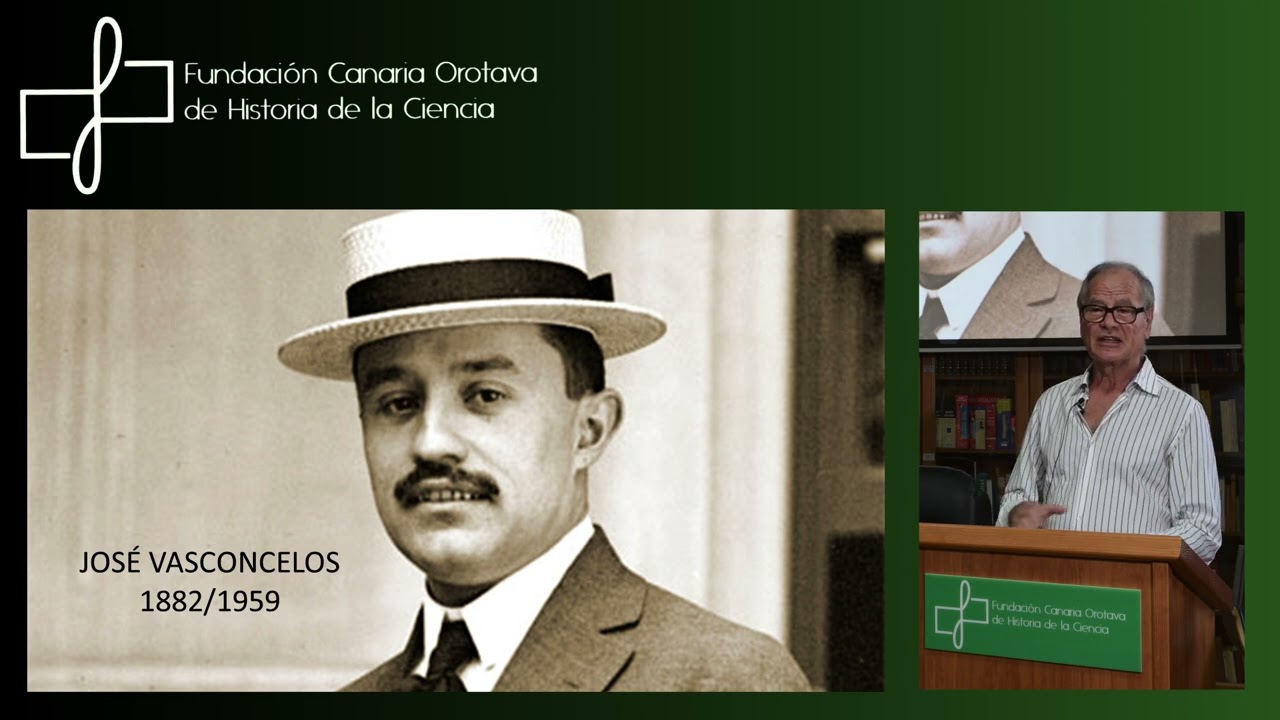
- José Vasconcelos — Key figure in promoting muralism and Mexican cultural identity.
89 words
Radar Profile
The profile shows high scores in information quantity and quality, with moderate technical level and reliability. This indicates a well-informed lecture that is accessible to a general audience but relies on a limited number of sources.