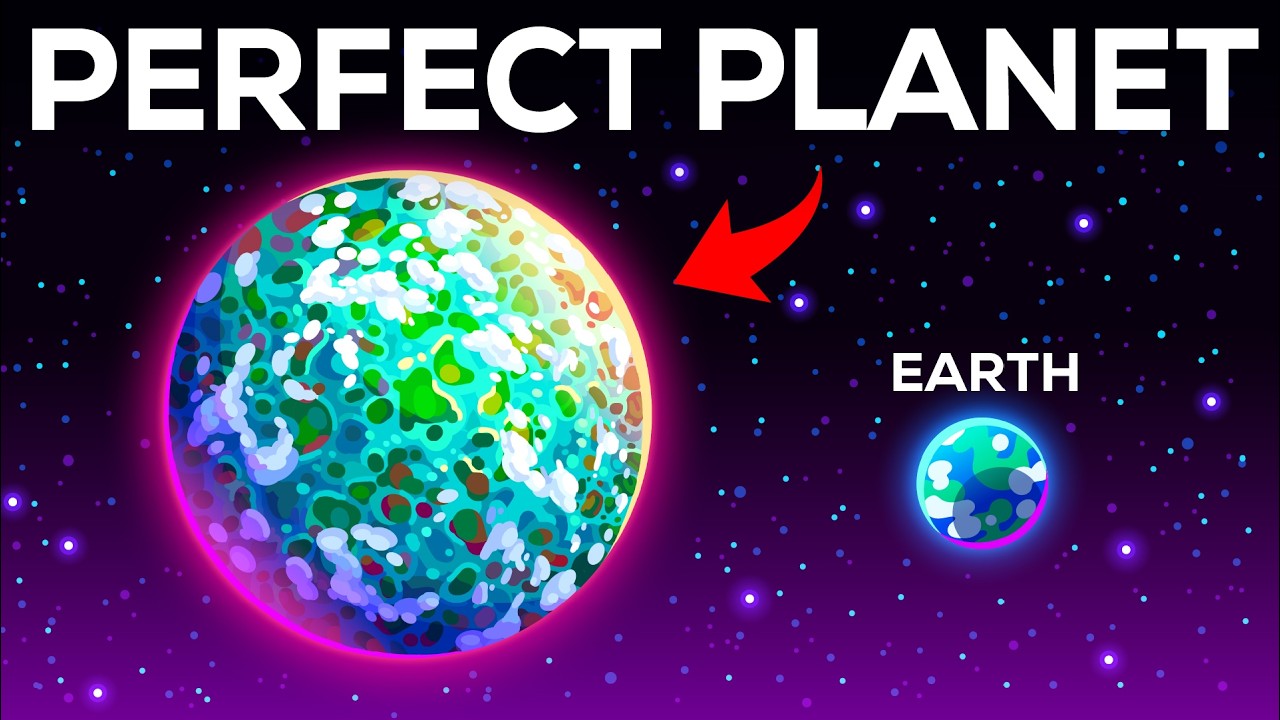
Why Earth Sucks Compared to the Planet Hestia
Keywords
Summary
216 words
Critical Evaluation
The video is a high-quality science communication piece that effectively explains complex concepts in astrobiology and exoplanet research. It presents a well-structured thought experiment, building Hestia step by step from star to surface to atmosphere to oceans, each time justifying the choices with scientific reasoning. The information is largely accurate and up-to-date, drawing on current knowledge about habitable zones, plate tectonics, and the requirements for life. The video does not overstate certainty; it clearly labels Hestia as a hypothetical construct based on current scientific understanding. The sources cited in the description are credible, including scientific papers and reviews, which adds to the video’s reliability. However, the video is speculative, and some claims, such as the exact conditions for superhabitability, are still debated in the scientific community. The video also includes a sponsored segment for Brilliant, which is clearly disclosed and does not detract from the scientific content. The argumentation is solid, but it could be strengthened by acknowledging more explicitly the uncertainties and alternative viewpoints. The title is catchy and matches the content, though it may be slightly sensationalist. Overall, the video is an excellent educational resource that stimulates curiosity and critical thinking about our place in the universe.
199 words
Title / Content Match
The title is catchy and matches the content, which compares Earth to a hypothetical superhabitable planet.
Quality & Reliability
8/10
The video is well-researched, citing scientific sources in the description, and presents plausible scientific concepts about exoplanets and superhabitability. However, it is a speculative thought experiment, not a peer-reviewed study, and includes a sponsored segment.
Key Moments
Markers derived by PSI from the transcript: the creator did not define chapters.
- Introduction: Earth is not perfect, but could there be a better planet?
- The perfect star: orange dwarfs are more stable and longer-lived than our Sun.
- Hestia's size and gravity: 1.3 times Earth's radius, 20% more gravity.
- Magnetic field and plate tectonics: essential for protecting the atmosphere and recycling nutrients.
- The perfect land: archipelago world with many islands and coastlines.
- The best possible sky: thick atmosphere allows for giant flying creatures.
- The best possible oceans: shallow seas with sunlight reaching the floor.
- Intelligent life on Hestia and concluding thoughts.
Cited Sources
- Sources & further reading — The video's description links to a Google Sites page with sources and further reading.
- Brilliant — Sponsor link for the educational platform Brilliant.
- Star Birds on Steam — Link to the video game Star Birds, mentioned in the video.
Concurring Sources
- Superhabitable planets — The concept of superhabitable planets is discussed in scientific literature, supporting the video's premise.
- Orange dwarfs and habitability — Orange dwarfs (K-type stars) are considered good candidates for hosting habitable planets.
Dissenting Sources
- Potential drawbacks of superhabitable planets — Some scientists argue that superhabitable planets may have challenges such as high gravity making spaceflight difficult, or that biodiversity may be limited by other factors.
External References
Contribution & Novelties
The video presents a comprehensive and engaging thought experiment on superhabitable exoplanets, synthesizing current scientific knowledge into a coherent hypothetical world. It goes beyond simple habitability to explore what an ideal planet for life might look like, considering factors such as star type, plate tectonics, land distribution, atmosphere, and ocean depth. The video’s originality lies in its holistic approach and its ability to make complex astrobiological concepts accessible to a broad audience.
Pour aller plus loin :
- Superhabitable planet - Wikipedia — Overview of the concept of superhabitable planets.
- Habitable zone - Wikipedia — Explanation of the circumstellar habitable zone.
- Plate tectonics - Wikipedia — The role of plate tectonics in planetary habitability.
113 words
Radar Profile
The radar profile shows high scores in quantity and quality of information, with moderate technical level and reliability. This indicates a well-researched and informative video that is accessible to a general audience, though it is speculative in nature.
💬 The comments are predominantly positive and enthusiastic, with many viewers expressing amusement and engagement with the hypothetical planet Hestia. Some comments playfully defend Earth, while others appreciate the scientific depth. Overall, the sentiment is very positive.