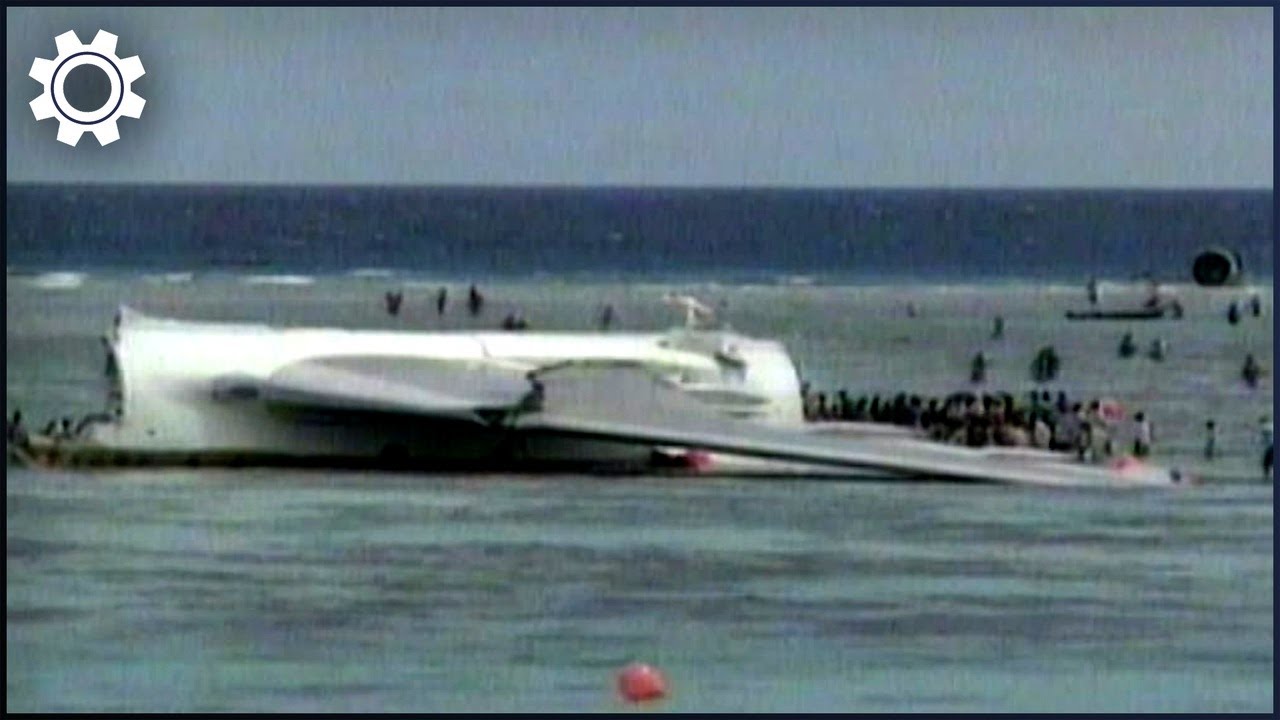
How Air Transat Flight 236 Survived the Atlantic With No Engines
Keywords
Summary
147 words
Critical Evaluation
Value of the Information & Strength of the Argument
The documentary provides valuable insights into aviation safety, human factors, and emergency procedures. It effectively uses survivor testimonies and expert commentary to build a compelling narrative. The argumentation is solid, presenting known facts and standard procedures, though it lacks direct interviews with the pilots and investigators, which would have strengthened the analysis. The reconstruction of events is plausible and well-supported by available evidence.
Scientific Rigor, Source Quality, Title Accuracy
The documentary demonstrates scientific rigor by basing its narrative on known facts and expert opinions. It references standard emergency procedures and includes survivor accounts, which adds credibility. However, the lack of direct interviews with the pilots and official investigators is a limitation. The title accurately reflects the content, focusing on the survival and technical aspects. The sources cited are not explicitly listed, but the documentary appears to draw from official investigation reports and expert knowledge.
153 words
Title / Content Match
The title accurately reflects the content, focusing on the survival and technical aspects of the incident.
Quality & Reliability
7/10
The documentary is based on known facts, expert commentary, and survivor accounts, but lacks direct interviews with the pilots and investigators. It reconstructs events with standard procedures, which is generally reliable but not primary-source verified.
Key Moments
Markers derived by PSI from the transcript: the creator did not define chapters.
- Introduction to the incident and the stakes.
- First warning signs: oil temperature and pressure anomalies.
- Fuel imbalance warning and decision to crossfeed.
- Discovery of fuel leak and declaration of emergency.
- Both engines fail; the plane becomes a glider.
- Preparation for ditching and passenger reactions.
- Final approach and landing at Lajes Field.
Contribution & Novelties
The documentary offers a detailed reconstruction of the Air Transat 236 incident, emphasizing the human and technical aspects. It highlights the importance of crew resource management and the potential pitfalls of over-reliance on automated systems. The narrative is engaging and informative, making it a valuable educational resource for aviation enthusiasts and professionals.
Pour aller plus loin :
- Air Transat Flight 236 - Wikipedia — Comprehensive overview of the incident.
- Crew Resource Management - Wikipedia — Key concept in aviation safety.
- Gliding - Wikipedia — Principles of unpowered flight.
88 words
Radar Profile
The radar profile shows high scores in information quantity and quality, with moderate technical depth and reliability. This indicates a well-researched documentary that is accessible to a general audience while providing substantial detail.