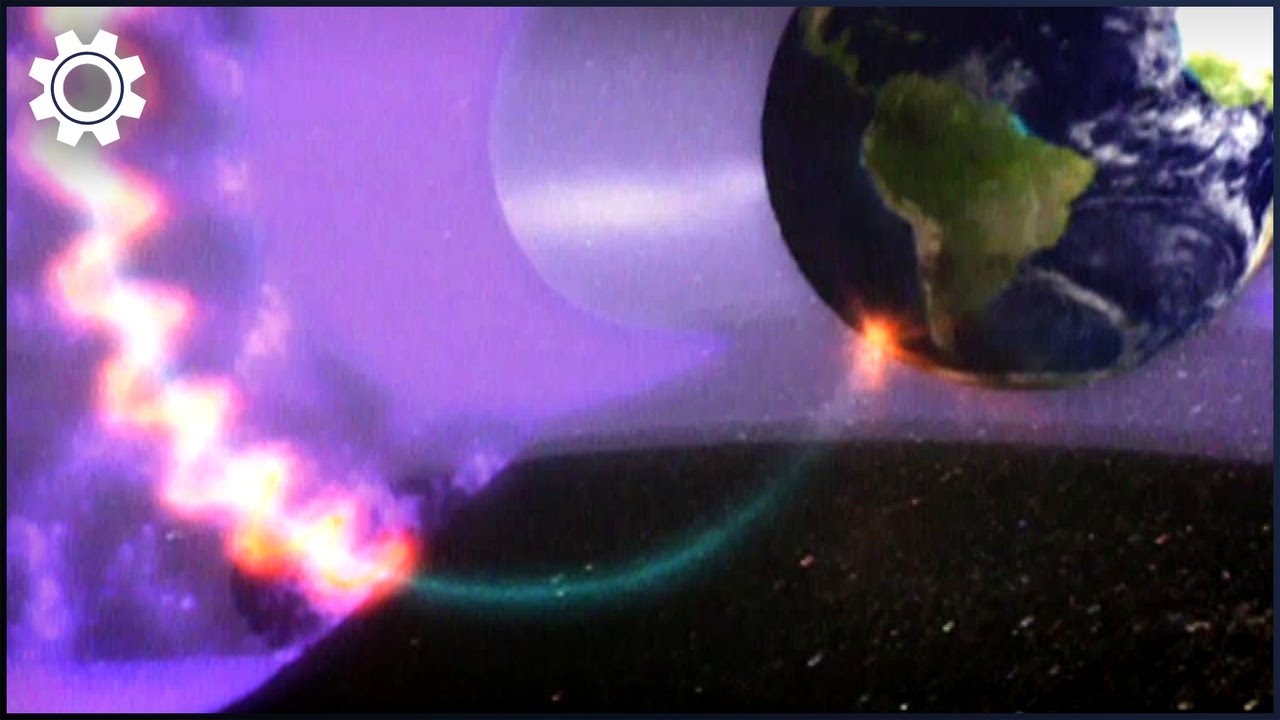
The Putter That Saved Michael Utley: Lightning's Deadly Secrets
Keywords
Summary
131 words
Critical Evaluation
Value of the Information & Strength of the Argument
The documentary provides substantial value by combining a compelling personal survival story with a broad overview of lightning science. It effectively explains complex concepts like the electrical breakdown of air and the role of cosmic rays in a way that is accessible to a general audience. The argumentation is generally solid, with experts presenting evidence and hypotheses, but it sometimes blurs the line between established fact and speculation, particularly regarding ball lightning and cosmic ray triggering. The inclusion of multiple expert perspectives strengthens the overall credibility, though some claims, such as the potential for ball lightning as an energy source, are presented without sufficient critical scrutiny.
Scientific Rigor, Source Quality, Title Accuracy
The documentary features interviews with recognized experts in lightning research, including Dr. Mary Ann Cooper, Dr. Joe Dwyer, and Dr. Graeme Hubler, which lends scientific authority. However, it does not provide direct citations to specific studies or papers, relying instead on the authority of the interviewees. The title accurately reflects the content, focusing on Utley’s survival and the broader scientific investigation. The documentary’s production quality is high, with clear explanations and visual aids, but the lack of explicit source references limits its utility for academic purposes. The title is well-aligned with the content, and the documentary does not overpromise or mislead.
222 words
Title / Content Match
The title accurately reflects the content, focusing on Michael Utley's survival story and the scientific exploration of lightning's dangers and mysteries.
Quality & Reliability
8/10
The documentary presents a balanced mix of expert interviews, scientific demonstrations, and historical accounts, with a clear separation between established facts and speculative theories. The main weakness is the lack of direct citations to peer-reviewed studies, though the involvement of recognized researchers (e.g., Dr. Mary Ann Cooper, Dr. Joe Dwyer) lends credibility.
Key Moments
Markers derived by PSI from the transcript: the creator did not define chapters.
- Introduction to lightning's power and frequency.
- Michael Utley's story: the golf course strike and immediate aftermath.
- Medical effects of lightning on the body: cardiac arrest, neurological damage, and Lichtenberg marks.
- Functional MRI study of a lightning survivor's brain activity.
- Demonstration at Lightning Technologies: recreating the strike on a mannequin with a putter and sweat.
- Investigation of lightning initiation: Darwin storms and the search for the trigger.
- Rocket-triggered lightning experiments and the discovery of X-ray bursts.
- Ball lightning: eyewitness accounts, theories, and the Eastern Airlines incident.
- Sprites, blue jets, and elves: high-altitude phenomena captured on camera.
- NASA's Jim Green discusses lightning's role in space weather and satellite protection.
Cited Sources
- Lightning Injury Research Program at University of Illinois — Dr. Mary Ann Cooper's research on lightning injuries.
- Florida Institute of Technology - Dr. Joe Dwyer — Research on lightning initiation and cosmic rays.
- Lightning Technologies Inc. — High-voltage testing of lightning protection systems.
- NASA - Jim Green — Discussion on lightning and space weather.
Concurring Sources
- National Weather Service - Lightning Safety — Confirms the dangers of lightning and safety recommendations.
- CDC - Lightning Strike Victims — Provides statistics and medical information on lightning injuries.
Dissenting Sources
- Scientific American - Ball Lightning — Some theories presented in the documentary, such as ball lightning being plasma, are debated; this source offers alternative explanations.
Contribution & Novelties
The documentary offers a comprehensive and engaging overview of lightning science, blending personal narrative with expert insights. It highlights recent research on cosmic ray triggering and the use of functional MRI to understand neurological effects, providing a fresh perspective on a well-known phenomenon. The inclusion of rare phenomena like ball lightning and sprites adds depth, though the treatment of these topics is more descriptive than analytical.
Pour aller plus loin :
- Lightning - Wikipedia — General overview of lightning physics and types.
- Ball lightning - Wikipedia — Detailed discussion of ball lightning observations and theories.
- Sprites (lightning) - Wikipedia — Information on high-altitude electrical discharges.
- Cosmic ray - Wikipedia — Background on cosmic rays and their potential role in lightning initiation.
- Functional magnetic resonance imaging - Wikipedia — Explanation of fMRI technology used in the documentary.
136 words
Radar Profile
The radar profile shows high scores in information quantity and quality, indicating a content-rich documentary with credible expert input. The technical level is moderate, making it accessible to a general audience while still covering advanced concepts. Overall, the documentary is well-balanced, with a slight emphasis on narrative over rigorous scientific detail.
💬 No comments were provided for analysis.