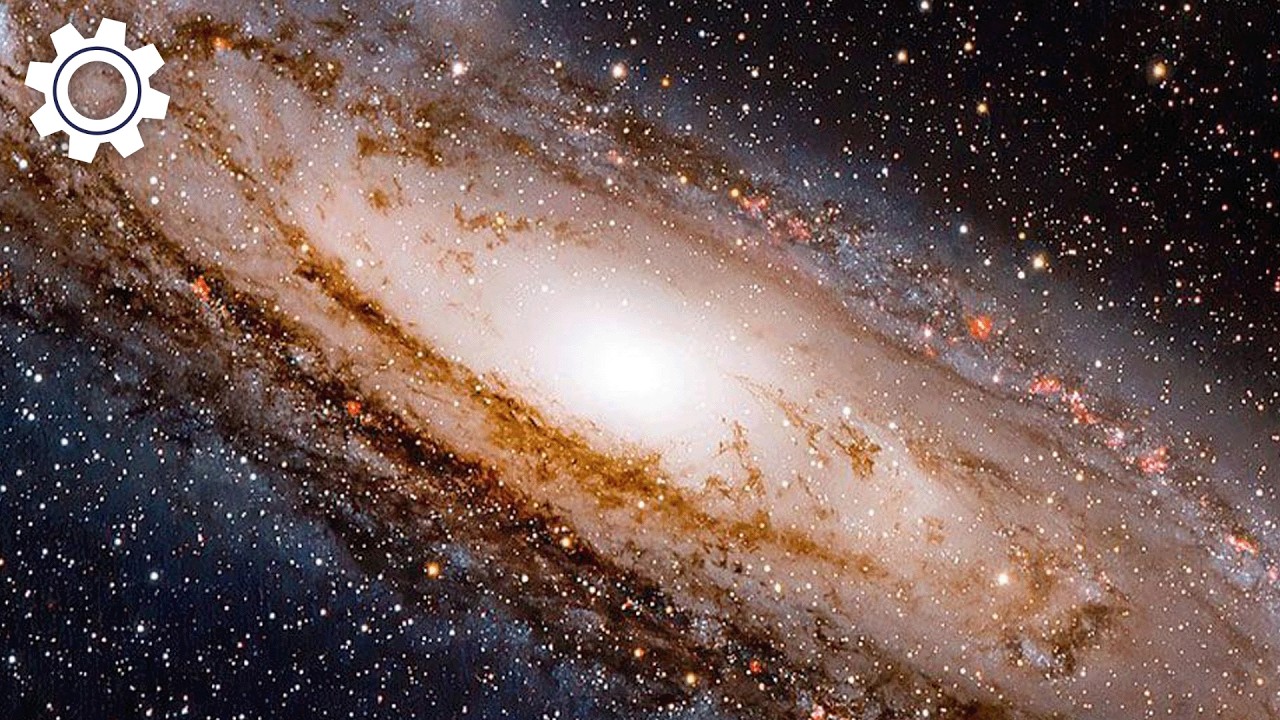
Understanding the Impossible Scale of our Universe
Keywords
Summary
144 words
Critical Evaluation
Value of the Information & Strength of the Argument
The documentary provides a broad overview of cosmological concepts, but its value is limited by a lack of depth and critical analysis. It presents speculative ideas such as the multiverse and nested universes without substantial evidence or discussion of alternative viewpoints. The argumentation is largely anecdotal and relies on emotional appeals to awe and wonder rather than rigorous scientific reasoning. While it includes interviews with experts, their statements are often brief and lack detailed explanation. The documentary succeeds in conveying the scale of the universe and the philosophical questions it raises, but it fails to provide a solid scientific foundation or to critically examine the theories presented.
Scientific Rigor, Source Quality, Title Accuracy
The documentary lacks rigorous scientific rigor, as it does not cite specific studies or provide references for the claims made. The sources are primarily the interviewed scientists, but their statements are not backed by detailed data or citations. The title accurately reflects the content, which focuses on the scale of the universe. However, the content is more philosophical and speculative than scientifically rigorous, and it does not adequately address the complexities of the topics. The lack of citations and the reliance on unverified theories significantly reduce the scientific credibility of the documentary.
214 words
Title / Content Match
The title accurately reflects the content, which explores the vast scales of the universe, from the observable horizon to the Planck length.
Quality & Reliability
5/10
The documentary presents speculative and philosophical ideas about the scale of the universe, including multiverse and nesting doll concepts, without rigorous scientific evidence or citations. It features interviews with scientists but lacks depth and critical analysis. The content is more inspirational than educational, with limited factual accuracy and reliance on unverified theories.
Key Moments
Markers derived by PSI from the transcript: the creator did not define chapters.
- Introduction to the universe's scale and the questions it raises.
- Discussion on the feeling of awe when looking at the stars.
- Explanation of the Hubble Deep Field and the vast number of galaxies.
- Comparison of the number of stars to grains of sand on Earth.
- Introduction to the concept of the observable universe and its radius.
- Discussion on the scale of the solar system and interstellar distances.
- Exploration of galaxy clusters and the idea of dark matter.
- Introduction to the concept of nested universes and Russian nesting dolls.
- Discussion on fractals and self-similarity across scales.
- Exploration of the Planck length and the quantization of space-time.
Cited Sources
- History Hit membership — Promotional link for additional documentaries.
Concurring Sources
- Hubble Deep Field — The documentary mentions the Hubble Deep Field, which revealed thousands of galaxies in a small patch of sky.
Dissenting Sources
- Scientific consensus on multiverse — The documentary presents the multiverse as a plausible idea, but many physicists consider it speculative and not yet supported by evidence.
Contribution & Novelties
The documentary offers a visually engaging and philosophical perspective on the scale of the universe, but it does not present new scientific findings. Its originality lies in its use of analogies like nesting dolls and fractals to make abstract concepts more accessible. However, the content is largely a compilation of existing ideas without novel contributions.
Pour aller plus loin :
- Observable universe — Provides a detailed overview of the observable universe’s size and structure.
- Planck length — Explains the concept of the smallest measurable length in physics.
- Multiverse — Discusses various multiverse theories and their scientific basis.
- Fractal — Introduces the mathematical concept of fractals and their properties.
- Russian nesting doll — Cultural reference used in the documentary to illustrate nested structures.
122 words
Radar Profile
The radar profile shows low scores across all dimensions, indicating a documentary that is visually appealing but scientifically weak. The low reliability and information quality scores reflect the lack of rigorous sources and speculative content.
💬 Mixed to negative: Many comments criticize the loud background music and audio editing, while others express awe and appreciation for the content. Overall, the sentiment is balanced with a slight negative lean due to technical issues.