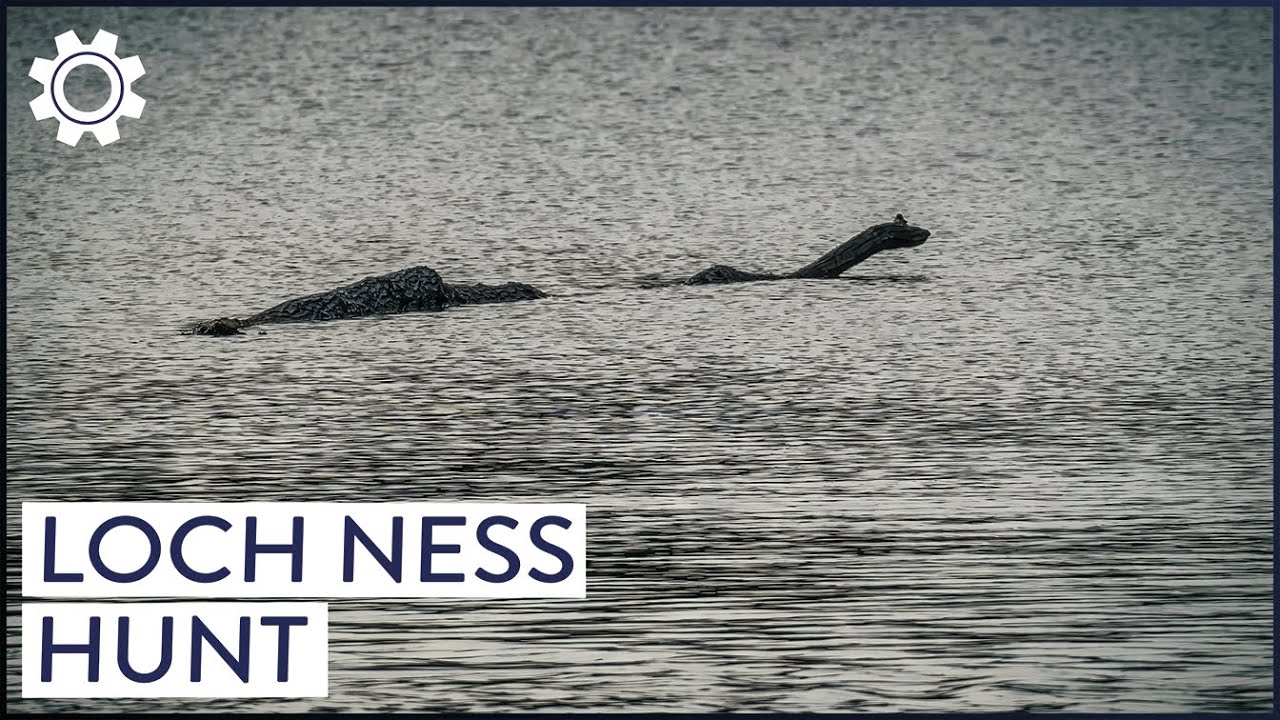
The Loch Ness Project: Hunting For A Legend In The Murky Depths
Keywords
Summary
130 words
Critical Evaluation
Value of the Information & Strength of the Argument
The documentary provides valuable insights into the scientific investigation of the Loch Ness Monster, presenting a balanced view that weighs evidence for and against its existence. It effectively uses expert interviews and scientific methods, such as sonar surveys and food chain analysis, to debunk common myths. The argumentation is solid, systematically addressing each piece of evidence and offering rational explanations. However, some segments rely on anecdotal accounts and lack rigorous scientific scrutiny, which weakens the overall argument.
Scientific Rigor, Source Quality, Title Accuracy
The documentary demonstrates scientific rigor by consulting experts in relevant fields and using empirical data. It cites specific studies and historical records, though not all sources are explicitly named. The title accurately reflects the content, focusing on the Loch Ness Project’s investigations. The documentary maintains a skeptical yet open-minded tone, which enhances its credibility. However, the lack of direct citations for some claims and the occasional dramatic presentation may reduce its scientific authority.
165 words
Title / Content Match
The title accurately reflects the content, focusing on the Loch Ness Project's scientific search for the monster.
Quality & Reliability
7/10
The documentary presents a balanced investigation, consulting experts in zoology, geology, and photography, and uses scientific methods to test hypotheses. However, some claims lack direct citations, and the narrative occasionally leans toward sensationalism.
Key Moments
Markers derived by PSI from the transcript: the creator did not define chapters.
- Introduction to the Loch Ness Monster legend and the documentary's purpose.
- Discussion of early sightings and the Surgeon's Photo.
- Analysis of the food chain and the feasibility of a large creature.
- Sonar expeditions and the Operation Deepscan.
- Investigation of Nessie's lair and geological history.
- Examination of the Dinsdale film and its analysis.
- Debunking of the McNab photograph and other images.
- Revelation of the Surgeon's Photo hoax.
- Psychological tests and the role of perception in sightings.
- Conclusion summarizing the scientific evidence and the enduring mystery.
Cited Sources
- Operation Deepscan — Mentioned as a major sonar survey of Loch Ness in 1987.
- Surgeon's Photo — The famous 1934 photograph, later revealed as a hoax.
- Dinsdale Film — 1960 film analyzed by JARIC, later reinterpreted as a boat.
Concurring Sources
- Loch Ness Project — The research team led by Adrian Shine, which conducted scientific investigations.
- Natural History Museum, London — Experts from the museum provided analysis of footprints and fish species.
Dissenting Sources
- Eyewitness accounts — Many eyewitnesses claim to have seen the monster, contradicting scientific findings.
Contribution & Novelties
The documentary offers a comprehensive and balanced scientific examination of the Loch Ness Monster, synthesizing decades of evidence and expert opinions. It provides a clear explanation of why a large creature is unlikely, based on ecological and physiological constraints. The analysis of historical photographs and films using modern technology adds new insights into their authenticity. The documentary also highlights the role of human perception and psychological factors in sightings.
Pour aller plus loin :
- Plesiosauria — Provides background on plesiosaurs, the proposed identity of Nessie.
- Coelacanth — A living fossil fish, illustrating that species can survive extinction events.
- Loch Ness Monster — Overview of the legend and evidence.
108 words
Radar Profile
The radar profile shows high scores in information quantity and quality, indicating a well-researched documentary. The technical level is moderate, making it accessible to a general audience. The overall reliability is strong, though some aspects could be more rigorously sourced.
💬 Positif. Sur les 30 commentaires analysés, le public exprime un mélange de curiosité et de scepticisme, avec plusieurs commentaires humoristiques et des suggestions pour de futures recherches.