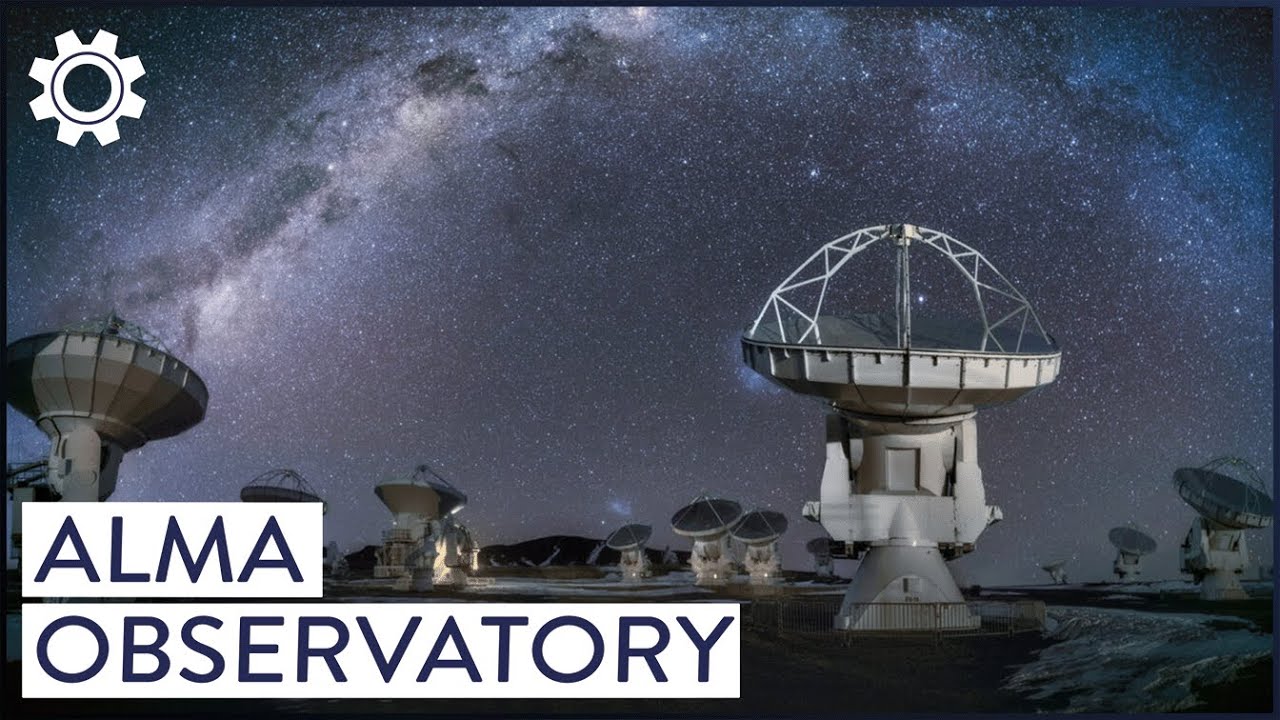
The Epic ALMA Observatory's Mission To Document The Beginning Of Time
Keywords
Summary
160 words
Critical Evaluation
Value of the Information & Strength of the Argument
The documentary provides valuable insights into ALMA’s capabilities and scientific goals, featuring expert interviews that explain complex concepts clearly. The argumentation is solid, based on established astronomical knowledge and recent observations. It effectively conveys the significance of ALMA’s contributions to our understanding of planet formation, black holes, and the early universe.
Scientific Rigor, Source Quality, Title Accuracy
The scientific rigor is high, with contributions from astronomers affiliated with ALMA partner institutions. The sources are credible, though the documentary does not provide explicit citations or references. The title accurately reflects the content, focusing on ALMA’s mission to explore cosmic origins. The documentary is well-structured and informative, maintaining scientific accuracy while being accessible.
120 words
Title / Content Match
The title accurately reflects the content, focusing on ALMA's mission and its role in studying the early universe.
Quality & Reliability
8/10
The documentary features interviews with scientists from ALMA partner institutions, presenting accurate scientific concepts and recent findings. The information is generally reliable, though presented in a popularized manner without detailed citations.
Key Moments
Markers derived by PSI from the transcript: the creator did not define chapters.
- Introduction to the Atacama Desert and the selection of the Chajnantor Plateau for ALMA.
- Overview of ALMA's history and international partnership.
- Explanation of radio astronomy and why ALMA observes millimeter wavelengths.
- Discussion on planet formation, featuring research on the star Fomalhaut.
- Description of ALMA's interferometry technique and its supercomputer.
- Observations of the Antennae Galaxies and star formation in dust clouds.
- Challenges of operating at high altitude, including oxygen use and logistics.
- Study of the supermassive black hole at the center of the Milky Way.
- Future prospects: galaxy collisions and the fate of our solar system.
Cited Sources
- ALMA Observatory Official Website — Mentioned as the main facility; the documentary is about ALMA.
- National Radio Astronomy Observatory (NRAO) — John Stoke and Allison Peck are affiliated with NRAO, a partner institution.
- European Southern Observatory (ESO) — ESO is a partner in ALMA; Carlos de Breuck works there.
Concurring Sources
- ALMA Observatory — Official source confirming the existence and capabilities of ALMA.
- NRAO — Partner institution providing context on ALMA's operations.
Contribution & Novelties
The documentary provides a comprehensive overview of ALMA’s construction and scientific objectives, highlighting recent discoveries such as planet formation around Fomalhaut and observations of the galactic center black hole. It emphasizes the technical challenges and the unique environment of the Atacama Desert.
Pour aller plus loin :
- ALMA Observatory — Official site with detailed information on the array and its science.
- Atacama Large Millimeter Array — Wikipedia article covering technical details and history.
- Fomalhaut — Star system discussed in the documentary, relevant to planet formation studies.
- Supermassive black hole — Concept central to the black hole research presented.
98 words
Radar Profile
The radar profile shows high scores in information quantity, quality, and reliability, with a slightly lower technical level, indicating a well-balanced documentary that is both informative and accessible.
💬 Sur les 0 commentaires analysés, aucune tendance n'est disponible.