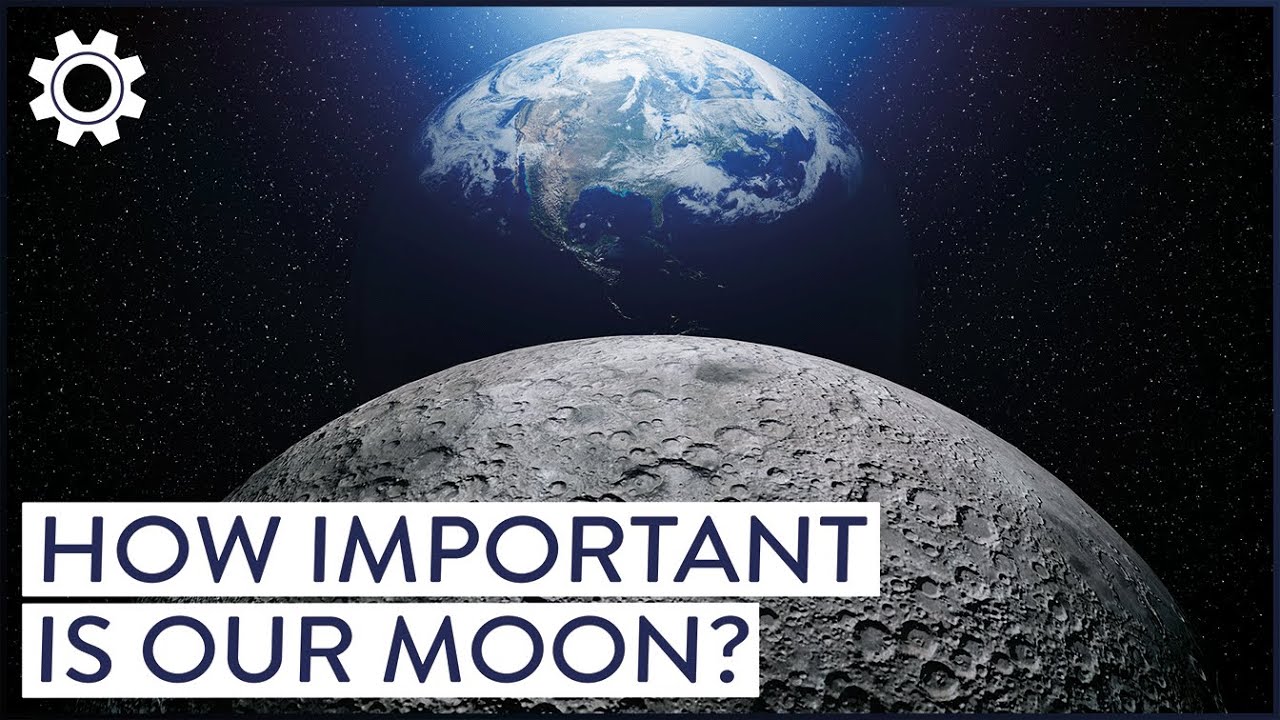
How A Planetary Collision Transformed Earth's Atmosphere And Life
Keywords
Summary
163 words
Critical Evaluation
Value of the Information & Strength of the Argument
The documentary provides valuable information on lunar formation and its effects on Earth, presenting the Giant Impact theory with supporting evidence from moon rock analysis and computer models. The argumentation is generally solid, using expert interviews and analogies to explain complex concepts. However, some sections, particularly those on lunar influence on human behavior, rely on anecdotal evidence and lack scientific rigor. The documentary effectively communicates the importance of the Moon for Earth’s habitability, but occasionally overstates certainty in areas where scientific consensus is still developing.
Scientific Rigor, Source Quality, Title Accuracy
The documentary features interviews with experts such as Jeff Taylor, Lynn Rothschild, and Guillermo Gonzalez, lending credibility. However, specific sources are not cited on screen, and the documentary relies on general scientific knowledge. The title accurately reflects the content, focusing on the planetary collision and its consequences. The documentary does not include a dedicated bibliography, but the information aligns with established scientific understanding. The inclusion of lunar influence on human behavior is presented without strong evidence, which slightly undermines scientific rigor.
181 words
Title / Content Match
The title accurately reflects the content, focusing on the planetary collision and its effects on Earth's atmosphere and life.
Quality & Reliability
7/10
The documentary presents established scientific theories (Giant Impact, lunar cataclysm) with expert interviews and analogies, but lacks detailed citations and includes some speculative elements (e.g., lunar influence on human behavior) without robust evidence.
Key Moments
Markers derived by PSI from the transcript: the creator did not define chapters.
- Introduction to the Moon's characteristics and its importance.
- Discussion of competing theories for the Moon's origin.
- Apollo missions and analysis of moon rocks.
- The Giant Impact theory and Theia collision.
- Accretion process and formation of the Moon.
- Moon's influence on Earth's tilt and seasons.
- Lunar cataclysm and cratering.
- Transfer of Earth rocks to the Moon.
- Tidal effects and slowing of Earth's rotation.
- Lunar phases and influence on human behavior.
Cited Sources
- History Hit membership — Promotional link in description for additional documentaries.
Concurring Sources
- NASA Moon Formation — NASA's overview of Moon formation theories, supporting the Giant Impact hypothesis.
Dissenting Sources
- Lunar influence on human behavior — The documentary presents anecdotal claims about full moon effects on human behavior, which are not supported by robust scientific evidence.
Contribution & Novelties
The documentary synthesizes current scientific knowledge on the Moon’s formation and its role in Earth’s habitability, presenting it in an accessible format. It highlights the Giant Impact theory and the lunar cataclysm, and explores the Moon’s influence on tides, rotation, and climate. The documentary also raises the intriguing possibility of finding Earth rocks on the Moon, which could preserve early Earth history.
Pour aller plus loin :
- Giant-impact hypothesis — Overview of the leading theory for the Moon’s formation.
- Lunar cataclysm — Details on the period of intense asteroid bombardment.
- Tidal acceleration — Explanation of how tidal forces affect Earth-Moon system.
- Earth’s axial tilt — Discussion of obliquity and its stability.
- Origin of life — Context for the Moon’s potential role in life’s emergence.
124 words
Radar Profile
The radar profile shows high scores in quantity of information and technical level, indicating a content-rich documentary with moderate depth. Quality and reliability are slightly lower due to some speculative elements. The overall balance suggests a informative but not deeply rigorous presentation.
💬 Sur les 0 commentaires analysés, aucune tendance n'est disponible.