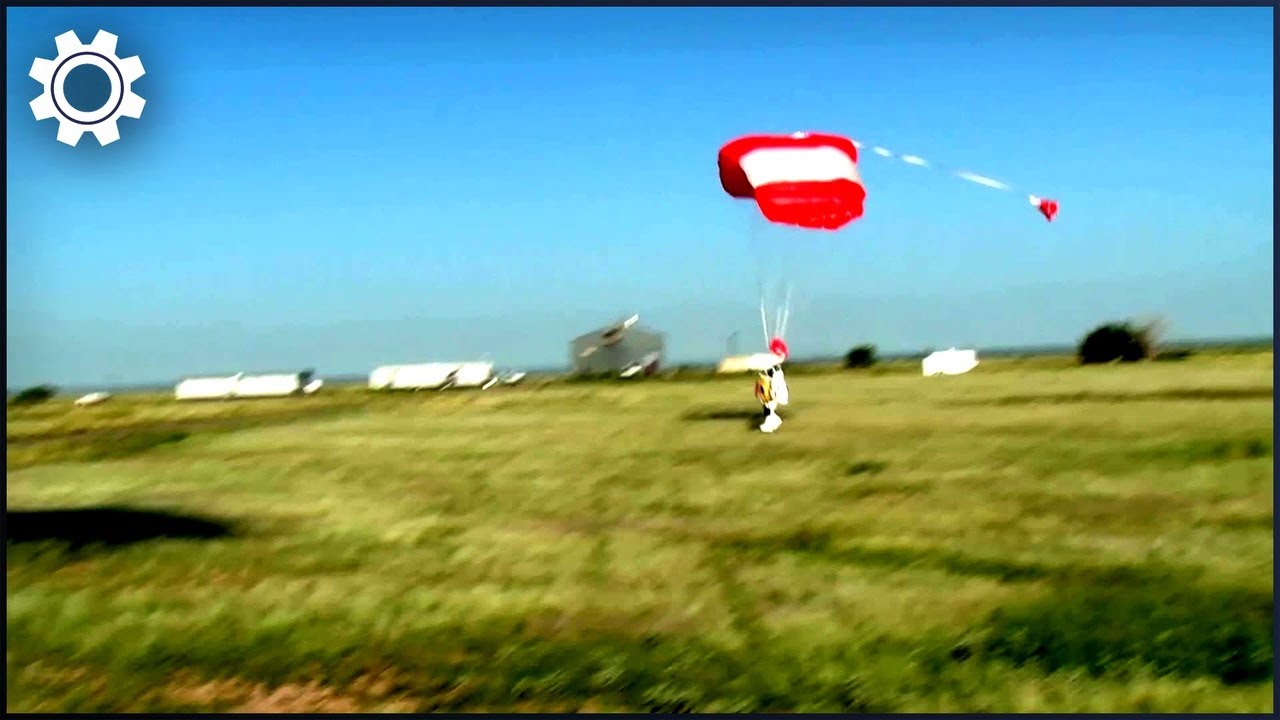
Alan Eustace's 135,000-Foot Stratosphere Jump - Inside the Stratix Suit
Keywords
Summary
138 words
Critical Evaluation
Value of the Information & Strength of the Argument
The documentary provides valuable insights into the engineering process behind a record-breaking high-altitude jump. It effectively argues for the feasibility of a simpler, more accessible approach to stratospheric exploration compared to traditional capsule-based methods. The argumentation is supported by interviews with engineers and experts, as well as footage of tests and the final jump. The film highlights the importance of iterative testing, problem-solving, and teamwork in overcoming technical challenges. However, the documentary may overstate the scientific value of the jump, as the primary motivation appears to be personal achievement and record-setting, with scientific benefits mentioned but not deeply explored.
Scientific Rigor, Source Quality, Title Accuracy
The documentary demonstrates scientific rigor by including technical details about the suit’s design, testing procedures, and safety measures. It features interviews with key team members from Paragon Space Development and ILC Dover, lending credibility. The title accurately reflects the content. However, the film does not provide external sources or citations, and it may omit potential criticisms or failures. The absence of a critical perspective on the risks and ethical considerations of such jumps is a limitation. Overall, the documentary is informative but not a peer-reviewed scientific source.
201 words
Title / Content Match
The title accurately reflects the content, focusing on Alan Eustace's stratospheric jump and the Stratix suit.
Quality & Reliability
8/10
The documentary provides a detailed account of the Stratix project, featuring interviews with key team members and showing actual test footage. The engineering challenges and solutions are presented with technical specificity, and the narrative aligns with publicly known facts about Alan Eustace's jump. However, the film is produced by a documentary channel and may have a promotional tone, and some technical details are simplified for a general audience.
Key Moments
Markers derived by PSI from the transcript: the creator did not define chapters.
- Introduction to the atmosphere and the stratosphere.
- Alan Eustace's background and his idea for a scuba-like approach.
- Assembling the team from Paragon and ILC Dover.
- Design and manufacturing of the Stratix suit.
- Wind tunnel testing at 170 mph.
- Thermal chamber test with liquid nitrogen.
- Desert jump test in Coolidge, Arizona, with technical issues.
- Final preparations and launch day in Roswell.
- The successful jump from 135,000 feet.
- Landing and aftermath, including the suit's donation to the Smithsonian.
Cited Sources
- Paragon Space Development — Company involved in life support systems and thermal control.
- ILC Dover — Manufacturer of the pressure suit.
- United Parachute Technologies — Designer of the parachute system.
Concurring Sources
- Alan Eustace's record jump — Wikipedia article confirming the details of the jump.
Contribution & Novelties
The documentary provides an in-depth look at the engineering and testing of a novel pressure suit system for high-altitude jumps, highlighting the potential for simpler and more accessible stratospheric exploration. It showcases the iterative design process and the importance of safety testing. The film also emphasizes the scientific value of studying the stratosphere for weather and climate research.
Pour aller plus loin :
- Stratosphere — Overview of the atmospheric layer and its characteristics.
- Pressure suit — Explanation of pressure suits and their applications.
- Felix Baumgartner’s jump — Comparison with a previous record attempt.
- Drogue parachute — Description of drogue chutes and their use in stabilization.
105 words
Radar Profile
The radar profile shows high scores in information quantity, quality, and technical level, with a slightly lower but still strong reliability score. This indicates a well-produced documentary with substantial technical content, though it may rely on a single narrative perspective.