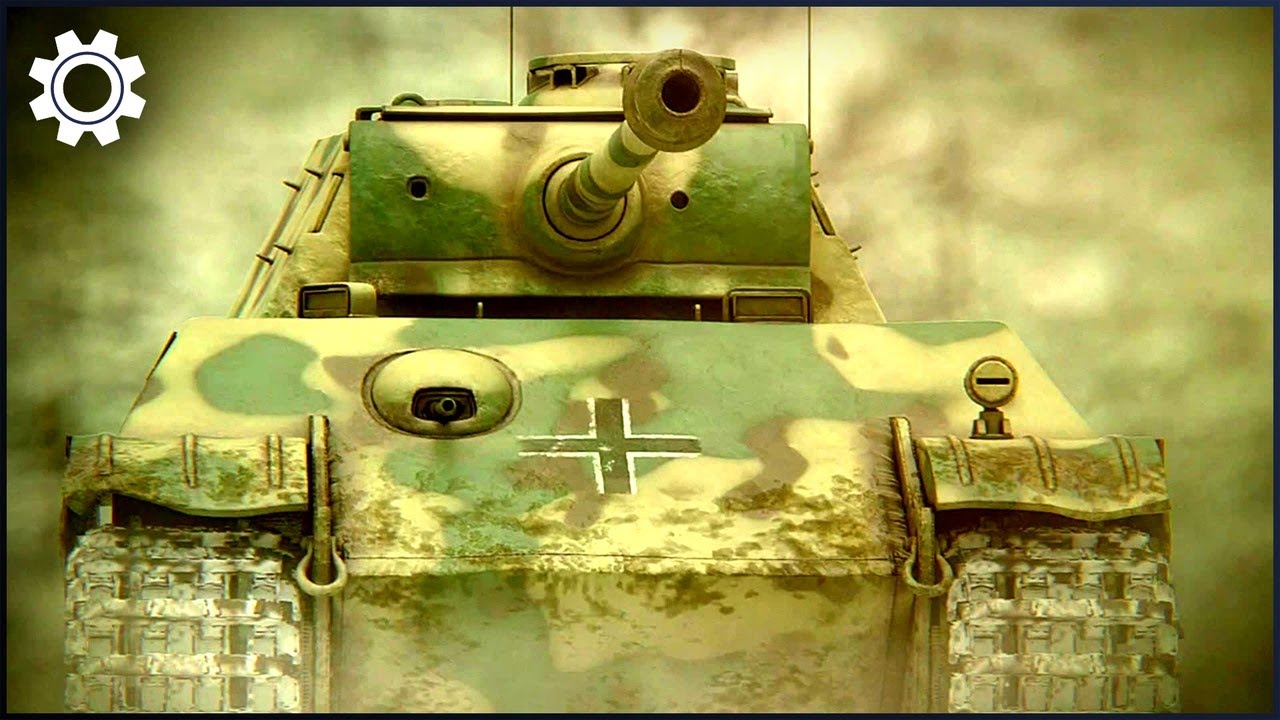
Battle of the Bulge - The Epic Tank Clash That Changed WWII
Keywords
Summary
160 words
Critical Evaluation
Value of the Information & Strength of the Argument
The documentary provides valuable insights into the tactical and strategic aspects of the Battle of the Bulge, emphasizing the role of armored warfare. It effectively uses firsthand accounts to convey the experiences of soldiers, adding emotional depth. The argumentation is coherent, presenting the battle as a decisive moment due to the Allied resilience and the failure of the German offensive. However, it lacks critical analysis of broader strategic decisions and relies on a linear narrative that may oversimplify complex events.
Scientific Rigor, Source Quality, Title Accuracy
The documentary appears well-researched, with expert commentary and veteran testimonies that lend credibility. However, specific sources are not explicitly cited within the video, and the description provides no references. The title accurately reflects the content, focusing on the tank clash and its impact. The production quality is high, with clear visuals and sound. The lack of explicit citations reduces the scientific rigor, but the overall accuracy is acceptable for a general audience.
167 words
Title / Content Match
The title accurately reflects the content, focusing on the tank battles and their significance in WWII.
Quality & Reliability
7/10
The documentary combines firsthand accounts, archival footage, and expert commentary, but lacks explicit citations to primary sources. The narrative is engaging and generally accurate, though some technical details are simplified.
Key Moments
Markers derived by PSI from the transcript: the creator did not define chapters.
- Introduction to the Battle of the Bulge and the German surprise attack.
- Overview of the Ardennes region and its strategic importance.
- German forces assemble and launch the offensive on December 16, 1944.
- John Marshall's account of the initial chaos and tank breakdowns.
- Comparison of Sherman and Panther tanks, highlighting technical disparities.
- The siege of Bastogne and the 101st Airborne's defense.
- Patton's Third Army's rapid march to relieve Bastogne.
- Tank battle at Chaumont and the encounter with Jagdtigers.
- The final breakthrough at Assenois and the relief of Bastogne.
- Conclusion and reflection on the battle's significance.
Contribution & Novelties
The documentary offers a compelling narrative of the Battle of the Bulge, focusing on personal stories and tank warfare. It provides a balanced view of both Allied and German perspectives, which is valuable for understanding the battle’s complexity. The use of veteran interviews adds a unique human element. However, it does not present new historical research or novel interpretations.
Pour aller plus loin :
- Battle of the Bulge - Wikipedia — Comprehensive overview of the battle.
- M4 Sherman tank - Wikipedia — Technical details and history of the Sherman tank.
- Panther tank - Wikipedia — Technical details and history of the Panther tank.
- Jagdtiger - Wikipedia — Information on the Jagdtiger tank destroyer.
- Patton’s Third Army - Wikipedia — Overview of Patton’s command and operations.
125 words
Radar Profile
The radar profile shows high scores in information quantity and quality, with moderate technical depth and reliability. This indicates a well-produced documentary that is informative and engaging, but may not delve deeply into technical or scholarly details.