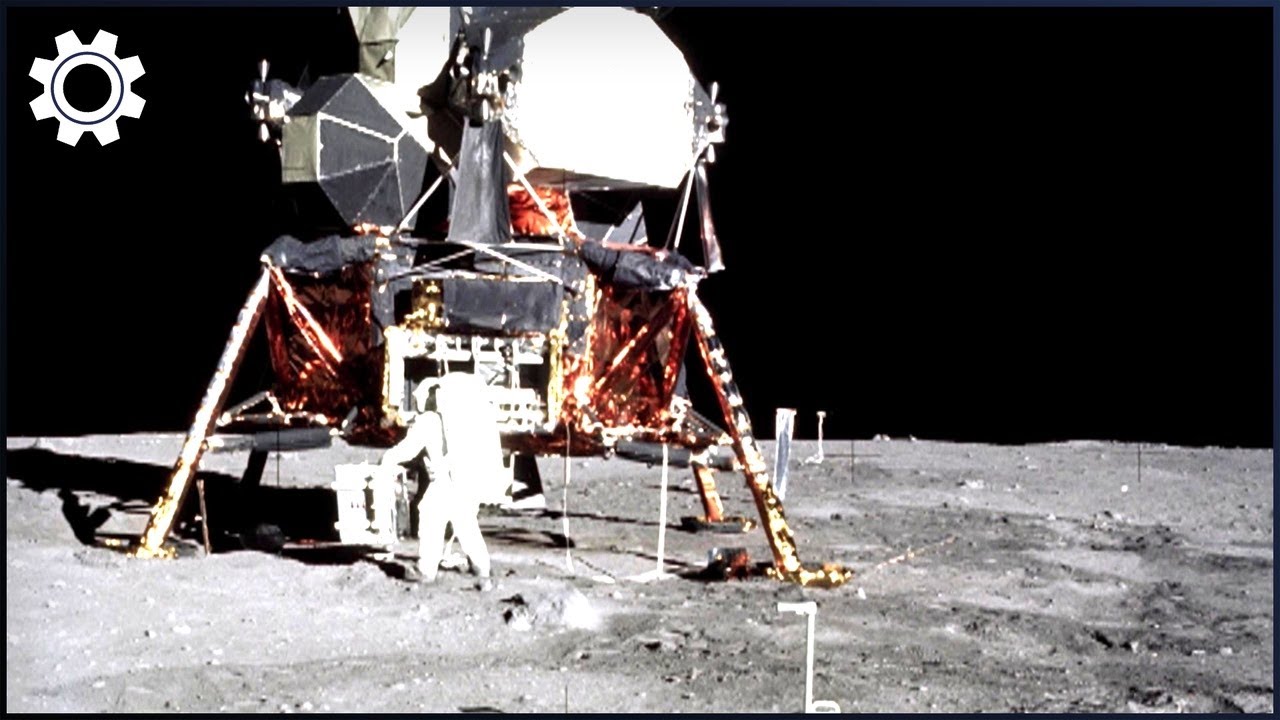
Moon Landing Hoax? Debunking Apollo Conspiracy Theories with Science
Keywords
Summary
125 words
Critical Evaluation
Value of the Information & Strength of the Argument
The documentary provides a comprehensive overview of the main conspiracy claims and their scientific rebuttals. It offers valuable insights into the physics of lunar photography, the design of space suits and cameras, and the engineering challenges of the Apollo missions. The argumentation is generally solid, relying on expert interviews and experimental demonstrations. However, some rebuttals are presented briefly and could benefit from more detailed explanations. The inclusion of conspiracy theorists’ perspectives, while balanced, sometimes gives undue weight to unsupported claims. Overall, the value lies in its educational approach to debunking myths with science.
Scientific Rigor, Source Quality, Title Accuracy
The documentary features interviews with experts such as Pat Norris, Jay Windley, and Richard Underwood, who provide credible technical explanations. It also references historical figures and events, such as the Jodrell Bank radio telescope reception. The sources are not explicitly cited with URLs, but the experts’ credentials lend authority. The title accurately reflects the content, which is a scientific debunking of conspiracy theories. The documentary maintains a rigorous tone, though it occasionally simplifies complex topics for a general audience. The inclusion of conspiracy theorists’ claims without always providing immediate rebuttals could mislead viewers, but overall the scientific evidence is presented convincingly.
209 words
Title / Content Match
The title accurately reflects the content, which systematically addresses and debunks common moon landing conspiracy theories using scientific evidence.
Quality & Reliability
7/10
The documentary presents a balanced view, featuring both conspiracy theorists and experts, and uses scientific reasoning and experiments to debunk claims. However, some arguments are simplified and lack depth, and the production is not a peer-reviewed source.
Key Moments
Markers derived by PSI from the transcript: the creator did not define chapters.
- Introduction to the moon landing conspiracy theories and the ongoing debate.
- Historical context: the space race and political motivations behind the Apollo program.
- Bill Kaysing's claims and the idea that NASA faked the landings.
- Analysis of lunar photographs: shadow anomalies and lighting explanations.
- The waving flag phenomenon and the physics of its movement.
- The absence of stars in photos and the camera exposure settings.
- Radiation dangers and the Van Allen belts: scientific rebuttals.
- Technological feasibility: computers and navigation challenges.
- Evidence from lunar rocks, laser reflectors, and satellite imagery.
- The impossibility of a cover-up and final conclusions.
Cited Sources
- NASA Apollo Mission Archives — Referenced as the source of lunar photographs and mission data.
- Jodrell Bank Radio Telescope — Mentioned as the site where amateur radio enthusiasts listened to Apollo transmissions.
Concurring Sources
- NASA Apollo Mission Archives — Official NASA documentation and imagery supporting the moon landings.
- Jodrell Bank Radio Telescope — Independent reception of Apollo transmissions, corroborating the missions.
Dissenting Sources
- Bill Kaysing's claims — Claims that NASA faked the moon landings, based on alleged insider knowledge, but lacking verifiable evidence.
- Ralph Rene's experiments — Demonstrations suggesting glove inflexibility and lack of crater, but flawed methodology and ignored counter-evidence.
Contribution & Novelties
The documentary synthesizes existing scientific rebuttals into a coherent narrative, making them accessible to a general audience. It adds value by featuring interviews with experts and conducting hands-on experiments to demonstrate the physics behind the claims. The film also addresses the psychological and sociological aspects of conspiracy belief, offering a balanced perspective.
Pour aller plus loin :
- Apollo program - Wikipedia — Provides comprehensive historical and technical details.
- Moon landing conspiracy theories - Wikipedia — Overview of common claims and rebuttals.
- Van Allen radiation belt - Wikipedia — Explains the radiation environment and its traversal by Apollo missions.
98 words
Radar Profile
The radar profile shows high scores in quantity of information and global reliability, with moderate technical level. This indicates a well-researched documentary that balances depth with accessibility, though it may not delve into the most advanced technical details.
💬 Négatif. Sur les 30 commentaires analysés, la majorité exprime un scepticisme marqué envers les missions Apollo, souvent avec des arguments pseudo-scientifiques ou des affirmations non étayées, tandis qu'une minorité défend la réalité des alunissages.