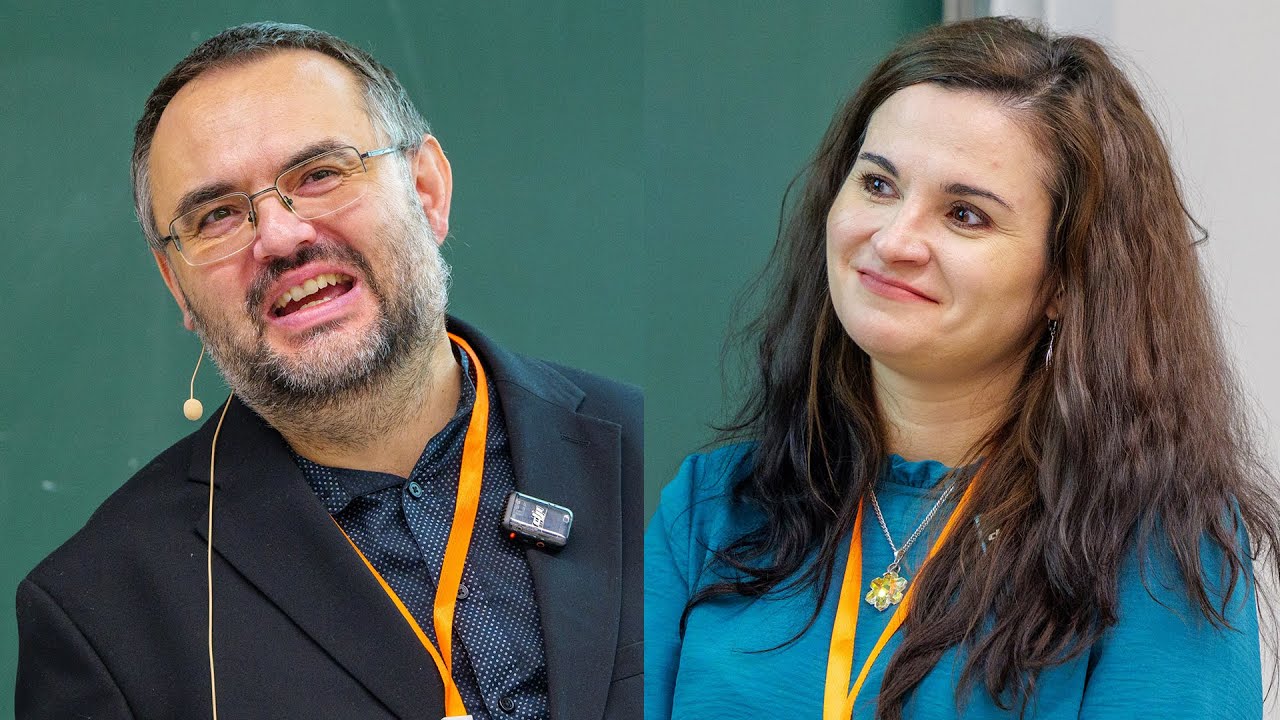
Inovative Approaches to Teaching Probability in Secondary Schools | Peter Vankúš - Michaela Vargová
Keywords
Summary
143 words
Critical Evaluation
Value of the Information & Strength of the Argument
The presentation provides valuable insights into teaching probability, supported by concrete examples and references to known misconceptions. The argumentation is solid, based on the authors’ teaching experience and research in mathematics education. They effectively demonstrate the need for active learning strategies and provide practical tasks that can be implemented in classrooms. The feedback from teachers adds credibility, though it is limited and not systematically analyzed.
Scientific Rigor, Source Quality, Title Accuracy
The presentation is scientifically rigorous in its discussion of misconceptions and teaching strategies, but it lacks explicit citations to research studies. The sources mentioned are the authors’ own projects and materials, and the feedback is anecdotal. The title accurately reflects the content, and the presentation is well-structured. No comments are provided, so no analysis of public reception is possible.
139 words
Title / Content Match
The title accurately reflects the content, which focuses on innovative teaching approaches for probability in secondary schools.
Quality & Reliability
7/10
The presentation is based on the authors' experience and research in mathematics education, with references to known misconceptions and teaching materials. However, it lacks detailed citations and empirical data, and the feedback is anecdotal.
Key Moments
Markers derived by PSI from the transcript: the creator did not define chapters.
- Introduction and overview of the presentation
- Historical example of d'Alembert's mistake in probability
- Introduction of teaching materials and projects
- Geometric probability task: 'fair square' game
- Conditional probability task: taxi cab problem
- Expected value task with dice and misconceptions
- Feedback from teachers on the materials
- Future plans and concluding remarks
Cited Sources
- KEGA project: Innovative learning technologies in the preparation of future mathematics teachers — Mentioned as the project under which teaching materials are developed.
- National project: Digital transformation of education and schools — Mentioned as another project supporting the development of materials.
Concurring Sources
- Research on misconceptions in probability — The presentation aligns with known research on probability misconceptions.
Contribution & Novelties
The presentation offers practical, classroom-tested activities for teaching probability, addressing specific misconceptions with visualization and experimentation. It contributes to the field by sharing concrete materials and feedback from teachers.
Pour aller plus loin :
- Probability theory — Foundational concepts.
- Law of large numbers — Key principle discussed.
- Conditional probability — Relevant to the taxi cab problem.
- Misconceptions in probability — Overview of common errors.
64 words
Radar Profile
The radar profile shows balanced scores across information quantity, quality, technical level, and reliability, indicating a well-rounded presentation with moderate depth and credibility.