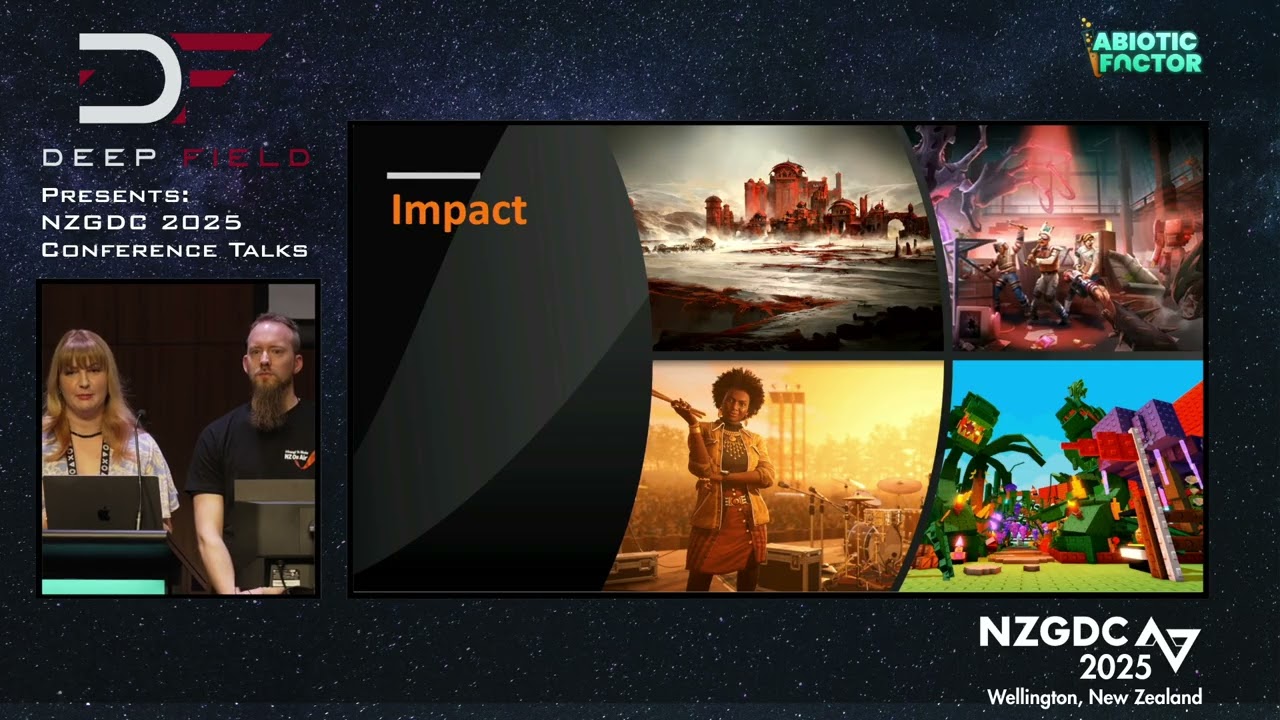
Industry Insights 2 yrs into GDSR | Chantelle Cole | NZGDC 2025
Keywords
Summary
174 words
Critical Evaluation
Value of the Information & Strength of the Argument
The presentation provides valuable, up-to-date data on the impact of a specific government policy on a national industry. The argumentation is coherent, using quantitative evidence (revenue, employment, game counts) and qualitative examples (studio success stories) to support the claim that the GDSR is effective. However, the argumentation is one-sided, as it is delivered by program managers who have a vested interest in the program’s success. The data is presented without critical analysis or discussion of potential negative effects, such as the possibility of the rebate merely shifting activity from other sectors or the long-term sustainability of the growth. The comparison with global trends is effective but selective, as it does not account for other factors that might influence New Zealand’s growth.
Scientific Rigor, Source Quality, Title Accuracy
The presentation is based on official data from the GDSR program, which is a reliable source for the program’s own metrics. However, the data is self-reported by studios and not independently verified. The speakers reference a ‘year 2 review’ available online, but no specific URL is provided. The title accurately reflects the content. The presentation includes a promotional tone, which is expected in a conference talk but may affect objectivity. The sources cited are primarily internal program data and anecdotal examples, with no external academic or industry reports referenced.
225 words
Title / Content Match
The title accurately reflects the content, which provides industry insights two years into the GDSR program.
Quality & Reliability
7/10
The presentation is based on official data from the New Zealand Game Development Sector Rebate (GDSR) program, with specific figures on revenue, employment, and game counts. The speakers are program managers, providing insider perspective. However, the data is self-reported by the industry and the talk is promotional in nature, lacking independent verification or critical analysis.
Key Moments
Markers derived by PSI from the transcript: the creator did not define chapters.
- Introduction and setting the scene
- Background on industry slowdown and introduction of GDSR
- Data on studio participation and revenue growth
- Employment and game development statistics
- Success stories of specific studios
- Comparison with global industry trends
- Future outlook and GDSR updates
- Q&A session begins
Cited Sources
- GDSR Year 2 Review — Mentioned as available online, but no URL provided.
Concurring Sources
- New Zealand Game Developers Association — Industry body that collaborates with government on the GDSR, likely to have related reports.
- NZ On Air — Government agency that administers the GDSR, official source for program details.
Dissenting Sources
- Global games industry reports (e.g., Newzoo) — Global market reports may show different trends, but the presentation acknowledges global slowdown, so not directly discordant.
Contribution & Novelties
The presentation offers a unique insider perspective on the early impact of a government rebate on a national games industry, providing specific data on revenue, employment, and game production. It highlights the role of a coordinated ecosystem approach. The talk also announces updates to the GDSR, including its perpetual funding and increased budget for CODE.
Pour aller plus loin :
- New Zealand Game Developers Association — Official industry body, relevant for context on the ecosystem.
- NZ On Air — Government agency administering the GDSR, provides official program details.
- Game Development Sector Rebate guidelines — Note: This URL is uncertain; the rebate is administered by NZ On Air, but guidelines may be on MBIE’s site. Consider searching for ‘GDSR guidelines’ on MBIE’s website.
- Ministry of Business, Innovation and Employment (MBIE) — Government ministry responsible for economic development, likely hosts official reports.
- Forbes 30 Under 30 Asia — Reference for Jansen Matson’s recognition.
151 words
Radar Profile
The radar profile shows high scores in quantity of information and reliability, reflecting the data-rich and official nature of the presentation. The lower score in technical level indicates that the content is accessible to a general audience, focusing on economic and policy aspects rather than technical game development details.