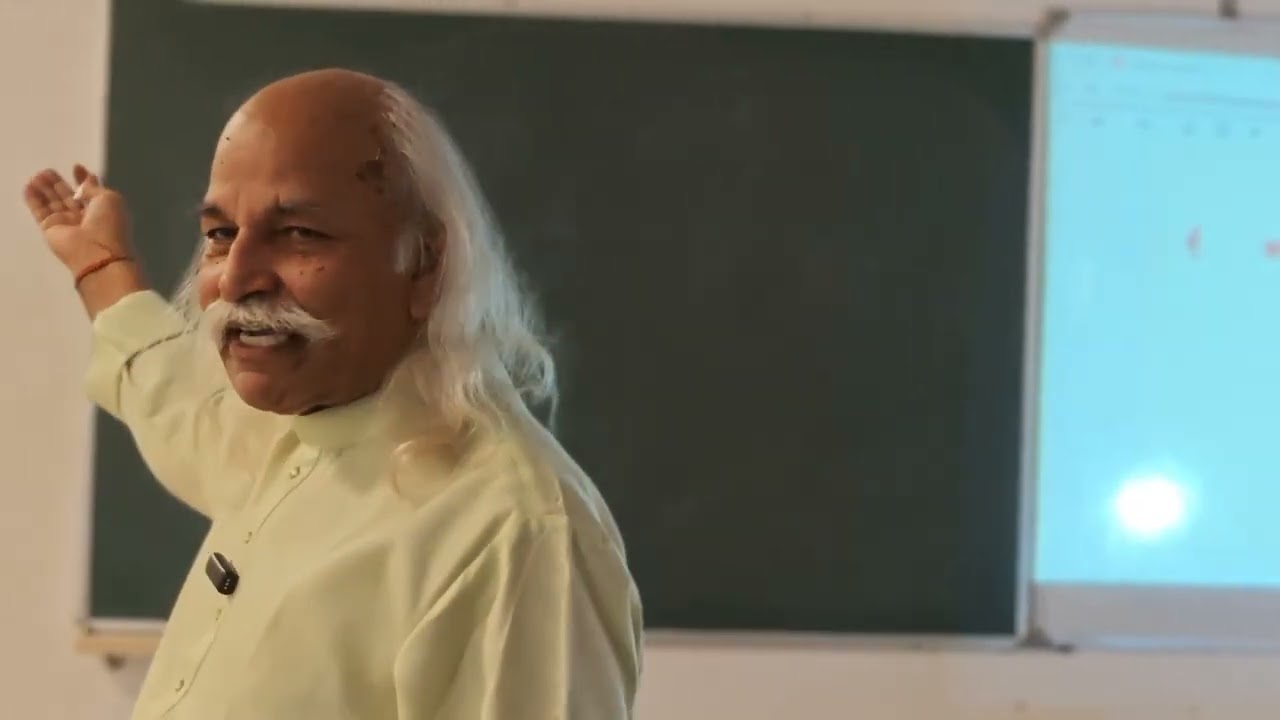
Calculus for 9th 10th Part 4/5
Keywords
Summary
141 words
Critical Evaluation
Value of the Information & Strength of the Argument
The video provides a solid conceptual foundation for calculus, emphasizing the meaning of derivative as a rate of change and its geometric interpretation. The argumentation is clear and logical, building from simple examples to more complex ideas. The use of the sine function to illustrate periodic maxima and minima is particularly effective. The teacher’s interactive style, with questions and answers, reinforces understanding. However, the video lacks formal proofs and rigorous definitions, which is appropriate for the target audience but limits its depth for advanced learners.
Scientific Rigor, Source Quality, Title Accuracy
The scientific rigor is high for an educational video: the mathematical content is accurate and the explanations are consistent with standard calculus. No external sources are cited, but this is typical for a tutorial. The title accurately describes the content, and the video is well-structured. The teacher’s reputation adds to the credibility. The video does not include any advertising or sponsored content.
162 words
Title / Content Match
The title accurately reflects the content: a calculus lesson for 9th and 10th grade students, part 4 of a series.
Quality & Reliability
8/10
The video is a tutorial by a renowned physics educator, H C Verma, known for clarity and pedagogical rigor. The content is mathematically sound, with correct explanations of derivatives, maxima/minima, and trigonometric functions. The informal style and lack of formal citations are typical for educational videos, but the reasoning is accurate and well-structured.
Key Moments
Markers derived by PSI from the transcript: the creator did not define chapters.
- Introduction: filling in blanks for dy/dx definition.
- Explanation of 'apeksha' and rate of change.
- Graphical interpretation of dy/dx sign at points a-e.
- Power rule example: derivative of x^(3/2).
- Introduction to maxima and minima on a graph.
- Discussion on local vs global maxima using sine function.
- Deriving sine values for angles beyond 90 degrees.
- Graphing sine function and identifying maxima/minima.
- Key insight: dy/dx = 0 at maxima and minima.
- Counterexample: y = x^3 at x=0, dy/dx=0 but no extremum.
Contribution & Novelties
The video offers a unique pedagogical approach by connecting the concept of derivative to the rate of change and using the sine function to illustrate periodic maxima and minima. It emphasizes intuitive understanding over rote memorization. The interactive style engages students and clarifies common misconceptions.
Pour aller plus loin :
- Derivative — Foundational concept.
- Maxima and minima — Detailed mathematical treatment.
- Sine and cosine — Trigonometric functions.
- Power rule — Differentiation rule.
72 words
Radar Profile
The radar profile shows high scores in quality and reliability, reflecting the accurate and well-explained content. The quantity of information is moderate, as the video focuses on a few key concepts. The technical level is appropriate for high school students, balancing accessibility with depth.