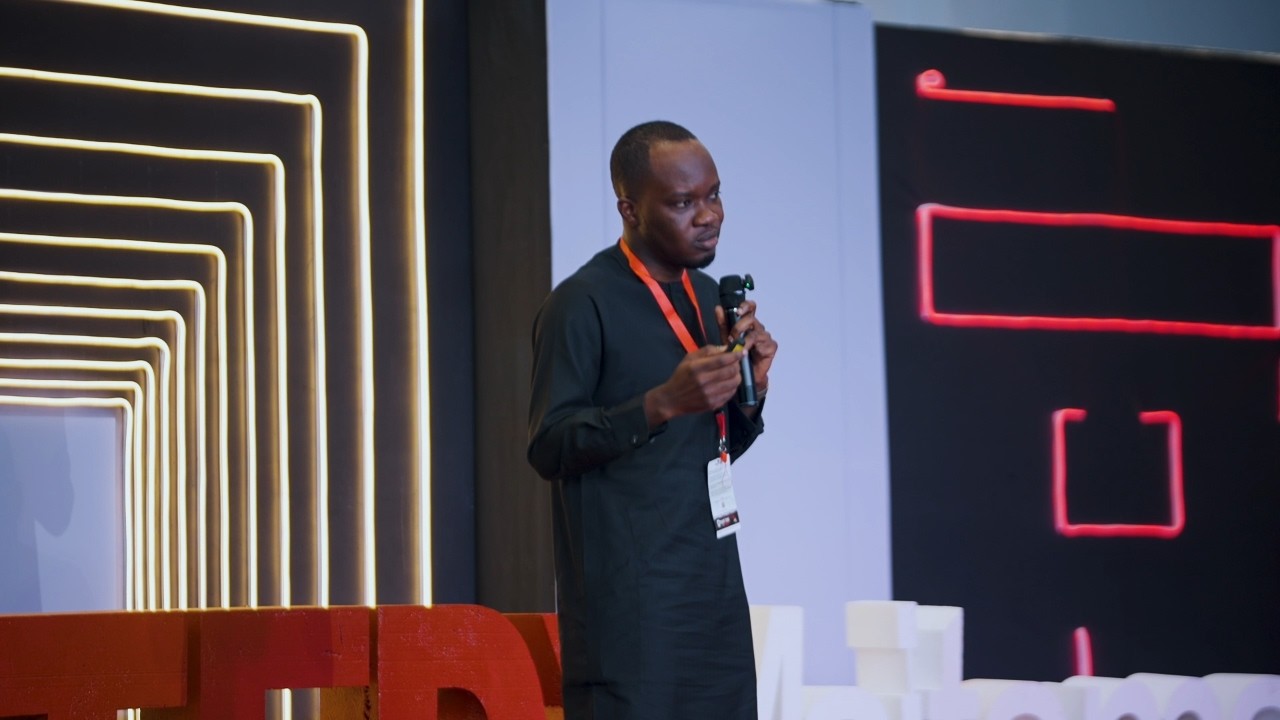
The future of money is being written right now
Keywords
Summary
125 words
Critical Evaluation
Value of the Information & Strength of the Argument
The talk provides a compelling narrative that connects historical monetary evolution to current technological trends. The speaker’s argument that Africa can leapfrog traditional banking, as it did with mobile money, is persuasive and well-illustrated. However, the argumentation relies on anecdotal evidence and broad generalizations rather than rigorous data. The claim that stablecoins moved $33 trillion last year is presented without a source and seems implausibly high, undermining the overall credibility. The speaker’s call for Africa to build ‘rails’ and engage in regulation is strategic and forward-looking, but the lack of concrete examples or case studies weakens the practical value.
Scientific Rigor, Source Quality, Title Accuracy
The talk is an opinion piece based on the speaker’s professional experience, not a scientific review. No specific sources are cited within the talk, and the only link provided in the description is to the TEDx program, which is not a source for the content. The historical narrative is simplified and lacks nuance; for instance, the claim that barter never existed is a contested point among anthropologists. The title is catchy and aligns with the content, but the content’s rigor is limited by the absence of verifiable data and references. The speaker’s credentials in finance and technology lend some authority, but the lack of citations prevents a high reliability score.
224 words
Title / Content Match
The title accurately reflects the central thesis that the future of money is being actively shaped now, with a focus on Africa's potential role.
Quality & Reliability
6/10
The talk presents a coherent historical narrative of monetary evolution and current trends in stablecoins, but relies heavily on personal interpretation and lacks rigorous citations. Some claims (e.g., $33 trillion stablecoin volume) are unverified and may be overstated. The speaker's background in finance lends credibility, but the argumentation is more persuasive than evidence-based.
Key Moments
Markers derived by PSI from the transcript: the creator did not define chapters.
- Introduction: The first trade was between two cells, not humans.
- First rewrite: Money as a ledger, not barter.
- Second rewrite: Coins and trust in the king's stamp.
- Third rewrite: Paper money as a promise of value.
- Fourth rewrite: Shares and fractional ownership.
- Fifth rewrite: Fiat money backed by consensus.
- Sixth rewrite: Blockchain and stablecoins as digital dollars.
- Stablecoin adoption in Africa and the $33 trillion claim.
- Hypotheses for the new rules: trust encoded, interplanetary money, local settlement.
- Call to action: Build rails, treat regulation as a product, build for the unbanked.
Cited Sources
- TEDx Program — General reference to the TEDx platform, not a specific source for the talk's content.
Concurring Sources
- Stablecoin - Wikipedia — Supports the definition and growth of stablecoins as digital dollars.
- Financial inclusion - World Bank — Aligns with the talk's emphasis on expanding access to financial systems.
Dissenting Sources
- Barter - Wikipedia — The speaker claims barter never existed as a precursor to money, but this is a contested view; many anthropologists argue that barter did occur in some form.
Contribution & Novelties
The talk offers a fresh perspective on financial inclusion by framing stablecoins as a continuation of historical monetary evolution, with a specific focus on Africa’s potential to lead the next rewrite. It synthesizes known concepts into a compelling narrative that emphasizes the importance of infrastructure and regulation.
Pour aller plus loin :
- Stablecoin - Wikipedia — Provides a comprehensive overview of stablecoins, their types, and use cases.
- Blockchain - Wikipedia — Explains the underlying technology and its applications beyond cryptocurrencies.
- Financial inclusion - World Bank — Official resource on global financial inclusion efforts and data.
- Mobile money in Africa — Concept without URL; relevant to the leapfrogging argument.
108 words
Radar Profile
The radar profile shows moderate scores across all dimensions, with slightly higher on quantity of information and lower on technical level. This reflects a talk that is informative and engaging but lacks deep technical detail and rigorous sourcing.
💬 No comments were provided for analysis.