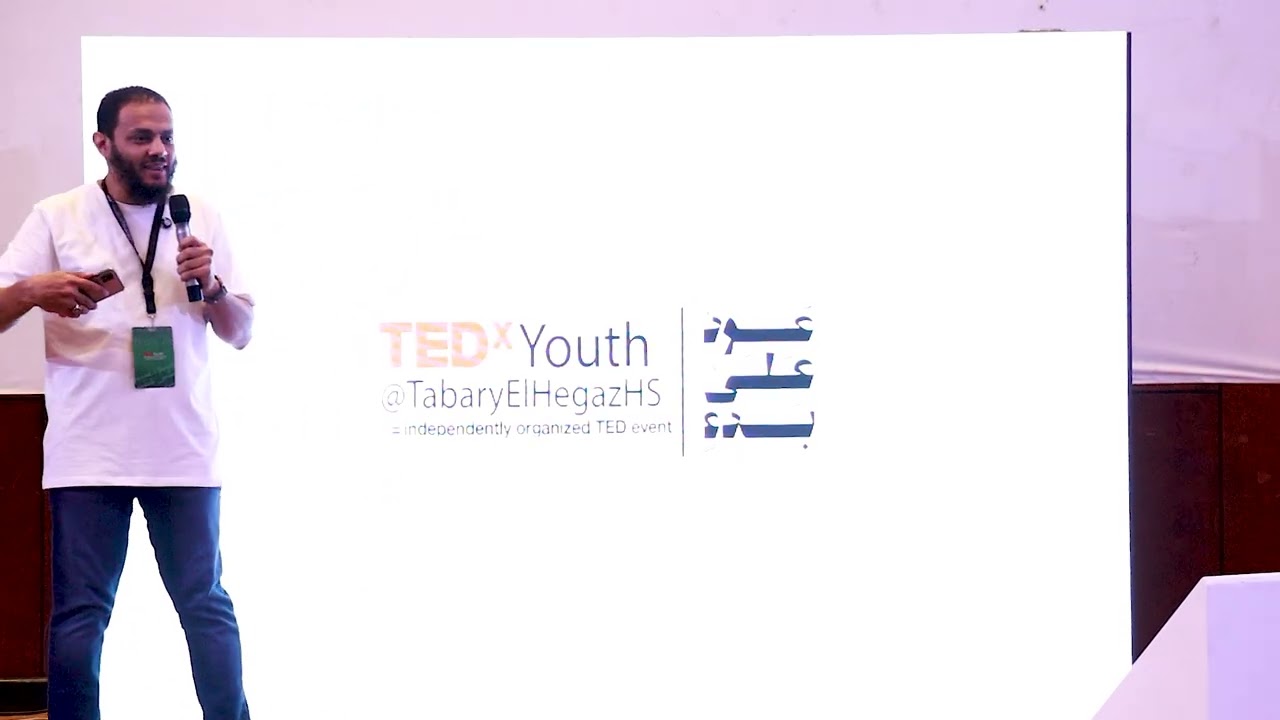
أهم قرار في حياتك: هل أنت مستعد فعلًا للزواج؟ | Helal Elsayed | TEDxYouth@TabaryElHegazHS
Keywords
Summary
181 words
Critical Evaluation
Value of the Information & Strength of the Argument
The talk offers a personal and faith-based perspective on early marriage, which may resonate with audiences sharing similar cultural and religious backgrounds. The argumentation is structured around four practical points, supported by religious references and personal anecdotes. However, the lack of empirical evidence or diverse perspectives limits its generalizability. The speaker’s sincerity and coherent narrative add value, but the advice is prescriptive and may not account for individual variations in circumstances.
Scientific Rigor, Source Quality, Title Accuracy
The talk relies primarily on religious texts (Quran and Hadith) and personal experience, with no external scientific sources. The title accurately reflects the content. The absence of citations or references to research weakens the scientific rigor, but the religious framing is appropriate for the intended audience. The talk is well-structured and the speaker’s credibility is established through his personal story.
146 words
Title / Content Match
The title accurately reflects the content, which focuses on the decision to marry and readiness for it.
Quality & Reliability
6/10
The talk is a personal testimony and religiously framed advice on early marriage, with no empirical data or cited studies. It relies on religious texts and personal anecdotes, which limits its scientific reliability but provides a coherent and sincere perspective.
Key Moments
Markers derived by PSI from the transcript: the creator did not define chapters.
- Speaker introduces his personal desire to marry early and the societal perception of marriage as difficult.
- He recounts a hadith about God helping those who marry to protect their chastity, which motivated his decision.
- He shares his own experience of marrying with minimal resources and the subsequent improvement in his life.
- He outlines the first key element: strong faith in God's promise of support.
- He discusses the second element: redefining one's needs and avoiding consumerist pressures.
- He emphasizes the importance of partner selection, focusing on religious commitment and shared values.
- He addresses the fourth element: awareness of the costs of delaying marriage, including lost energy and generational gaps.
- He concludes by balancing the advice with caution against recklessness and emphasizing the need for planning.
Cited Sources
- TEDx Talks — General TEDx platform information.
Concurring Sources
- TEDx Talks — General platform, not specific to the talk.
Contribution & Novelties
The talk provides a faith-based perspective on early marriage, which is common in religious communities but often underrepresented in mainstream discourse. It offers practical advice grounded in personal experience and religious teachings, which may be novel for audiences unfamiliar with this viewpoint.
Pour aller plus loin :
- Marriage in Islam — Overview of Islamic teachings on marriage.
- Early marriage — Note: This is about child marriage, but relevant to the topic of early marriage.
- Consumerism — Related to the speaker’s critique of societal pressures.
84 words
Radar Profile
The radar profile shows moderate scores across all dimensions, with a slightly higher score in quality of information due to the coherent personal narrative, but lower in technical level and quantity of information due to the lack of empirical data.