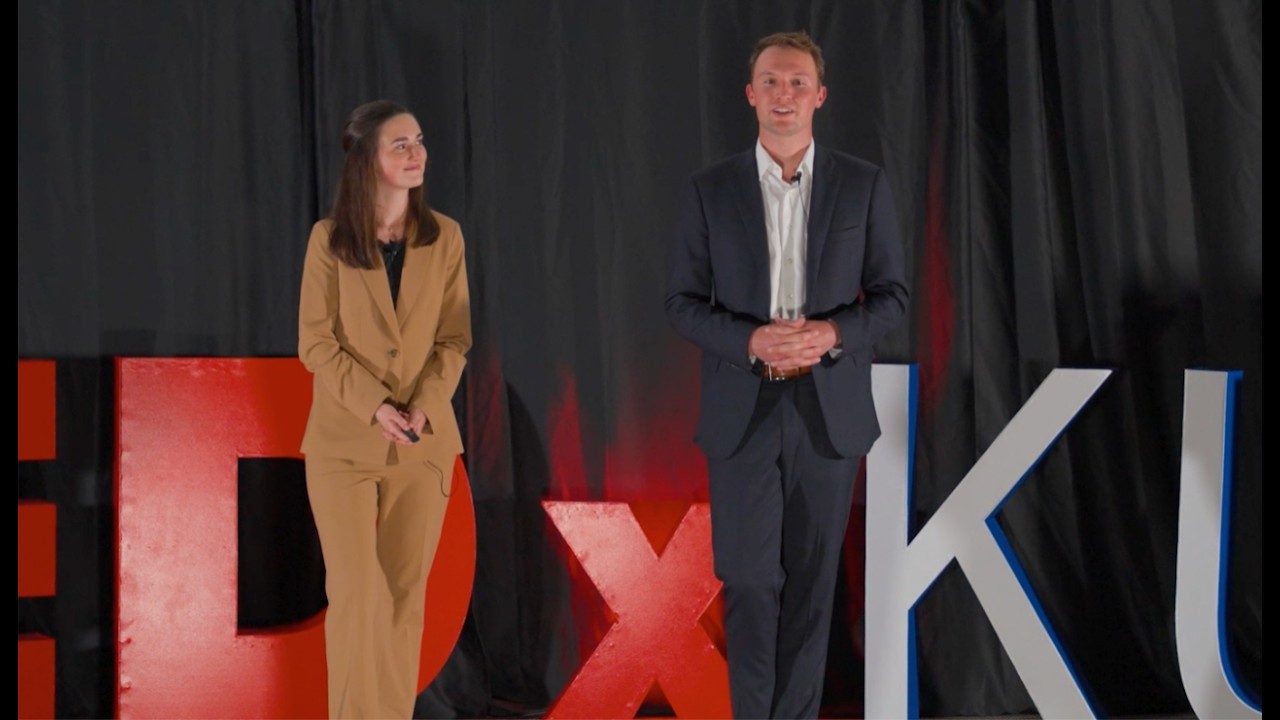
Celebrating the small things | Amelia Knopp & Luke Karel | TEDxKU
Keywords
Summary
138 words
Critical Evaluation
Value of the Information & Strength of the Argument
The talk’s value lies in its authentic, first-hand accounts of overcoming life-threatening illness and the practical, actionable advice derived from these experiences. The speakers effectively argue that gratitude and connection are powerful tools for navigating adversity. Their argument is built on personal narratives, which are compelling and emotionally resonant, but it lacks empirical evidence or references to psychological research. The structure is clear, with three distinct points that are illustrated with personal stories, making the message memorable and relatable. However, the argumentation is anecdotal and does not engage with potential counterarguments or alternative perspectives.
Scientific Rigor, Source Quality, Title Accuracy
The talk is a personal testimony rather than a scientific presentation, so it does not cite external sources. The only link provided is to TEDx, which is the organizing body, not a source of scientific information. The title accurately reflects the content, and the speakers are credible as individuals with lived experience. The lack of citations is appropriate for this format, but it limits the scientific rigor. The talk’s strength is its authenticity, not its empirical basis.
186 words
Title / Content Match
The title accurately reflects the content, which focuses on appreciating small moments and acts of kindness in the face of adversity.
Quality & Reliability
7/10
Personal testimonies from two cancer survivors, presented with emotional authenticity and practical advice. The scientific basis is limited to personal experience, but the advice is grounded in widely recognized psychological principles of gratitude and resilience. The talk is not peer-reviewed but is credible as a lived-experience perspective.
Key Moments
Markers derived by PSI from the transcript: the creator did not define chapters.
- Introduction: Both speakers diagnosed with leukemia at 17.
- Luke's story: relapse, bone marrow transplant, and lung complications.
- Amelia's story: ALL diagnosis, sepsis, and joint replacements.
- Lesson on celebrating small things: the walk down Mass Street.
- The card story: Amelia sends Luke a card, leading to friendship.
- Three points: send the card, show up, acknowledge invisible resumes.
- Conclusion: Encouragement to celebrate small things and reflect on one's own invisible resume.
Cited Sources
- TEDx — Organizing body of the talk; provides context for the TEDx format.
Concurring Sources
- Gratitude — Supports the talk's emphasis on gratitude as a beneficial practice.
- Post-traumatic growth — Aligns with the speakers' narrative of finding meaning and strength after trauma.
Contribution & Novelties
The talk offers a unique perspective by combining two personal cancer journeys and highlighting how small acts of kindness can create profound connections. The concept of an ‘invisible resume’ is a novel framing for acknowledging unseen struggles and strengths. The speakers’ emphasis on gratitude and community support provides a practical framework for resilience.
Pour aller plus loin :
- Gratitude — Overview of gratitude as a psychological concept and its benefits.
- Post-traumatic growth — Related concept of positive psychological change after adversity.
- Social support — The role of social connections in coping with illness and stress.
95 words
Radar Profile
The radar profile shows high scores in quality of information and reliability, reflecting the authentic and credible personal narratives. The lower scores in quantity and technical level indicate that the talk is not information-dense or technically complex, which is appropriate for its inspirational and personal nature.
💬 No comments were provided for analysis.