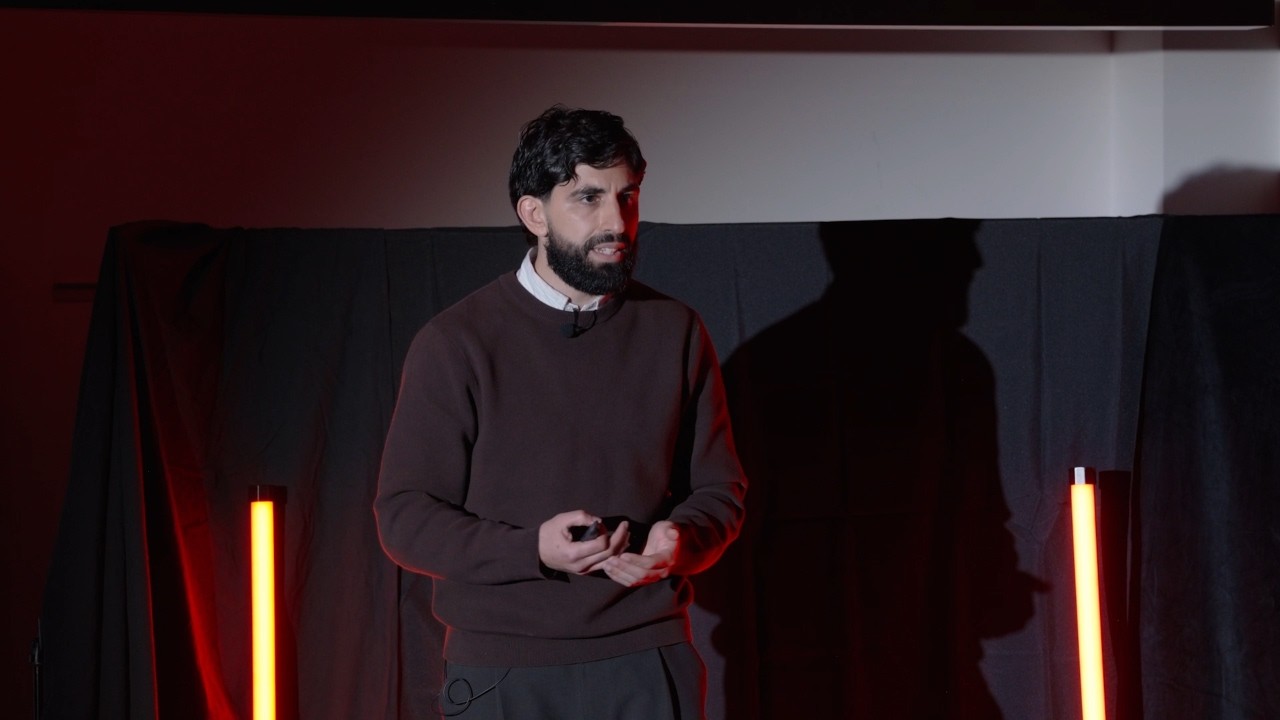
Is AI the death of Art | Kamal Saleh | TEDxUnity Grammar Youth
Keywords
Summary
121 words
Critical Evaluation
Value of the Information & Strength of the Argument
The talk offers a thoughtful perspective on AI and art, emphasizing the importance of intention and spirituality. The argument is coherent and uses compelling historical examples to support the claim that art’s value transcends technical skill. However, the reasoning is largely anecdotal and lacks empirical evidence or engagement with counterarguments. The speaker’s personal experience adds authenticity but also subjectivity. The argumentation is persuasive for a general audience but not rigorous in a scientific sense.
Scientific Rigor, Source Quality, Title Accuracy
The talk does not cite specific sources, but references historical figures and works (e.g., Leonardo da Vinci, Michelangelo, Gaudí) and mentions philosopher Alija Izetbegović. The only provided link is to TEDx, which is not a source for the content. The title accurately reflects the content, and the talk stays on topic. The lack of verifiable sources and reliance on personal interpretation reduce its scientific rigor.
154 words
Title / Content Match
The title accurately reflects the content, which directly addresses the question of whether AI threatens art.
Quality & Reliability
6/10
The talk is a personal and philosophical reflection rather than a scientific study. It relies on anecdotal evidence and historical examples, with no empirical data or citations. The argument is coherent but subjective, and the speaker's expertise is in storytelling rather than academic philosophy.
Key Moments
Markers derived by PSI from the transcript: the creator did not define chapters.
- Introduction: The speaker introduces himself as an artist and storyteller, and poses the question of whether AI has killed art.
- Comparison between the Mona Lisa and an AI-generated 'Muna Lisa' to illustrate the difference in impact.
- Argument that the power of art lies in the artist's intention and inner spirit, not just the surface.
- Examples of spiritual intention in art: Michelangelo's Sistine Chapel, Gaudí's Sagrada Família, and Ottoman architecture.
- Discussion of the Kaaba as an example of simple form with profound intention.
- Conclusion: AI can replicate form but not the human soul, so the artist lives on.
Cited Sources
- TEDx Program — Mentioned in the description as the organizing body for the talk.
Contribution & Novelties
The talk offers a humanistic perspective on AI and art, emphasizing the irreplaceable role of intention and spirituality. It contributes to the discourse by framing AI’s limitations in terms of the ‘soul’ of art, rather than technical capability.
Pour aller plus loin :
- Philosophy of art — Overview of philosophical questions about art’s nature and value.
- AI art — Discussion of AI-generated art and its implications.
- Intention — Philosophical concept of intention, relevant to the speaker’s argument.
77 words
Radar Profile
The radar profile shows moderate scores across all dimensions, with a slightly higher score in quality of information relative to quantity and technical level. This reflects a talk that is engaging and thoughtful but lacks depth in technical detail and empirical support.