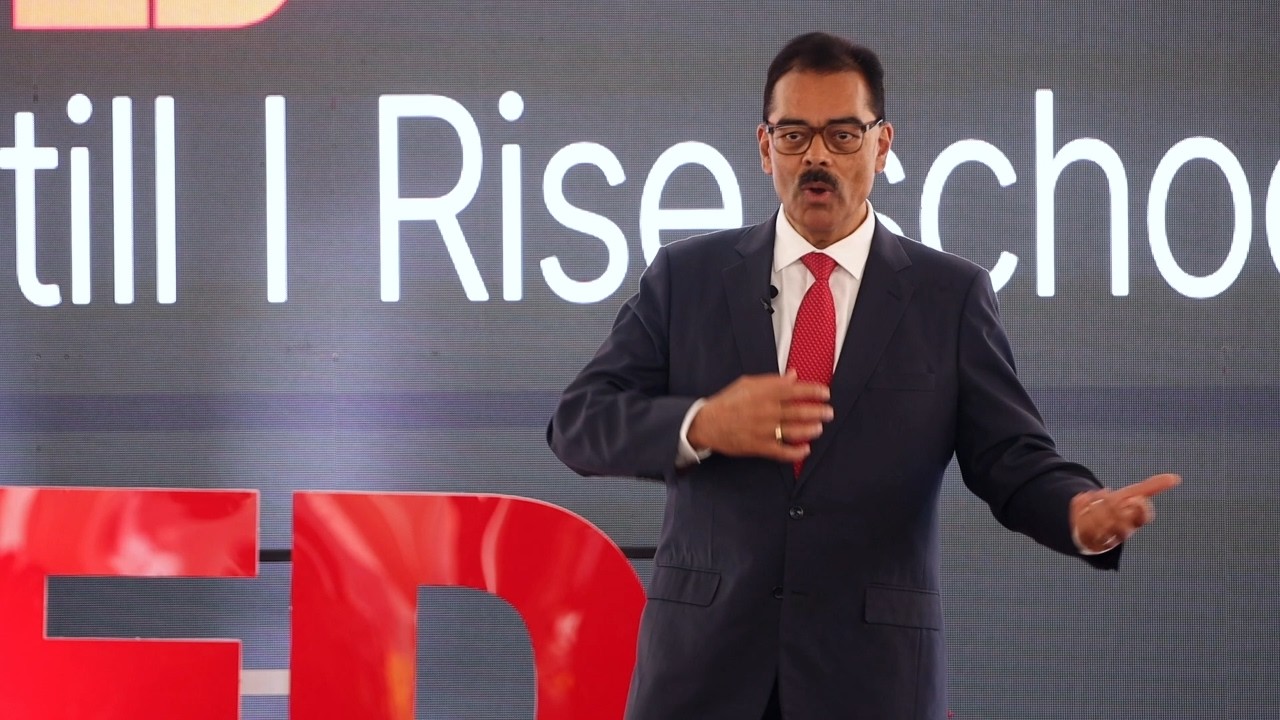
THE DISCIPLINE OF WHY: trusting the quiet voice within | Vimal Shah | TEDxStill I Rise School
Keywords
Summary
117 words
Critical Evaluation
Value of the Information & Strength of the Argument
The talk offers a valuable personal perspective on ethical decision-making in business, illustrated by a concrete example. The argument is coherent and emotionally resonant, but it relies entirely on anecdotal evidence and lacks rigorous analysis. The speaker’s authority is based on his success, not on systematic study. The reasoning is sound within its philosophical framework, but it does not engage with counterarguments or alternative viewpoints.
Scientific Rigor, Source Quality, Title Accuracy
The talk is a personal testimony with no scientific rigor or external sources. The only reference is to Kaizen and the Five Whys, which are mentioned without formal citation. The title accurately reflects the content, which is a philosophical reflection rather than a scientific exposition. The lack of sources limits its verifiability, but the speaker’s experience provides some practical credibility.
140 words
Title / Content Match
The title accurately reflects the content, which centers on the 'Five Whys' as a tool for introspection and the importance of inner alignment.
Quality & Reliability
6/10
Personal testimony from a successful industrialist, but lacks empirical evidence, citations, or verifiable data. The reasoning is anecdotal and philosophical rather than scientific.
Key Moments
Markers derived by PSI from the transcript: the creator did not define chapters.
- Introduction: the speaker asks the audience to hold an unresolved decision in mind.
- The speaker describes his lifelong habit of asking 'why' and the two inner voices.
- Introduction of Kaizen and the Five Whys tool, initially applied to manufacturing.
- Anecdote about the Madagascar expansion and the ethical dilemma.
- Distinction between reputation and character, and the concept of life as a mirror.
- Conclusion: the true discipline of why is to ask until beliefs, words, and actions align.
Cited Sources
- TEDx Talks — Mentioned in the video description as the organizing body for TEDx events.
Concurring Sources
- Five Whys — The technique described by the speaker is a standard Kaizen tool.
Dissenting Sources
- No discordant sources found — The talk is a personal narrative without scientific claims, so no contradictory sources are identified.
Contribution & Novelties
The talk’s original contribution is the application of a quality management tool (Five Whys) to personal ethics, framing it as a ‘discipline of why’ for self-alignment. It offers a practical heuristic for decision-making that considers both external outcomes and internal character development.
Pour aller plus loin :
- Five Whys — Foundational technique from Kaizen, relevant to the speaker’s method.
- Kaizen — Japanese philosophy of continuous improvement, the source of the Five Whys.
- Cognitive dissonance — Psychological concept related to the discomfort of misalignment between beliefs and actions.
87 words
Radar Profile
The radar profile shows moderate scores across all dimensions, with a slight peak in quality of information due to the speaker's authentic experience, but low technical level and limited quantitative information. This reflects a philosophical talk that is engaging but not data-driven.