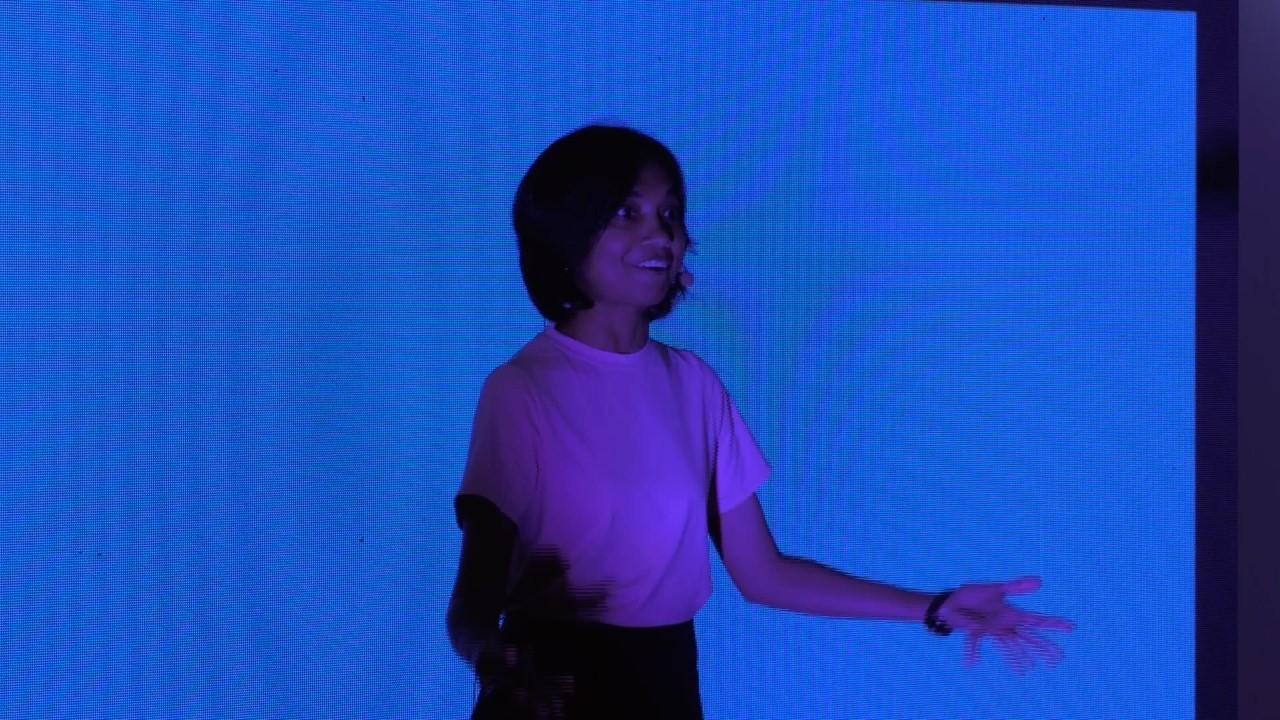
Curiosity Needs a Compass | Shihama Hanifa | TEDxKandy
Keywords
Summary
130 words
Critical Evaluation
Value of the Information & Strength of the Argument
The talk’s value lies in its practical, relatable examples from the classroom and a creative project. The argument is built on the speaker’s personal experience, which makes it engaging but not scientifically rigorous. The reasoning is coherent: curiosity must be paired with understanding and direction to be productive. The drama anecdote effectively illustrates how guiding students’ curiosity can lead to a powerful learning outcome. However, the lack of external evidence or references weakens the argument’s generalizability.
Scientific Rigor, Source Quality, Title Accuracy
The talk is an opinion piece based on personal experience, not a scientific study. No external sources are cited, and the only link provided is the general TEDx page. The title accurately represents the content, and the talk stays on topic. The speaker’s credentials as a teacher lend some authority, but the absence of research-backed claims limits the scientific rigor.
151 words
Title / Content Match
The title accurately reflects the core message: curiosity needs direction (a 'compass') to be effective. The talk consistently develops this metaphor.
Quality & Reliability
6/10
The talk is a personal and professional reflection on the role of curiosity in education, supported by anecdotal evidence from the speaker's teaching experience. It lacks empirical data or citations to scientific literature, which limits its scientific rigor, but the arguments are coherent and grounded in practical examples.
Key Moments
Markers derived by PSI from the transcript: the creator did not define chapters.
- Introduction: The speaker asks the audience to recall a time they faced a problem they didn't know how to solve, and introduces the idea of curiosity.
- Definition of curiosity as a series of questions, not just a desire to know.
- Example of a math problem about upper bounds, illustrating the need to understand the problem.
- Analysis of a student's answer that shows correct reasoning but a wrong final answer, earning partial credit.
- Transition to the drama project: the challenge of incorporating a missile launch into a play about math.
- Description of the students' creative solution: a ruler threatened by a data center, and a scientist's miscalculation.
- The students use a genie to rectify the mistake, leading to a successful launch and a powerful message about precision.
- Conclusion: The responsibility of adults to guide curiosity, and the transformation of uncertainty into discovery.
Cited Sources
- TEDx Talks — General TEDx page mentioned in the video description.
Concurring Sources
- Curiosity (Wikipedia) — General concept of curiosity as a driver of learning.
Contribution & Novelties
The talk offers a practical, teacher’s perspective on how to channel curiosity in educational settings, using a concrete example from a drama project. It emphasizes the importance of ‘staying with the question’ and understanding the problem, rather than just seeking answers.
Pour aller plus loin :
- Curiosity (Wikipedia) — Provides a general overview of curiosity as a psychological concept.
- Inquiry-based learning (Wikipedia) — Directly relates to the talk’s emphasis on questioning and exploration.
- Growth mindset (Wikipedia) — Relevant to the idea of learning from mistakes and persisting through challenges.
89 words
Radar Profile
The radar profile shows moderate scores across all dimensions, with a slightly higher score in 'qualite_information' and lower in 'niveau_technique'. This reflects a talk that is informative and coherent but lacks technical depth and rigorous sourcing.
💬 No comments were provided for analysis.