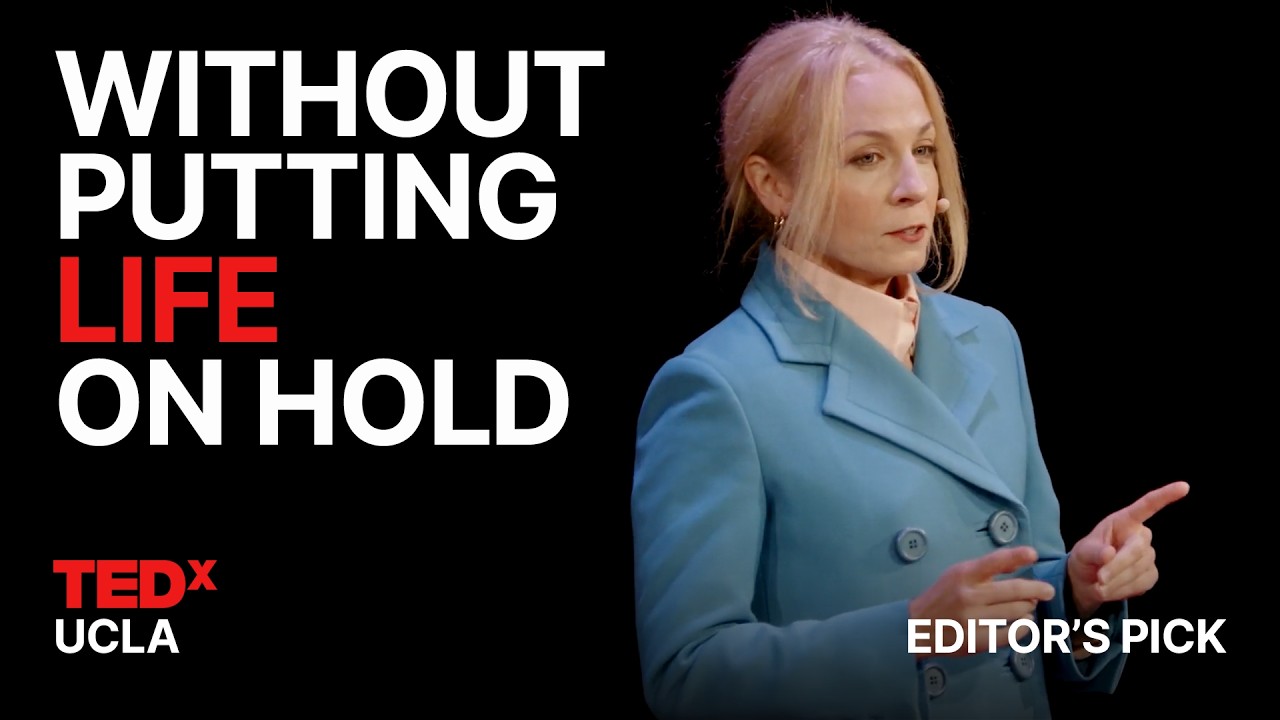
How to live in extreme heat | V. Kelly Turner | TEDxUCLA
Keywords
Summary
150 words
Critical Evaluation
Value of the Information & Strength of the Argument
The talk provides a compelling reframing of heat as a quality-of-life issue rather than solely a survival threat. The argument is well-structured, using a relatable narrative to illustrate the cumulative impact of heat on daily activities. The speaker effectively contrasts the current ‘survival’ model with a proposed ’living with heat’ model, supported by references to emerging research and measurement technologies. However, the argumentation relies heavily on anecdotal scenarios and lacks concrete data or case studies to strengthen the claims. The proposal for personalized heat guidance is visionary but presented without detailed implementation strategies.
102 words
Title / Content Match
The title accurately reflects the content, which focuses on adapting to extreme heat rather than merely surviving it.
Quality & Reliability
7/10
The talk is grounded in the speaker's expertise as a heat researcher and urban planning professor, and it references ongoing scientific research and measurement tools. However, it lacks specific citations or data points, and the narrative is largely anecdotal.
Key Moments
Markers derived by PSI from the transcript: the creator did not define chapters.
- Introduction: heat as a critical question for thriving in a hotter future.
- Narrative of a hot day: impacts on daily activities and quality of life.
- Discussion of inequities: families without air conditioning and outdoor workers.
- Critique of current heat warning systems: universal thresholds and blunt instruments.
- Proposal for a new approach: personalized heat guidance based on health, place, and activity.
- Vision of a future with clear vision: an app providing personalized heat advice.
- Conclusion: redefining 'too hot' as inability to live one's life.
Cited Sources
- UCLA Luskin Heat Equity — Referenced as the speaker's research center on heat equity.
- V. Kelly Turner profile — Speaker's profile at UCLA Luskin Center for Innovation.
- TEDx program — General information about TEDx events.
Concurring Sources
- UCLA Luskin Heat Equity — The speaker's research center focuses on heat equity, aligning with the talk's themes.
Contribution & Novelties
The talk offers a novel perspective by shifting the focus from heat as a lethal hazard to heat as a chronic quality-of-life issue. It advocates for personalized, context-aware heat management rather than universal thresholds. The speaker highlights the importance of metabolic heat stress and emerging measurement technologies, which are not widely discussed in public discourse.
Pour aller plus loin :
- Heat stress and human health — WHO fact sheet on heat and health, providing scientific background.
- Urban heat island effect — Wikipedia article explaining how urban design affects local temperatures.
- Thermoregulation — Wikipedia article on the body’s mechanisms for maintaining temperature, relevant to metabolic heat stress.
106 words
Radar Profile
The radar profile shows moderate scores across all dimensions, with slightly higher quality and reliability reflecting the speaker's expertise, but lower technical depth and information quantity due to the accessible format.