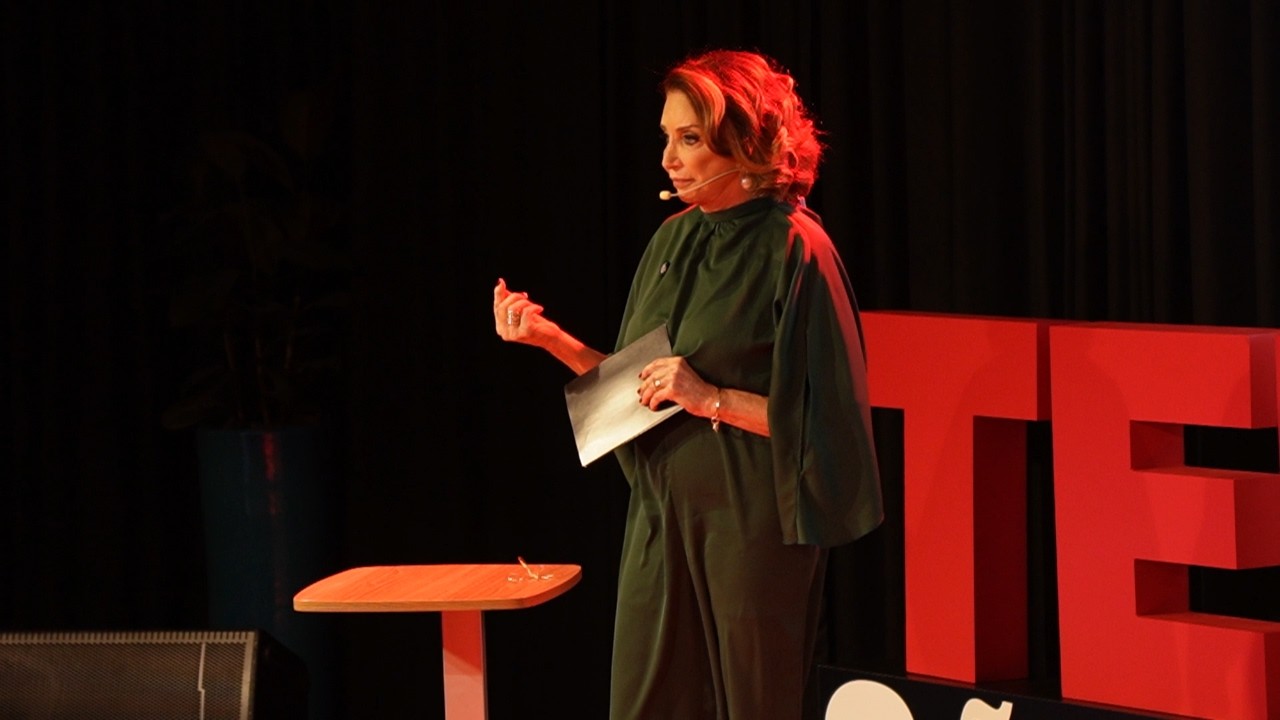
O impossível que eu recusei aceitar | Valquíria Menegaldo | TEDxSão José do Rio Preto Women
Keywords
Summary
135 words
Critical Evaluation
Value of the Information & Strength of the Argument
The talk’s value lies in its inspirational personal narrative, offering a powerful example of parental advocacy and resilience. The argumentation is based on anecdotal evidence, structured around the speaker’s experience and her three pillars (faith, courage, action). While emotionally compelling, it lacks empirical data or references to support the claims about neuroplasticity or the effectiveness of her methods. The reasoning is logical within its personal context but does not provide a generalizable framework.
Scientific Rigor, Source Quality, Title Accuracy
The talk is a personal testimony, not a scientific presentation. No external sources are cited; the only link in the description is to TEDx’s general page. The medical information (e.g., agenesis of the corpus callosum, epilepsy) is presented accurately but without citations. The title accurately reflects the content. The speaker’s credentials as a psychopedagogue lend some authority, but the lack of verifiable sources limits the scientific rigor.
155 words
Title / Content Match
The title accurately reflects the content: a personal story of refusing to accept a diagnosis of impossibility.
Quality & Reliability
6/10
Personal testimony with emotional weight, but lacks verifiable scientific references or data. Medical terms are mentioned but not explained with sources. The speaker's expertise in psychopedagogy adds credibility, but the talk is primarily anecdotal.
Key Moments
Markers derived by PSI from the transcript: the creator did not define chapters.
- Introduction: the question of impossibility and the speaker's identity.
- Birth of her daughter and the first signs of difference.
- Multiple diagnoses and the daughter's developmental delays.
- School rejections and the decision to study pedagogy.
- Adapting materials and collaborating with a teacher.
- Receiving the definitive diagnoses: agenesis of the corpus callosum and epilepsy.
- Adapting the home and overcoming prejudice.
- The three pillars: faith, courage, and action.
- The daughter's achievements and the final message.
Cited Sources
- TEDx Program — General information about TEDx events, mentioned in the video description.
Concurring Sources
- TEDx Program — The talk is part of the TEDx series, which shares personal stories and ideas.
Contribution & Novelties
The talk offers a personal perspective on raising a child with a rare neurological condition, emphasizing the role of parental advocacy and adapted education. It contributes to the discourse on inclusion and the potential of individuals with disabilities. The novelty lies in the speaker’s hands-on approach to creating educational materials and her insistence on not accepting limitations.
Pour aller plus loin :
- Agenesis of the corpus callosum — Provides medical background on the condition.
- Epilepsy — Overview of epilepsy types and management.
- Inclusive education — Discusses educational approaches for students with disabilities.
- Neuroplasticity — Relevant to the brain’s ability to adapt, though not explicitly mentioned in the talk.
108 words
Radar Profile
The radar profile shows moderate scores across all dimensions, with slightly higher quality of information and lower technical level. This reflects a personal testimony that is emotionally engaging but not technically deep.
💬 No comments were provided for analysis.