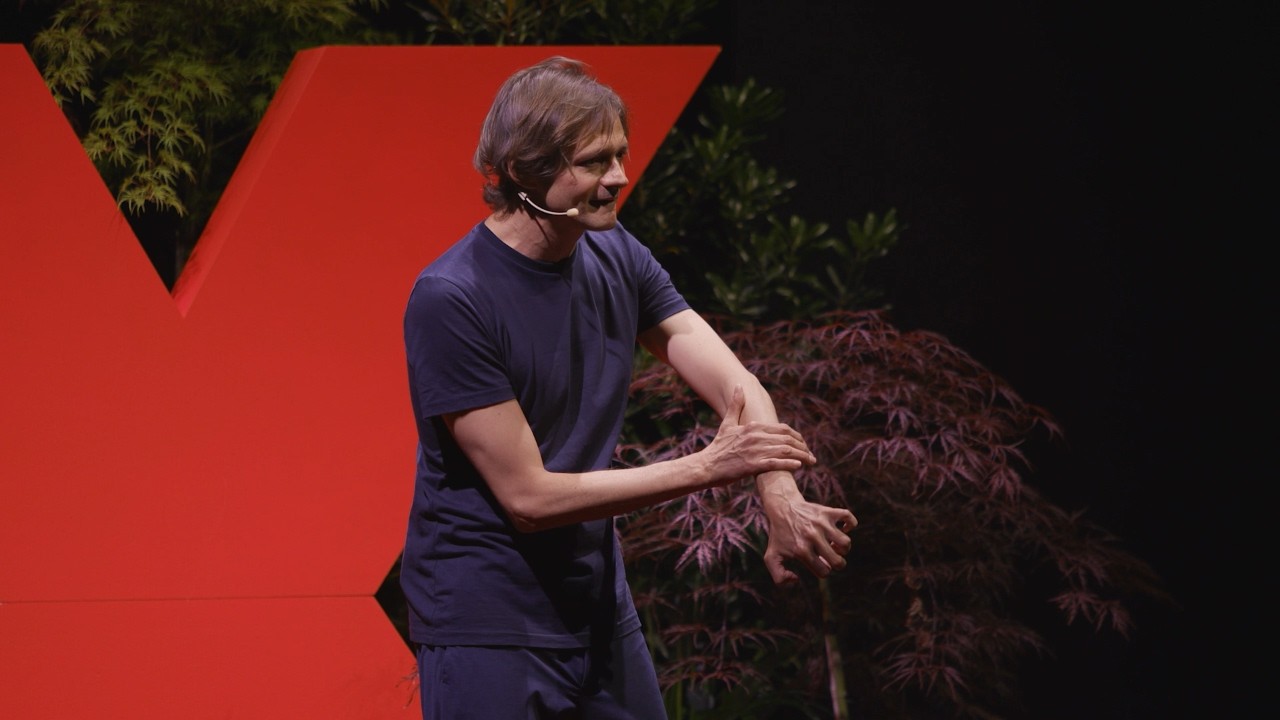
Giulio Xhaet | Giulio Xhaet | TEDxSaronno
Keywords
Summary
155 words
Critical Evaluation
The talk is a compelling personal narrative that effectively illustrates the transformative power of curiosity. Xhaet’s storytelling is engaging and emotionally resonant, making the content accessible. However, from a scientific perspective, the talk lacks empirical evidence and relies heavily on anecdotal experience. The four dimensions of curiosity are presented without clear theoretical grounding or references to psychological research, which weakens the scientific rigor. The etymological analysis of ‘curiosity’ from ‘cura’ is interesting but not deeply explored. The reference to the proverb’s extension is presented as historical fact without citation. The concept of ‘vujà dé’ is introduced as a coined term, but its psychological validity is not established. The talk’s strength lies in its motivational value and practical suggestions for cultivating curiosity, such as seeking new experiences and practicing critical thinking. The speaker’s background in communication and education lends some credibility, but the lack of citations to scientific literature is a significant limitation. The adéquation between title and content is adequate, though the title is redundant. Overall, the talk is inspiring and thought-provoking, but it should be viewed as an opinion piece rather than a scientifically rigorous analysis.
187 words
Title / Content Match
The title is repetitive and lacks descriptive clarity, but the content aligns with the speaker's personal story about curiosity.
Quality & Reliability
7/10
The talk is a personal narrative with references to etymology, historical proverbs, and psychological concepts, but lacks empirical citations or rigorous scientific backing. The speaker's expertise in communication and education lends credibility, but the content is primarily anecdotal and motivational.
Key Moments
Markers derived by PSI from the transcript: the creator did not define chapters.
- Introduction: The speaker shares that curiosity saved his life, setting the stage for his personal story.
- The tornado destroys the festival and his dreams of becoming a musician.
- He describes his descent into depression and substance abuse, and his refuge in books.
- He discusses the etymology of curiosity from Latin 'cura' and the proverb 'curiosity killed the cat'.
- He introduces the four dimensions of curiosity: exploratory, investigative, healing, and entrepreneurial.
- He explains the concept of 'vujà dé' as seeing familiar things with new eyes.
- He concludes with Italo Calvino's definition of curiosity and a call to action.
Cited Sources
- TEDx Program — Mentioned in the description as the organizing body for TEDx events.
Concurring Sources
- Curiosity (Wikipedia) — General information on curiosity as a psychological trait.
Contribution & Novelties
The talk offers a personal and motivational perspective on curiosity as a tool for self-care and resilience. It introduces a framework of four dimensions of curiosity and the concept of ‘vujà dé’, which, while not scientifically validated, provides a practical lens for personal development.
Pour aller plus loin :
- Curiosity (Wikipedia) — Provides background on the psychological concept of curiosity.
- Self-determination theory (Wikipedia) — Related to intrinsic motivation and well-being.
- Post-traumatic growth (Wikipedia) — Relevant to the speaker’s narrative of growth after adversity.
83 words
Radar Profile
The radar profile shows moderate scores across all dimensions, with slightly higher quality of information and lower technical depth, reflecting the talk's motivational nature and lack of scientific rigor.