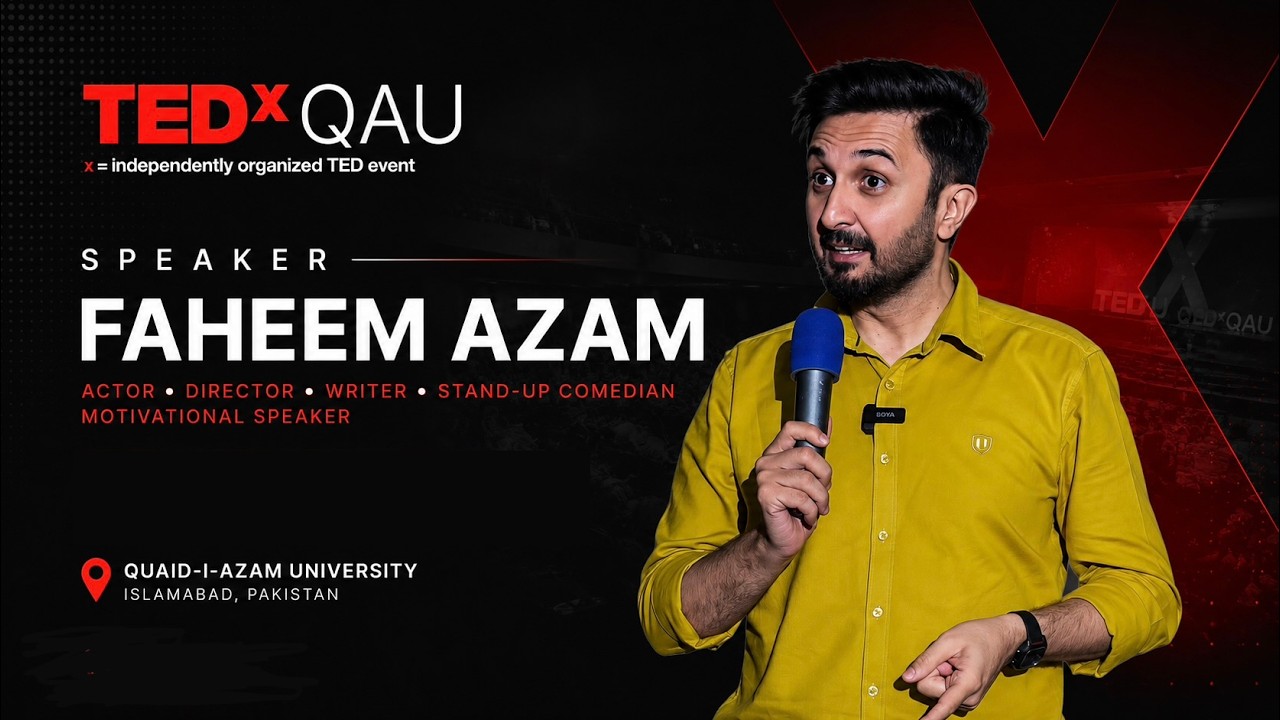
The Resonance of Stories: Rewriting the Narratives We’re Told | Faheem Azam | TEDxQAU
Keywords
Summary
132 words
Critical Evaluation
The talk presents a compelling personal perspective on the power of narratives, but it lacks scientific rigor. The speaker, a performing artist, offers anecdotal evidence and rhetorical arguments rather than empirical data or references to academic research. The historical claims about colonialism and its effects are broad and not substantiated. The argument that stories shape society is plausible and aligns with sociological theories, but the talk does not engage with scholarly literature. The examples used, such as the tortoise and the hare, are effective for illustration but are not analyzed in depth. The speaker’s call for empathy and unity is commendable, but the practical steps for rewriting narratives are vague. The talk is more inspirational than informative, and its value lies in its motivational aspect rather than its factual content. The adéquation between title and content is good, as the talk directly addresses the resonance of stories and the need to rewrite them. Overall, the talk is thought-provoking but not scientifically robust.
162 words
Title / Content Match
The title accurately reflects the content: the speaker discusses the resonance of inherited stories and the need to rewrite them.
Quality & Reliability
6/10
The talk is a personal and rhetorical exploration of how narratives shape identity and society, grounded in the speaker's experience in performing arts. It lacks empirical evidence or citations, relying on anecdotal examples and broad historical claims. The argument is coherent but not scientifically rigorous.
Key Moments
Markers derived by PSI from the transcript: the creator did not define chapters.
- Introduction: The speaker asks the audience to think of a story they relate to.
- Critique of the tortoise and hare fable, questioning its logic and propaganda.
- Discussion of how stories are seeded in our minds and shape our personalities.
- Historical context: post-WWII and post-colonial influences on parenting and societal narratives.
- The impact of fear-based parenting and the guilt of not following parental strategies.
- How media (radio, TV, mobile) have been labeled as devil's boxes, reflecting changing narratives.
- The role of propaganda in shaping our choices and separating us from our true stories.
- Call for stories that bring people together, citing a mayor who united a city.
- Conclusion: Encouragement to create and embrace unifying stories.
Cited Sources
- TEDx Program — The talk was given at a TEDx event, and the description links to the TEDx program.
Concurring Sources
- TEDx Program — The talk follows the TEDx format, which encourages sharing ideas worth spreading.
Contribution & Novelties
The talk offers a personal and creative perspective on how narratives shape identity, drawing on the speaker’s background in performing arts. It challenges common fables and societal norms, encouraging critical thinking about the stories we inherit. The emphasis on empathy and unity as a counter to divisive narratives is a valuable message.
Pour aller plus loin :
- Narrative identity — Relevant to the concept of identity being shaped by stories.
- Propaganda — Relevant to the speaker’s discussion of how stories can be used as propaganda.
- Social constructionism — Relevant to the idea that societal narratives shape our reality.
98 words
Radar Profile
The radar profile shows moderate scores in information quantity and quality, with a lower technical level and moderate reliability. This reflects a talk that is engaging and thought-provoking but lacks scientific depth and empirical support.