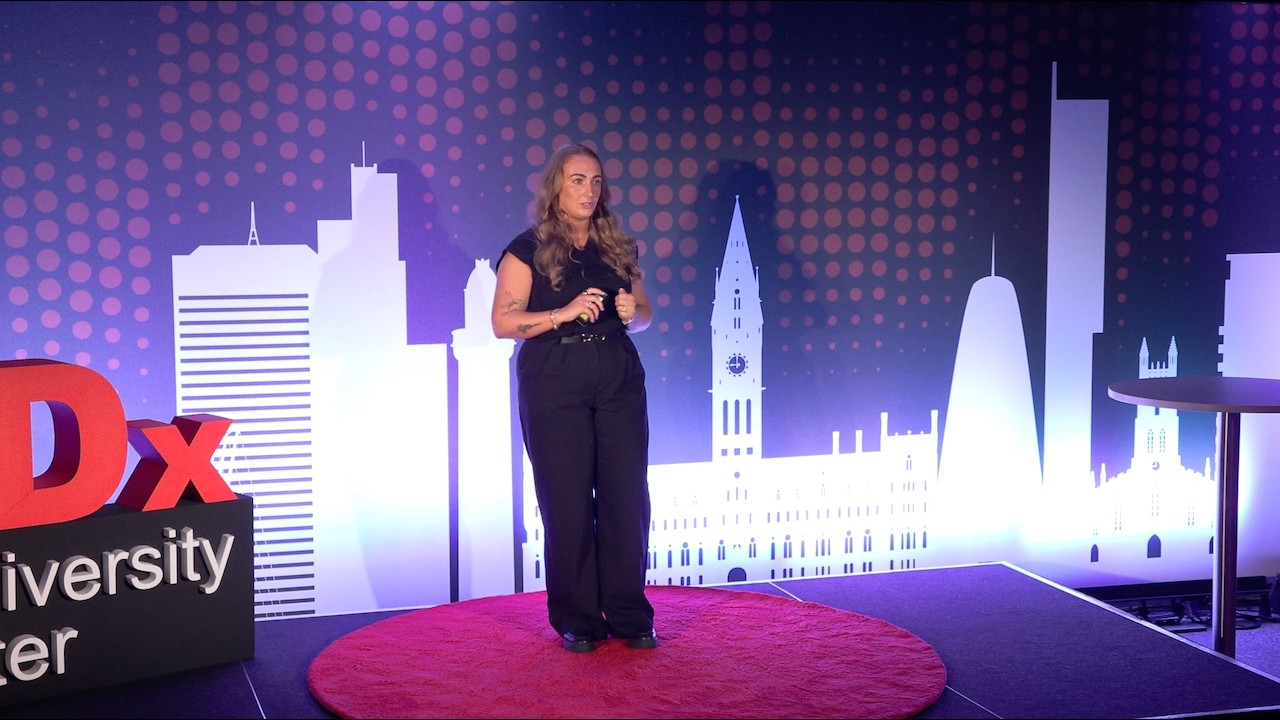
Why communication is key to change management | Jenn Rigby | TEDxArden University Manchester
Keywords
Summary
147 words
Critical Evaluation
The talk offers a compelling and accessible argument for prioritizing communication in change management. Rigby’s central thesis—that the human element is often overlooked in favor of technical plans—is well-supported by her professional experience in delivery and transformation. She effectively uses rhetorical questions and relatable examples to illustrate common pitfalls, such as announcing changes without context or using jargon that alienates employees. The introduction of the ‘What? So What? Now What?’ model provides a practical, actionable framework that viewers can immediately apply. However, the talk lacks empirical evidence or citations to specific research studies, relying instead on well-known but generic references like Kotter and Sinek. While these references lend some authority, they are not deeply explored, and the talk does not address potential counterarguments or complexities, such as situations where communication alone is insufficient or where organizational politics impede transparency. The speaker’s credibility is established through her role, but the absence of concrete data or case studies weakens the scientific rigor. The talk is more of an inspirational and practical guide than a rigorous academic analysis. The adéquation between title and content is strong, as the talk consistently focuses on communication as the key to change management. The presence of a brief sponsor segment (not named) does not detract from the content. Overall, the talk provides valuable insights for practitioners but would benefit from more robust evidence and a more nuanced discussion of the challenges involved.
235 words
Title / Content Match
The title accurately reflects the core message: communication is central to effective change management. The talk consistently elaborates on this theme.
Quality & Reliability
6/10
The talk presents a coherent argument based on personal experience and references to well-known models (Kotter, Simon Sinek, 'What? So What? Now What?'), but lacks empirical data or citations to specific studies. The speaker's expertise is in delivery and transformation, lending practical credibility, but the content is largely anecdotal and prescriptive.
Key Moments
Markers derived by PSI from the transcript: the creator did not define chapters.
- Introduction: Rigby opens with authoritarian phrases like 'because I said so' and asks the audience if they make them want to shut down.
- Rigby states that effective change management is a 'lost art' and emphasizes the role of communication in bridging intention and action.
- She discusses the importance of communicating the 'why' behind changes, contrasting corporate jargon with purpose-driven messaging.
- Rigby introduces the 'What? So What? Now What?' model as a framework for structuring communication and validating thinking.
- She emphasizes the need for feedback loops and active listening, sharing an example of why employees might leave despite career paths.
- Rigby concludes that change management is about leading people, not managing change, and encourages the audience to apply the 'now what'.
Cited Sources
- TEDx Talks — The talk was given at a TEDx event, and the description links to the TEDx program for more information.
Concurring Sources
- Kotter's 8-Step Process — The speaker references Kotter's model, which emphasizes creating urgency and communicating the vision.
- Simon Sinek's 'Start with Why' — The speaker explicitly cites Sinek's concept of starting with 'why' to inspire action.
Dissenting Sources
- Critique of 'Culture Eats Strategy for Breakfast' — Some argue that culture and strategy are interdependent, not one dominating the other, which nuances the speaker's reliance on the quote.
Contribution & Novelties
The talk provides a practical, human-centric perspective on change management, emphasizing the role of communication in fostering trust and buy-in. It offers a simple framework (‘What? So What? Now What?’) that can be applied across contexts. The speaker’s experience in technical delivery adds a pragmatic angle, highlighting the often-overlooked human element in technology-driven changes.
Pour aller plus loin :
- John Kotter’s 8-Step Process for Leading Change — Relevant as the speaker references Kotter’s work on urgency and culture.
- Simon Sinek’s ‘Start with Why’ — The talk explicitly cites Sinek’s concept of starting with ‘why’.
- Peter Drucker’s ‘Culture Eats Strategy for Breakfast’ — The speaker references this famous quote to emphasize the importance of culture.
- Change Management Models: A Comparison — Provides an overview of various change management frameworks, useful for further exploration.
132 words
Radar Profile
The radar profile shows moderate scores across all dimensions, with slightly higher scores in information quantity and quality, reflecting the talk's practical advice but limited depth. The low technical level indicates accessibility to a general audience, while the moderate reliability score suggests a mix of credible references and anecdotal evidence.
💬 No comments were provided for analysis.