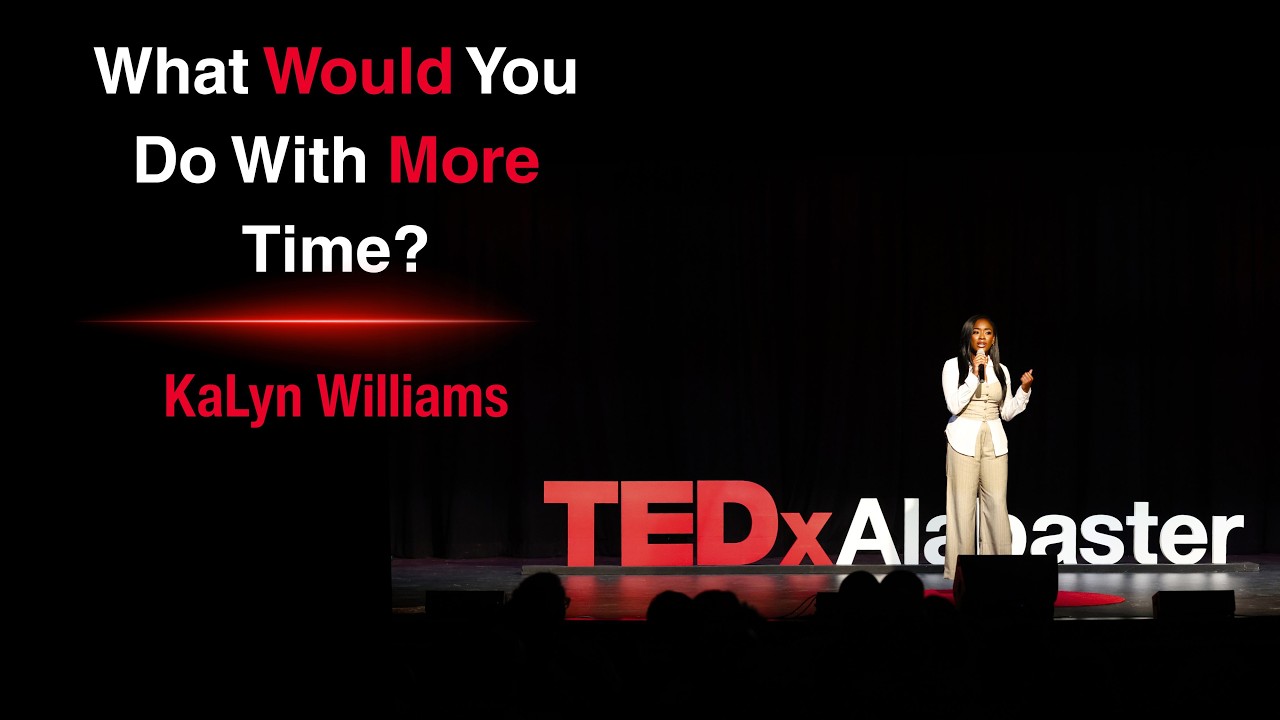
What Would You Do With More Time?
Keywords
Summary
144 words
Critical Evaluation
Value of the Information & Strength of the Argument
The talk’s value lies in its relatable framing of time scarcity and the potential of automation to improve quality of life. The argument is built on personal anecdote and generational observations rather than empirical evidence. The speaker’s narrative is coherent and persuasive, but lacks depth in addressing counterarguments or complexities such as the environmental and economic downsides of AI. The call to use AI intentionally is reasonable but not substantiated with concrete strategies or data.
84 words
Title / Content Match
The title is a thought-provoking question that matches the talk's central theme of reclaiming time through intentional use of automation and AI.
Quality & Reliability
5/10
The talk is a personal narrative and opinion piece with no scientific references or data. It relies on anecdotal evidence and general claims about technology and time use.
Key Moments
Markers derived by PSI from the transcript: the creator did not define chapters.
- Introduction: the paradox of technology saving time yet feeling exhausted.
- Generational perspectives on technology and work.
- AI as the latest tool, with both excitement and skepticism.
- Automation as a way to buy time, with examples.
- Personal story of automating workflows and reclaiming time.
- Conclusion: automation helps us be present, not just productive.
Cited Sources
- TEDx Program — Mentioned as the organizing body for the talk.
Contribution & Novelties
The talk offers a personal perspective on using automation to reclaim time for well-being, shifting the narrative from productivity to presence. It emphasizes intentionality in technology use, which is a valuable mindset shift.
Pour aller plus loin :
- Time management — Overview of techniques and theories.
- Automation — Definition and history.
- Artificial intelligence — General overview.
- Work–life balance — Concept and research.
- Digital well-being — Related to healthy tech habits.
70 words
Radar Profile
The radar profile shows low scores across all dimensions, reflecting the talk's anecdotal nature and lack of technical depth. The highest score is in information quality, but it remains modest.