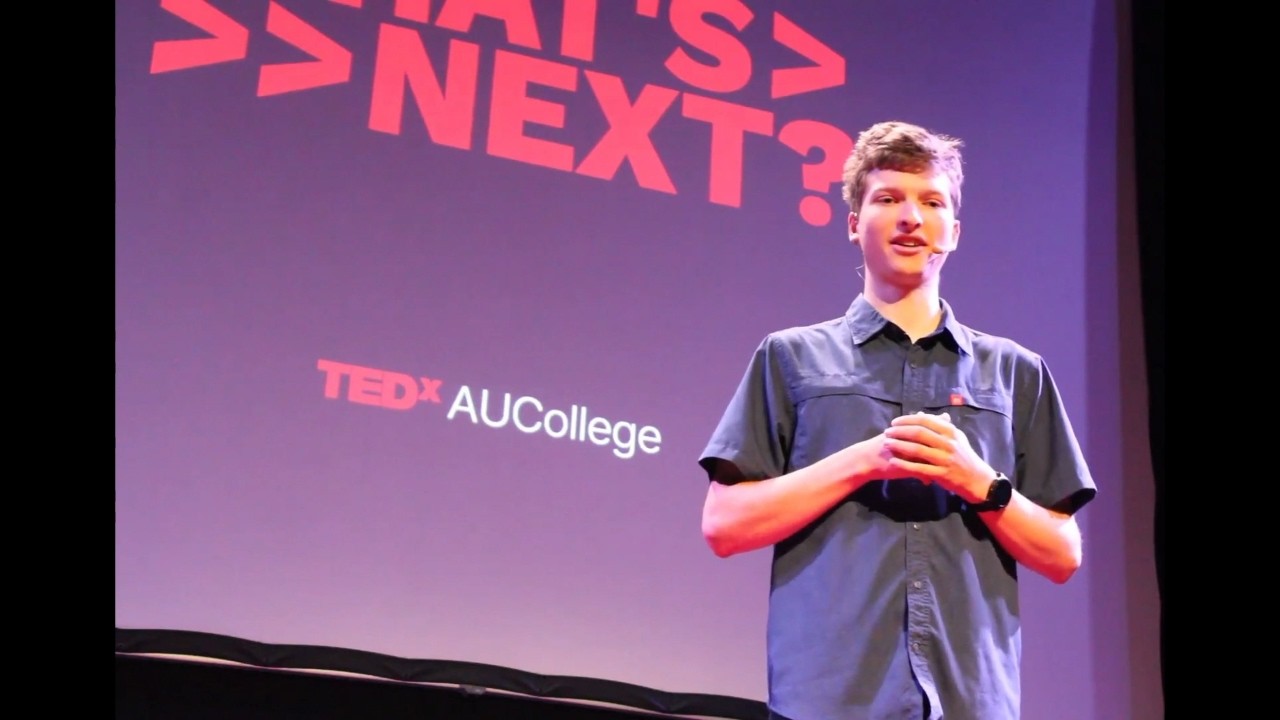
What chess can teach us about learning | Jonas Dornieden | TEDxAU College
Keywords
Summary
165 words
Critical Evaluation
Value of the Information & Strength of the Argument
The talk offers a valuable perspective on education by using chess as a lens to discuss failure and feedback. The argument is structured logically, moving from personal anecdote to broader educational critique and potential solutions. The speaker effectively illustrates how chess’s immediate feedback loop contrasts with the delayed feedback in schools. However, the argument relies heavily on anecdotal evidence and general claims, with limited empirical data. The references to research are vague (e.g., ‘Zaland University’ and ‘Columbia University’) and not detailed enough to verify. The proposal for reform, while compelling, is presented at a high level without addressing practical implementation challenges.
Scientific Rigor, Source Quality, Title Accuracy
The talk is a personal opinion piece rather than a rigorous scientific review. The speaker cites research from ‘Zaland University’ and ‘Columbia University’ but does not provide specific studies or data, making it difficult to assess their validity. The examples of Hungary and Finland are relevant but presented without in-depth analysis. The title accurately reflects the content, which uses chess as a central metaphor. The talk is well-structured and engaging, but the lack of concrete sources and detailed evidence limits its scientific rigor. No comments were provided for analysis.
205 words
Title / Content Match
The title accurately reflects the content, which uses chess as a metaphor to discuss learning and education reform.
Quality & Reliability
6/10
The talk presents a personal perspective supported by references to research (Zaland University, Columbia University) and examples (Hungary, Finland), but lacks detailed citations or data. The argument is coherent but relies on anecdotal evidence and general claims.
Key Moments
Markers derived by PSI from the transcript: the creator did not define chapters.
- Introduction: The speaker shares a common classroom scenario where students hesitate to answer for fear of being wrong.
- Contrast between school's avoidance of mistakes and chess's normalization of failure.
- Chess provides immediate feedback, unlike delayed feedback in education.
- Discussion of continuous assessment in chess versus yearly resets in school.
- Chess players analyze games together to learn from mistakes, fostering a healthy relationship with competition.
- Example of a young chess player acknowledging his mistake and pointing out a winning move to his opponent.
- Hungary's implementation of chess in schools to promote values like responsibility and managing failure.
- The role of metrics in shaping incentives; grades that reward correctness discourage curiosity.
- Finland's self-evaluation-based assessment as an alternative to standardized tests.
- Comparison with AI systems that learn through iterative feedback, and the human tendency to attach shame to mistakes.
- Call for systemic change: rewarding reflection and improvement, and giving timely feedback.
Cited Sources
- TEDx Program — The talk was given at a TEDx event, and this link provides information about the TEDx program.
Concurring Sources
- TEDx Talks — The talk is part of the TEDx series, which often features educational topics.
Contribution & Novelties
The talk offers a fresh perspective on education by drawing parallels with chess, emphasizing the importance of immediate feedback and a healthy attitude towards failure. It suggests that education systems should focus on adaptability and learning from mistakes rather than on correctness. The comparison with AI learning processes is particularly insightful, highlighting how machines are allowed to fail without judgment while humans are not.
Pour aller plus loin :
- Feedback in education — Overview of feedback types and their effectiveness in learning.
- Growth mindset — Concept by Carol Dweck related to learning from failure.
- Finland’s education system — Details on Finland’s approach to assessment and learning.
106 words
Radar Profile
The radar profile shows moderate scores across all dimensions, with slightly higher scores in information quantity and quality, and lower in technical level. This reflects a talk that is informative and well-structured but not highly technical or deeply sourced.