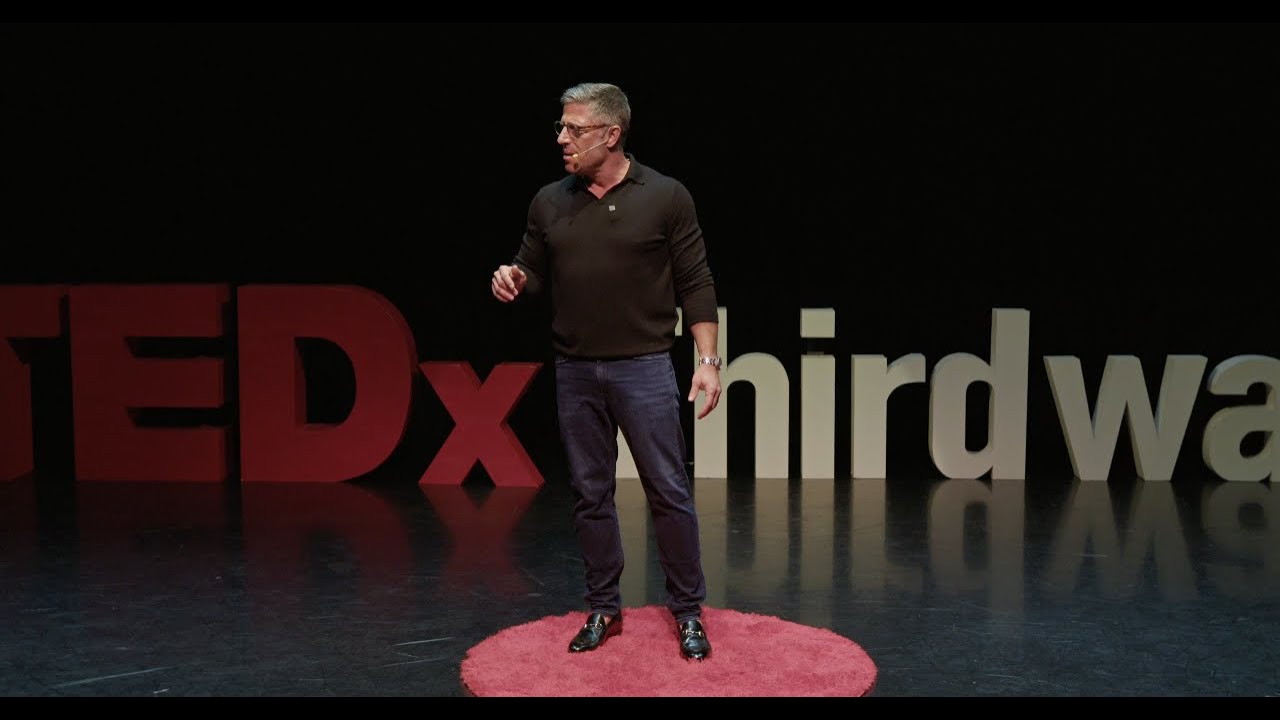
What if Your Worst Day Could Change the World | Evan Marks | TEDxThird Ward
Keywords
Summary
121 words
Critical Evaluation
The talk offers a compelling and emotionally resonant narrative that effectively communicates the concept of post-traumatic growth. Evan Marks uses his personal story to illustrate key points, making the content relatable and engaging. The inclusion of well-known examples like Malala Yousafzai and Candy Lightner adds credibility and demonstrates the real-world applicability of PTG. However, from a scientific standpoint, the talk lacks depth. Marks mentions research from UNC Chapel Hill and UPenn and references neuroplasticity, but he does not provide specific studies, citations, or data. The five-step framework (Face it, Feel it, Rewrite it, Share it, Use it) is presented as a practical guide, but it is not empirically validated or referenced to any established therapeutic model. The talk’s strength lies in its motivational and inspirational value rather than its scientific rigor. The speaker’s background as a mental performance coach lends practical experience, but it does not substitute for academic expertise in psychology or neuroscience. The TEDx disclaimer appropriately notes that the talk represents the speaker’s personal views. Overall, the content is valuable for raising awareness about PTG and encouraging personal growth, but viewers should seek additional evidence-based resources for a deeper understanding. The title accurately reflects the talk’s message, and the content is well-structured and delivered with passion.
208 words
Title / Content Match
The title is engaging and reflects the core message that personal crises can lead to positive transformation and impact on others.
Quality & Reliability
6/10
The talk is a personal narrative with references to scientific concepts (neuroplasticity, post-traumatic growth) but lacks specific citations or detailed evidence. The speaker's expertise is in coaching, not academic research, and the TEDx disclaimer notes that the talk represents personal views. The content is plausible and aligns with established psychological concepts, but the scientific rigor is limited.
Key Moments
Markers derived by PSI from the transcript: the creator did not define chapters.
- Introduction: The moment something breaks and the world expects you to continue.
- Mark Twain quote and the idea that finding your 'why' often begins in darkness.
- Examples of Malala and Candy Lightner as illustrations of post-traumatic growth.
- Definition of post-traumatic growth and the concept of bouncing forward.
- Evan's personal story: chaotic childhood, sports, and the loss of his athletic identity.
- Transition to Wall Street and the suppression of pain.
- The panic attack on the train platform and the medical diagnosis.
- The realization that collapse is not failure but an emergency brake.
- Introduction of the five-step path: Face it, Feel it, Rewrite it, Share it, Use it.
- Explanation of neuroplasticity and how the brain rewires when facing pain.
- The power of sharing pain and turning it into purpose.
- Conclusion: Turning pain into power, purpose, and path; the impact on others.
Cited Sources
- TEDx Content Guidelines — Referenced in the video description as a note from TED regarding the talk's content.
- TEDx Program — Mentioned in the description as the organizing body for TEDx events.
Concurring Sources
- Post-traumatic growth - Wikipedia — Supports the concept of post-traumatic growth as a recognized psychological phenomenon.
- Neuroplasticity - Wikipedia — Supports the claim that the brain can rewire in response to experience.
Dissenting Sources
- No specific sources found — No sources explicitly contradicting the talk's claims were found, but the lack of specific citations limits verification.
Contribution & Novelties
The talk provides a personal and accessible introduction to post-traumatic growth, offering a simple five-step framework that may help individuals reframe their struggles. It emphasizes the transformative potential of pain, which is a valuable perspective for a general audience.
Pour aller plus loin :
- Post-traumatic growth - Wikipedia — Provides an overview of the concept and its research background.
- Neuroplasticity - Wikipedia — Explains the brain’s ability to reorganize itself, a key mechanism mentioned in the talk.
- TEDx Talk on TED.com — The official TEDx platform where the talk may be available, offering context and related talks.
97 words
Radar Profile
The radar profile shows moderate scores across all dimensions, with slightly higher quality of information and lower technical level. This indicates a talk that is accessible and engaging but not deeply scientific, balancing personal narrative with general psychological concepts.
💬 Très positif. Les 30 commentaires analysés expriment une admiration unanime pour le discours, soulignant son inspiration, sa puissance émotionnelle et la clarté du message sur la croissance post-traumatique.