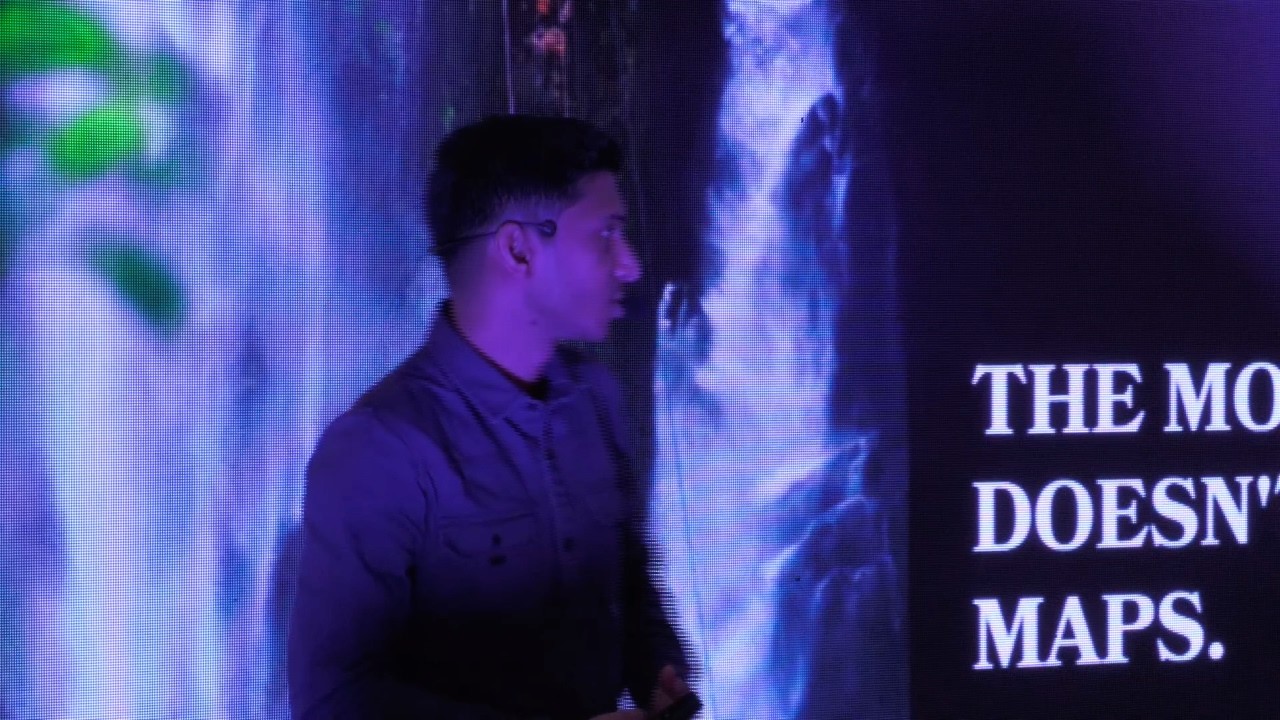
Map is not the mountain | Gayantha Niyangoda | TEDxKandy
Keywords
Summary
157 words
Critical Evaluation
Value of the Information & Strength of the Argument
The talk offers practical, experience-based insights into adaptability, a topic often discussed abstractly. The speaker’s dual background as a canyon guide and corporate leader lends credibility to his arguments, and he effectively uses vivid anecdotes to illustrate his points. However, the argumentation is largely anecdotal and lacks empirical evidence or references to established theories. The reasoning is coherent but relies on personal testimony rather than systematic analysis, which limits its scientific value. The speaker does not engage with potential counterarguments or alternative perspectives, making the argument somewhat one-sided.
Scientific Rigor, Source Quality, Title Accuracy
The talk does not cite any external sources, studies, or data, which significantly weakens its scientific rigor. The only reference provided in the description is the general TEDx website, which does not support the specific claims made. The title accurately reflects the content, and the talk stays on topic throughout. However, the lack of verifiable sources and the reliance on personal anecdotes mean that the information cannot be independently verified. The speaker’s professional experience adds some authority, but it does not compensate for the absence of evidence-based support.
191 words
Title / Content Match
The title accurately reflects the central metaphor of the talk, contrasting the map (plan) with the mountain (reality), and the content consistently develops this theme.
Quality & Reliability
5/10
The talk is based on personal anecdotes and professional experience, but lacks verifiable data, citations, or scientific references. The speaker's credibility as a certified canyon guide and corporate leader supports the practical insights, but the content remains largely anecdotal and not scientifically rigorous.
Key Moments
Markers derived by PSI from the transcript: the creator did not define chapters.
- Introduction: speaker describes standing on a cliff at Bambarakanda, realizing the map differs from reality.
- Speaker introduces himself as a certified canyon guide and corporate professional, connecting the two worlds.
- Explanation of canyon planning: team collaboration, mapping challenges, and backup solutions.
- Anecdote about the 'rekey' process and how unexpected changes (e.g., weather) require adaptation.
- Discussion of scuba diving: trusting intuition when visibility is poor, and the importance of not panicking.
- Conclusion: adaptability is a skill, teams must adapt together, and having confidence to move forward when plans fail.
Cited Sources
- TEDx Talks — The talk was given at a TEDx event, and the description links to the general TEDx page, which provides context about the event format.
Concurring Sources
- Adaptability (psychology) — The speaker's emphasis on adaptability as a skill aligns with psychological research on the trait.
Dissenting Sources
- No direct discordant sources — The talk does not engage with any scientific literature, so there are no sources that directly contradict its claims, but the lack of evidence means it cannot be validated.
Contribution & Novelties
The talk’s original contribution lies in framing adaptability as a trainable skill through the lens of extreme sports, offering a practical perspective that is often missing in corporate discussions. It bridges the gap between adventure sports and business leadership, providing concrete examples of decision-making under uncertainty. However, the concepts presented are not new; they echo established ideas in psychology and management about resilience and agility.
Pour aller plus loin :
- Adaptability (psychology) — Provides a scientific overview of adaptability as a psychological trait.
- VUCA (volatility, uncertainty, complexity, ambiguity) — A framework often used in business to describe environments requiring adaptability.
- Crisis management — Discusses how organizations prepare for and respond to unexpected events, relevant to the speaker’s corporate examples.
119 words
Radar Profile
The radar profile shows moderate scores across all dimensions, with slightly higher scores in information quality and technical level, reflecting the speaker's practical expertise. The low quantity of information and reliability scores indicate that the talk is more inspirational than informative, relying on personal stories rather than data.
💬 No comments were provided for analysis.