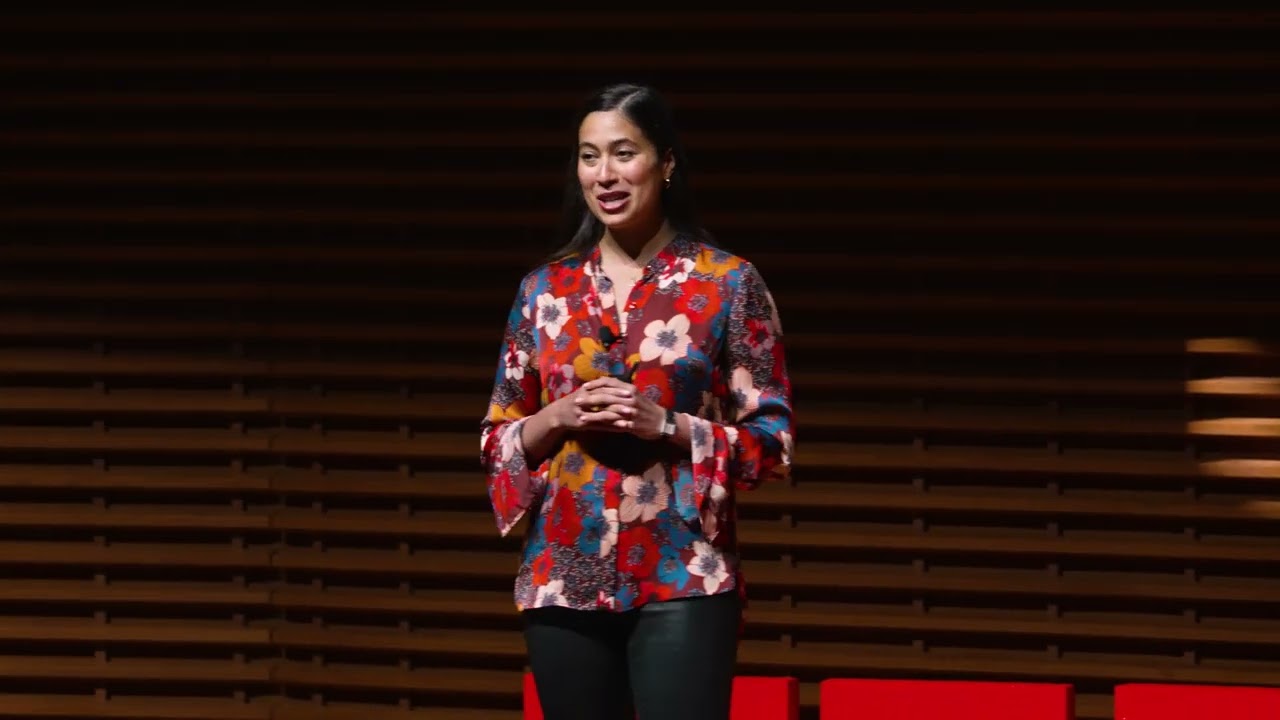
Pivot Pointes: Center Stage to Starting Over | Beatriz Stix-Brunell | TEDxStanford
Keywords
Summary
111 words
Critical Evaluation
The talk is a compelling personal narrative that effectively uses the speaker’s unique background to illustrate universal principles of change and resilience. Stix-Brunell’s credibility as a former Royal Ballet dancer lends authenticity to her insights, and her storytelling is engaging and relatable. However, the talk lacks empirical evidence or references to psychological or sociological research on career transitions, which limits its scientific rigor. The argument is primarily anecdotal, relying on personal experience rather than data or studies. The structure of the three acts is a useful heuristic, but it is presented as a universal framework without supporting evidence. The talk’s strength lies in its motivational and inspirational value rather than its scientific depth. The speaker’s emphasis on fearing regret over failure is a powerful message, but it is not backed by research on decision-making or risk perception. Additionally, the talk does not address potential criticisms or alternative perspectives, such as the role of privilege or structural barriers in career changes. Overall, the talk is valuable for its personal insights and practical advice, but it should be viewed as an opinion piece rather than a scientifically rigorous analysis. The audience’s positive reception, as indicated by the likes and comments, suggests that the message resonates, but the lack of sources and empirical grounding is a notable weakness.
215 words
Title / Content Match
The title accurately reflects the content, focusing on the pivot from ballet to academia.
Quality & Reliability
7/10
Personal testimony from a credible professional ballerina, but lacks external sources or empirical evidence; relies on anecdotal experience.
Key Moments
Markers derived by PSI from the transcript: the creator did not define chapters.
- Introduction and opening imagery of a ballet performance
- Speaker introduces herself and her background
- Discussion of the difficulty of ballet and the concept of flow
- Explanation of the three acts: backstage, onstage, after the show
- Backstage: importance of small steps and preparation
- Onstage: fearing regret over failure and taking risks
- After the show: starting over and applying skills to new contexts
- Personal story of transitioning to Stanford and final encouragement
Cited Sources
- TEDx Talks — Mentioned as the organizing body of the event
Concurring Sources
- TEDx Talks — The talk is part of the TEDx series, which is known for sharing ideas and personal stories.
Contribution & Novelties
The talk offers a unique perspective on career transitions by applying the discipline and mindset of a professional ballerina to broader life changes. It introduces a three-act framework (backstage, onstage, after the show) that can be applied to any major pivot. The speaker’s personal experience provides concrete examples of how skills like discipline, focus, and resilience transfer across domains.
Pour aller plus loin :
- Growth Mindset — Relevant to the idea of embracing challenges and learning from failure.
- Flow (psychology) — The state of optimal performance mentioned in the talk.
- Career transition — Provides academic context on the process of changing careers.
102 words
Radar Profile
The radar chart shows a balanced profile with moderate scores across all dimensions, indicating a talk that is informative and credible but not highly technical or data-driven. The strengths lie in the quality of information and reliability, while the technical level is lower, reflecting the personal and motivational nature of the content.
💬 Sur les 0 commentaires analysés, aucune tendance n'a pu être dégagée.