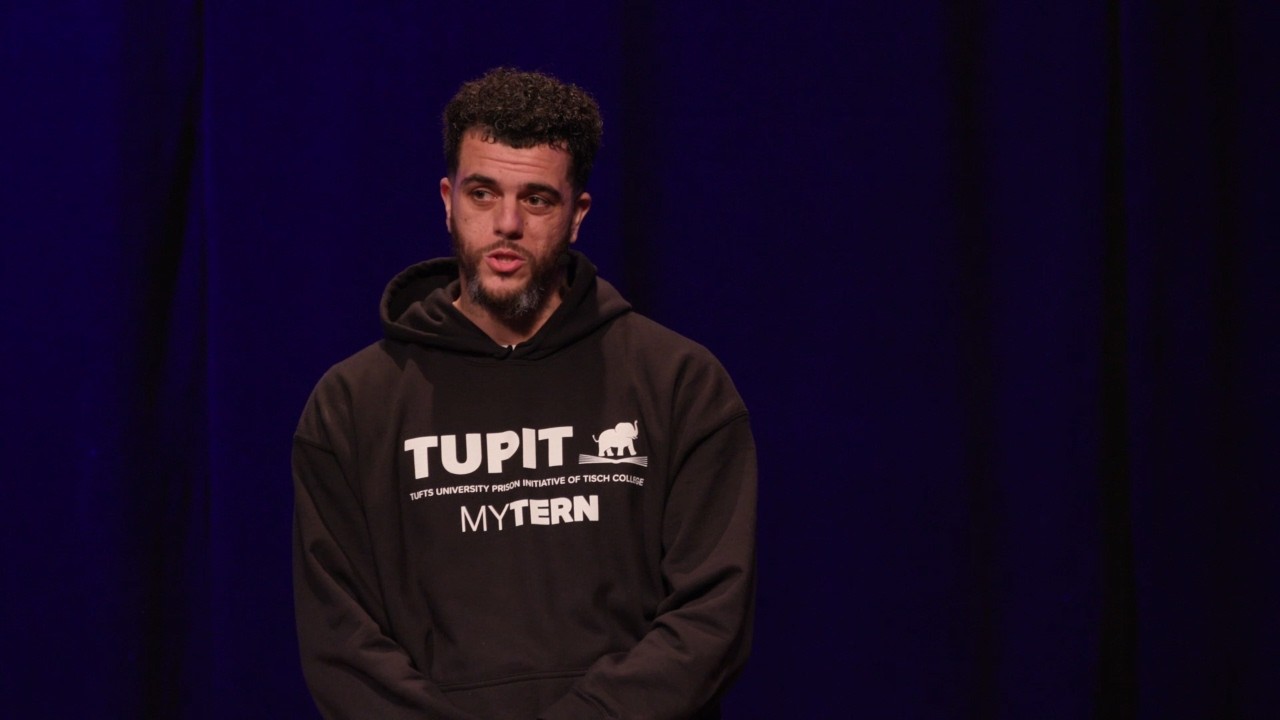
How Handcuffs Set Me Free | Jody Boykins | TEDxTufts
Keywords
Summary
125 words
Critical Evaluation
The talk is a powerful personal narrative that effectively illustrates the impact of the school-to-prison pipeline and the transformative potential of education and restorative justice. Boykins’s story is compelling and emotionally resonant, providing a human face to systemic issues. However, from a scientific perspective, the talk relies heavily on anecdotal evidence and personal testimony, with limited reference to empirical research. The statistic mentioned (20% increased risk of involvement in the criminal justice system due to disciplinary actions) is cited without a specific source, and the claim that education reduces mortality risk is presented without supporting data. The argumentation is more persuasive than rigorous, appealing to emotion rather than systematic evidence. The talk does not engage with counterarguments or complexities, such as the challenges of scaling prison education programs or the potential limitations of restorative justice in all cases. The sources mentioned (TuPIT, TPP) are credible organizations, but no specific studies or reports are cited. Overall, the talk is valuable for raising awareness and humanizing these issues, but it lacks the depth and rigor of a scientific analysis. The title is somewhat metaphorical and may not immediately convey the content, but it is fitting once the talk is viewed. The speaker’s personal experience is a strength, but it also limits the generalizability of the conclusions.
214 words
Title / Content Match
The title metaphorically captures the transformative journey from incarceration to freedom through education and forgiveness.
Quality & Reliability
7/10
Personal testimony with references to statistics and programs, but lacks detailed citations and scientific rigor.
Key Moments
Markers derived by PSI from the transcript: the creator did not define chapters.
- Introduction: Jody Boykins enters foster care before school, early trauma.
- Describes being medicated with Concerta and feeling silenced.
- Explains the school-to-prison pipeline and his own experience of disciplinary actions.
- Arrested for attempted murder at age 22, enters prison.
- Meets Dr. Hillary Binda and joins TuPIT, first grounding exercise.
- Discovers that his uncle's killer is in the same prison.
- Confronts the man in the prison yard, hears his story, and chooses forgiveness.
- Discusses the Transformational Prison Project and restorative justice circles.
- Release, re-entry, and the importance of education and community.
Cited Sources
- TEDx Program — Mentioned as the organizing body for the talk.
Concurring Sources
- Tufts University Prison Initiative — The program mentioned in the talk, providing higher education to incarcerated individuals.
- Transformational Prison Project — Restorative justice organization mentioned in the talk.
Dissenting Sources
- No discordant sources found — No sources contradicting the talk's claims were identified.
Contribution & Novelties
The talk provides a first-hand account of the school-to-prison pipeline and the transformative power of higher education in prison, offering a personal perspective that is often missing from academic literature. It highlights specific programs (TuPIT, TPP) and their impact on individuals.
Pour aller plus loin :
- Tufts University Prison Initiative — Official program page, relevant for understanding the initiative.
- Transformational Prison Project — Official website, relevant for restorative justice work.
- School-to-Prison Pipeline - Wikipedia — Overview of the concept, relevant for background.
- Restorative Justice - Wikipedia — Overview of restorative justice principles.
92 words
Radar Profile
The radar profile shows moderate scores across all dimensions, with a relatively higher score in quality of information due to the personal narrative, but lower in technical level and quantity of information, reflecting the anecdotal nature of the talk.
💬 No comments were provided for analysis.